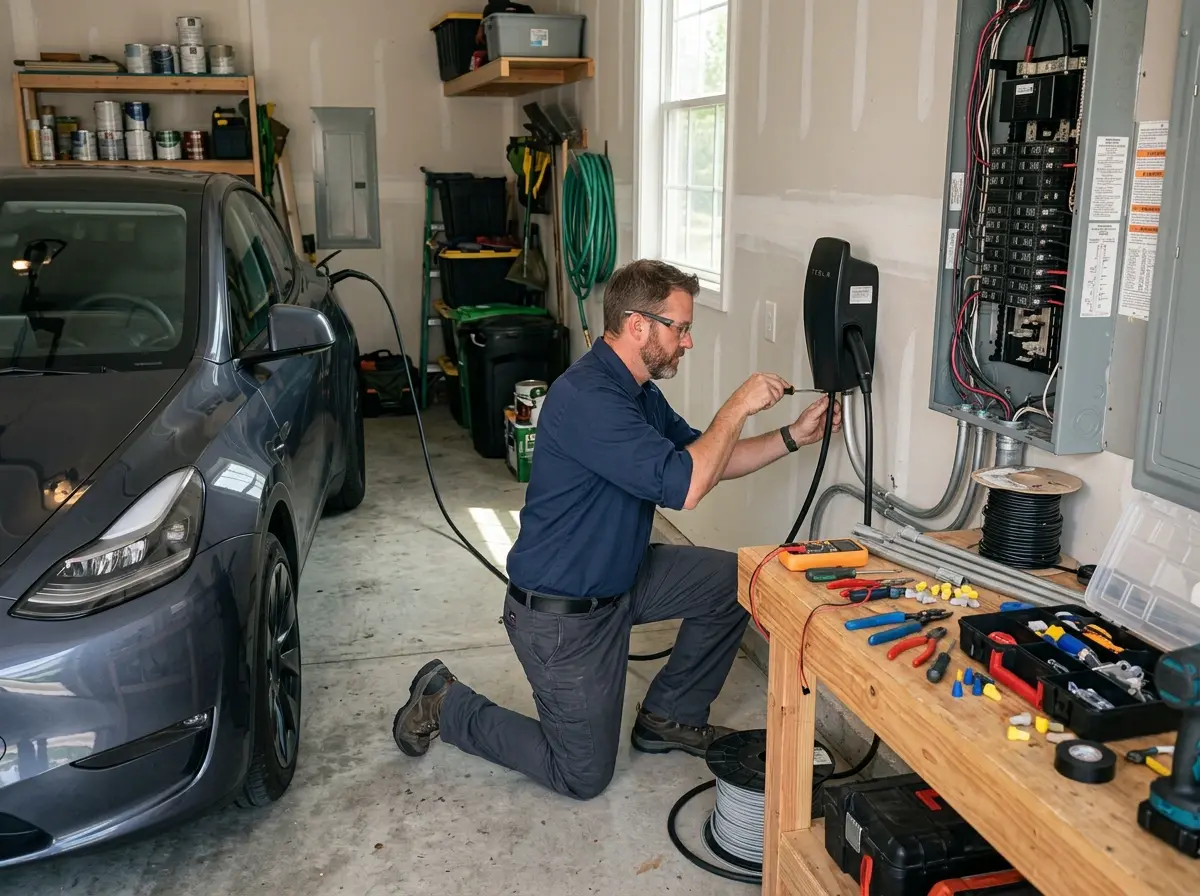
Smart EV Charger Installation for Jacksonville Homeowners
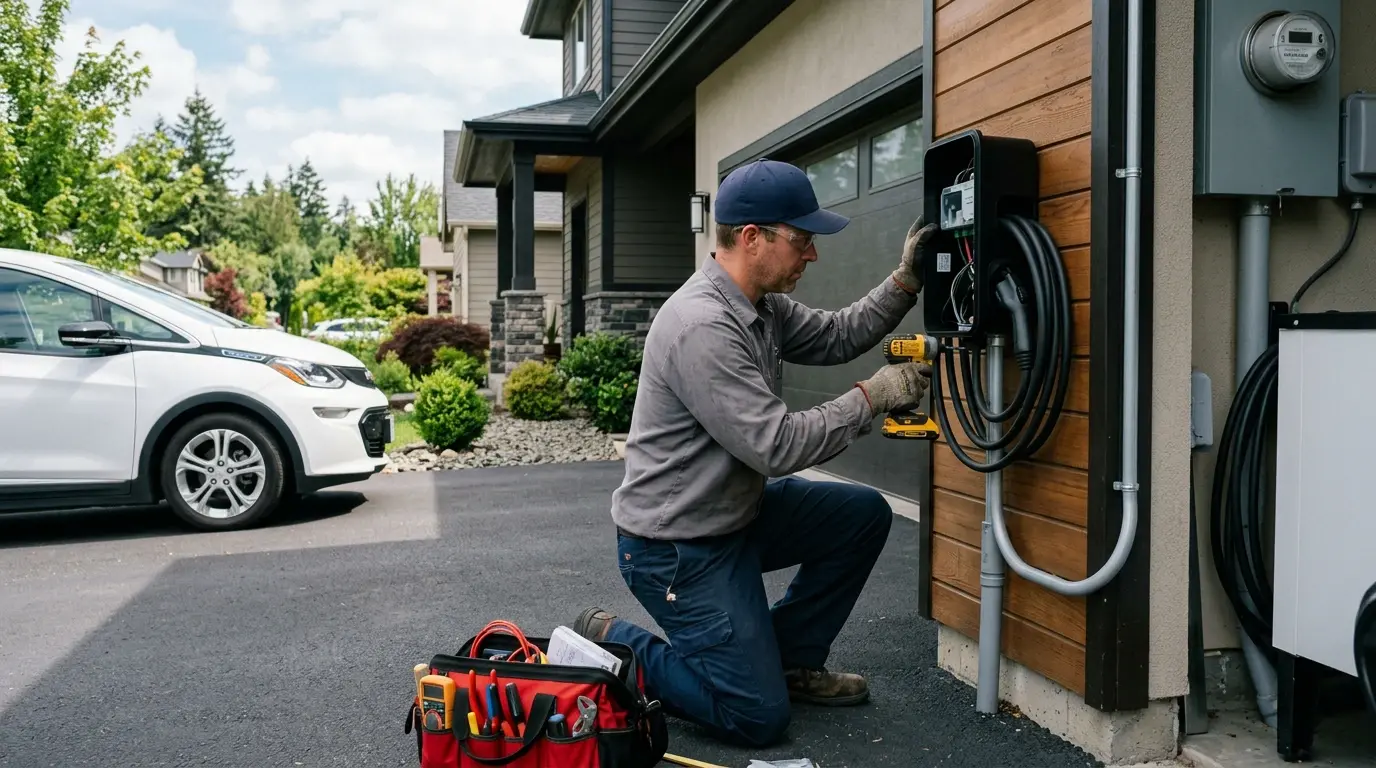
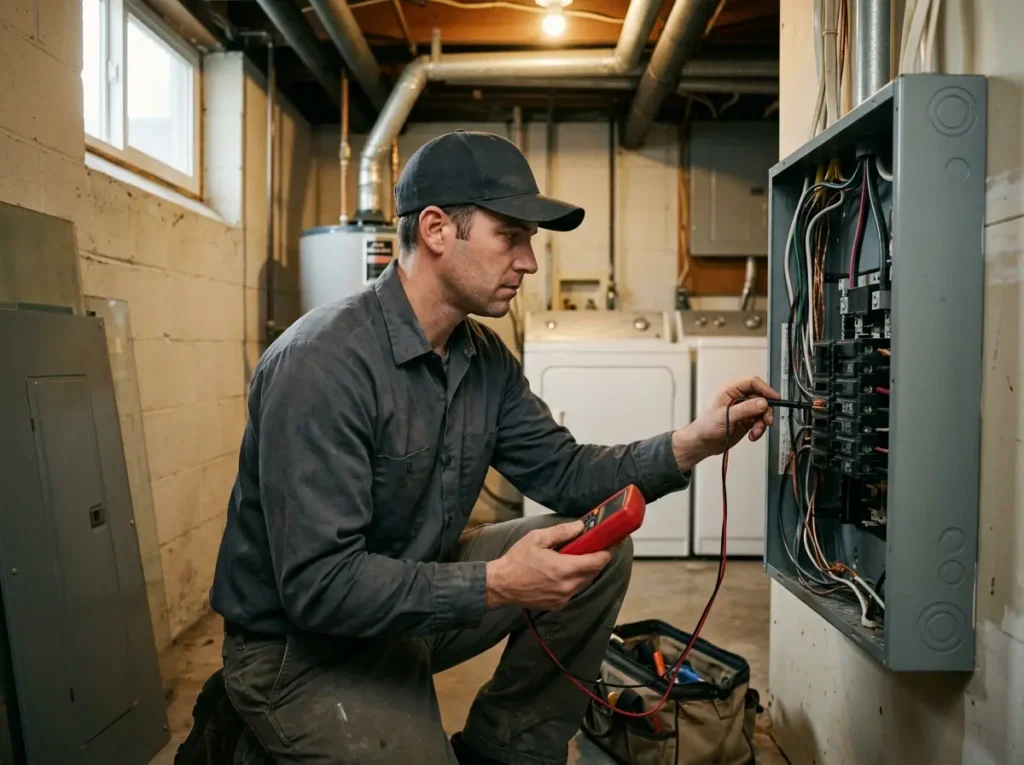
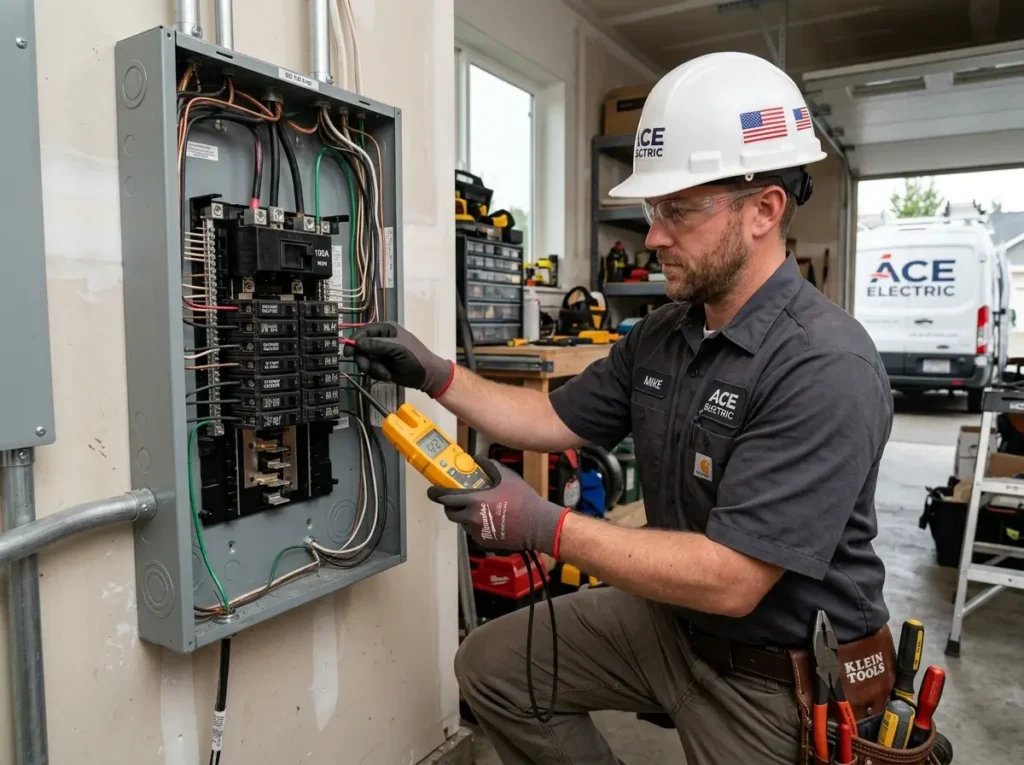
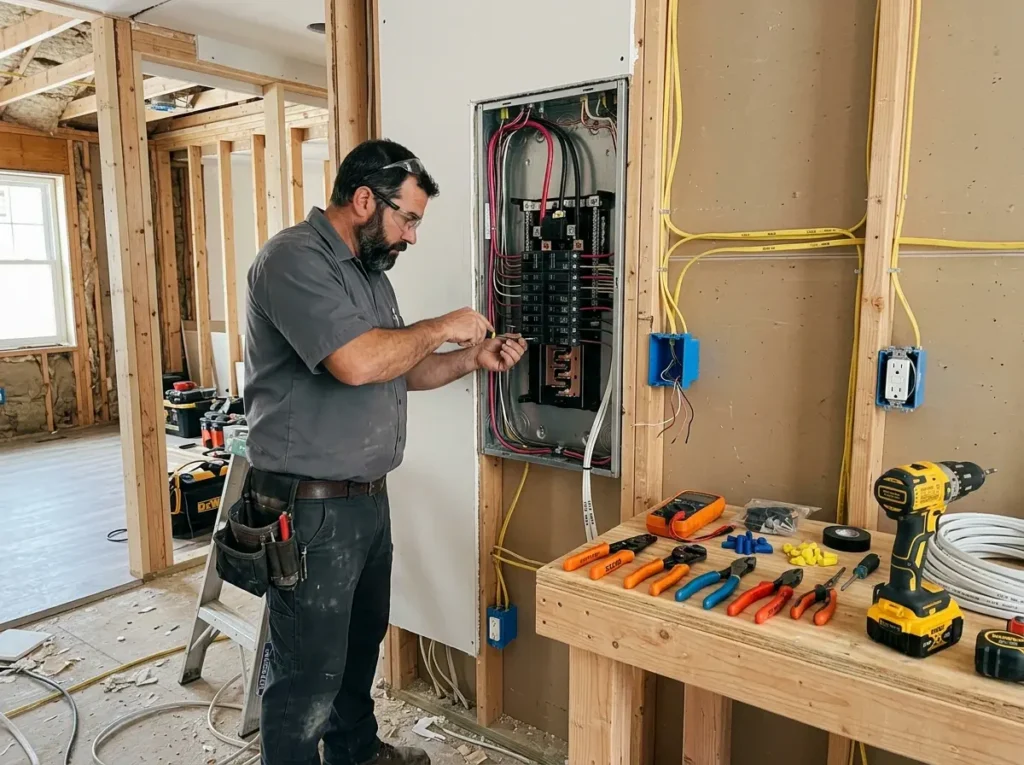
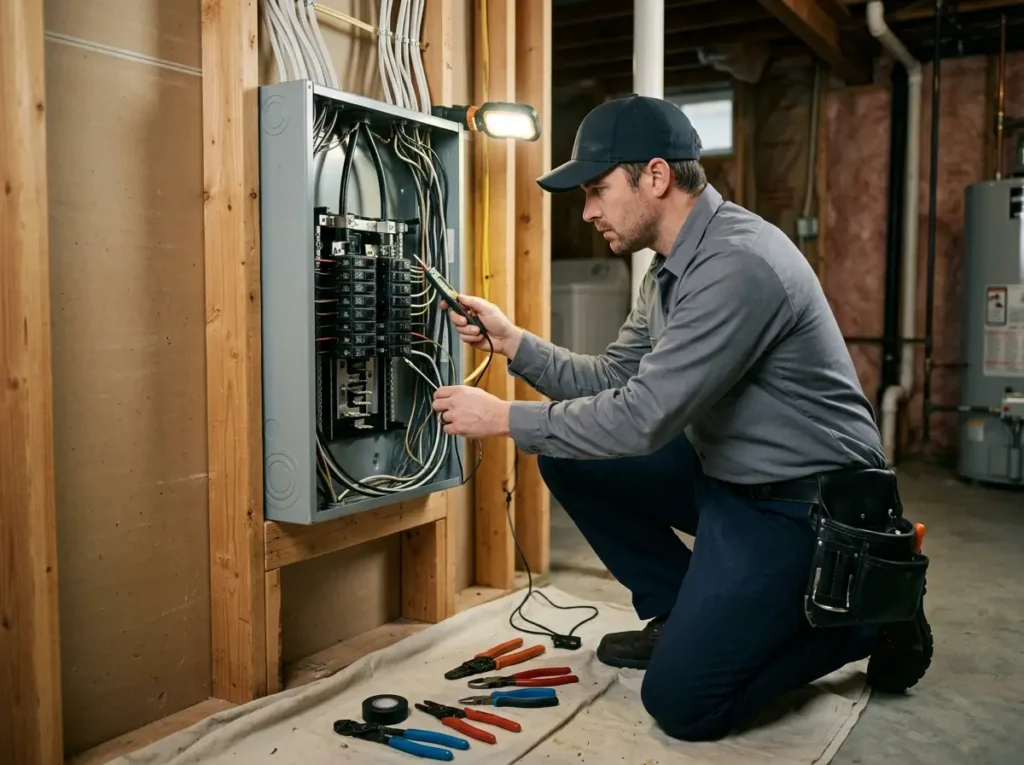
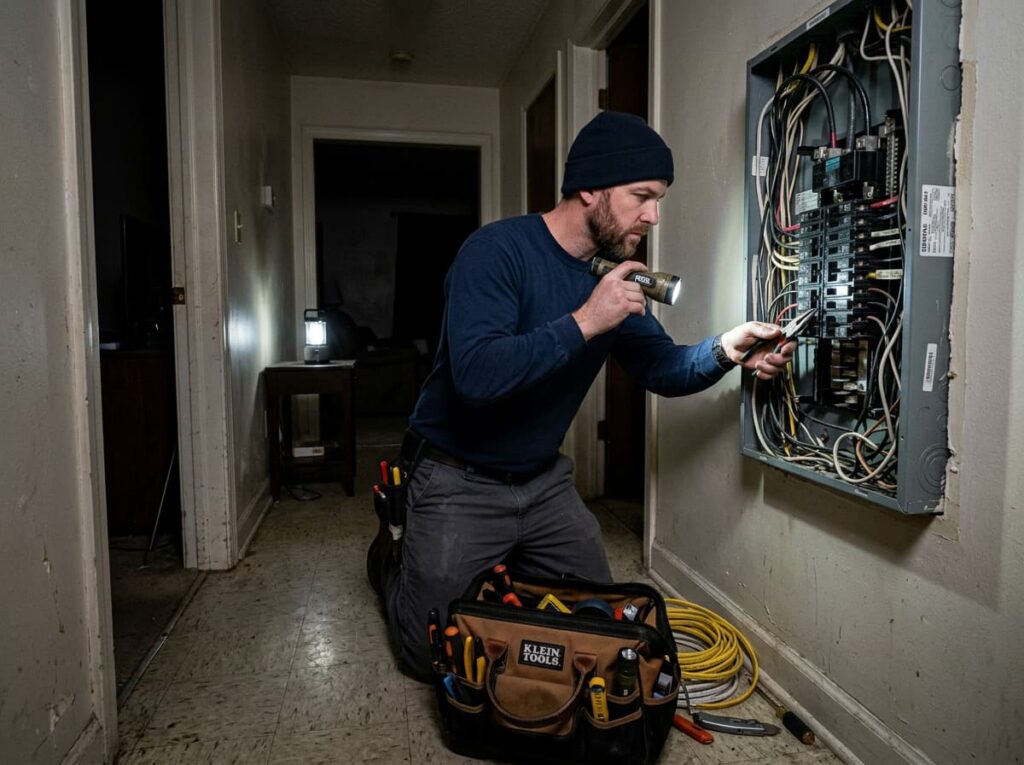
Switching to an electric vehicle saves you hundreds of dollars each month on fuel and maintenance, but that saving disappears the first time you wake up to a half-charged battery. Proper EV charger installation turns your garage into a reliable refueling station. Our team specializes in Level 2 EV charger installation, Tesla home charger installation, and NEMA 14-50 outlet installation for residents across Jacksonville. Before we drill a single hole, we run a complete load calculation to determine whether your existing electrical panel can handle the additional 40 to 80 amps that modern EVSE equipment demands. If your home runs on a 100A panel and already powers an air conditioner, electric dryer, and oven, adding a 50A charging circuit without a panel upgrade for EV is mathematically impossible and electrically dangerous.
Real Problems We Solve Every Week in Jacksonville
A family in Jacksonville buys a Tesla and hires a handyman to install a NEMA 14-50 outlet. Three weeks later, their main breaker trips at 2 AM when the car charges while the AC runs. The handyman disappeared. We arrive, perform a load calculation, and discover their 100A panel is already at 85% capacity before adding the charger. The solution is either a panel upgrade for EV to 200A or installing an EVSE with load management that automatically reduces charging current when other appliances run. Another common scenario: a homeowner purchases a Level 2 EV charger installation kit online, mounts the unit themselves, but cannot get it to power on. We find they connected the neutral wire incorrectly because they did not understand that hardwired vs plug-in installations follow different wiring rules. We also regularly fix EVSE equipment that overheats and shuts down after an hour of charging — usually caused by undersized wire or loose connections that create resistance. Our team diagnoses each issue, corrects the underlying problem, and documents every repair for warranty purposes.
Every EV charger installation we complete includes these specific steps:
- Site evaluation measuring garage distance from main panel, wall construction type, and existing circuit availability
- Load calculation using actual nameplate ratings of your major appliances plus proposed EV charger demand
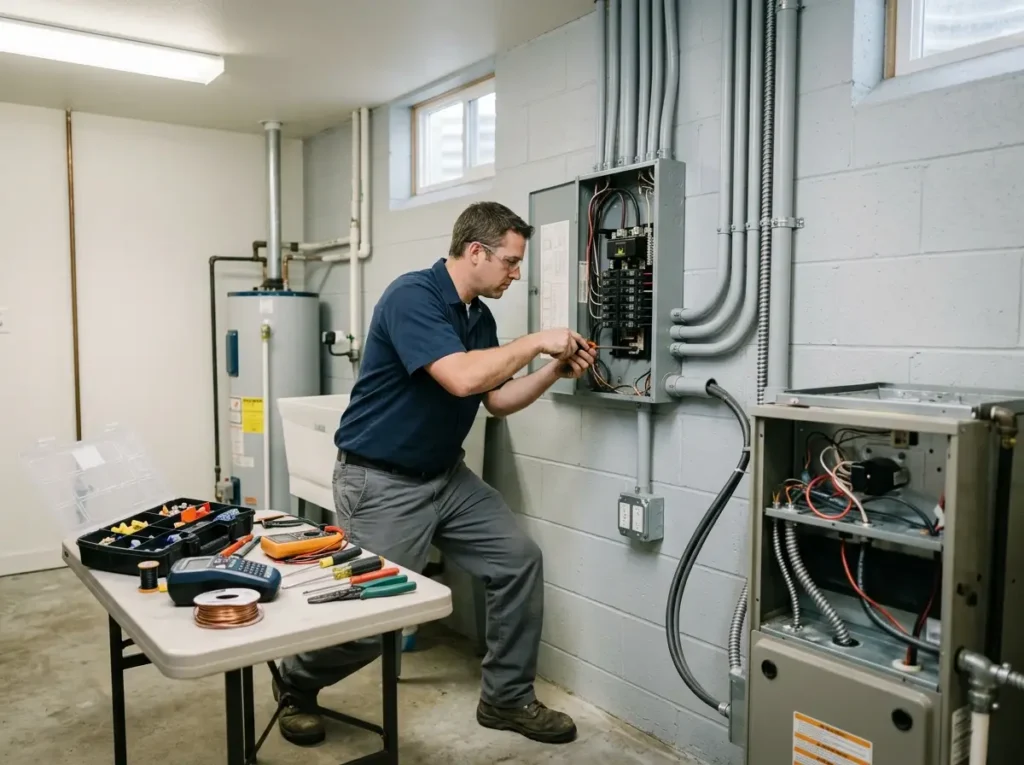
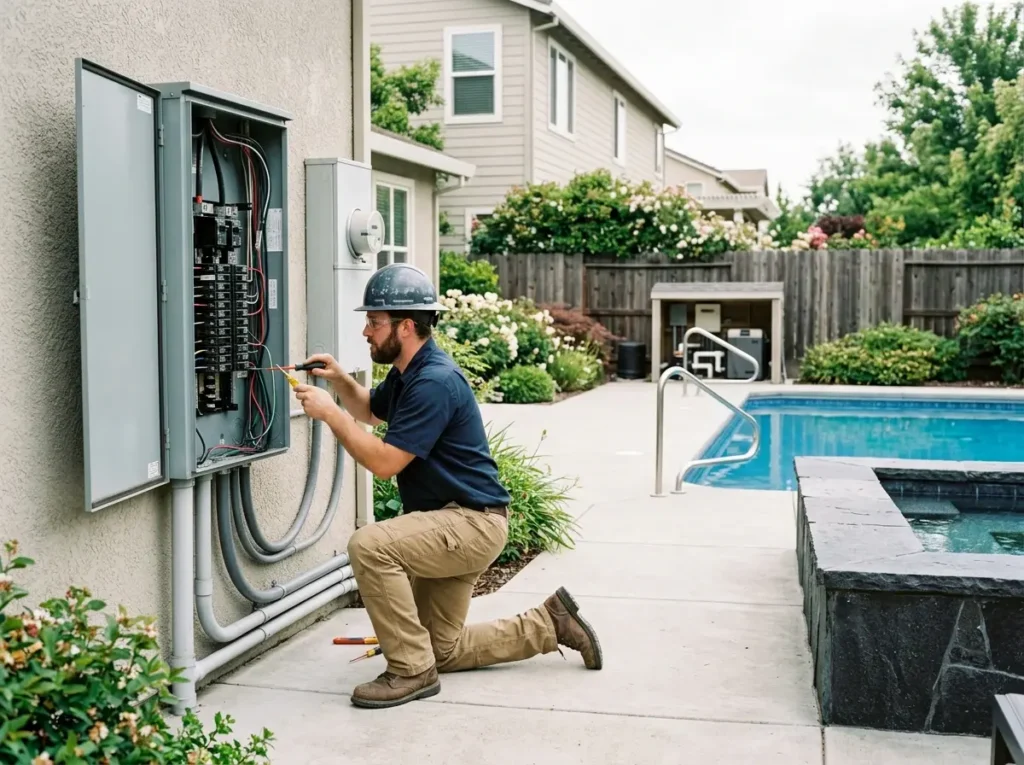
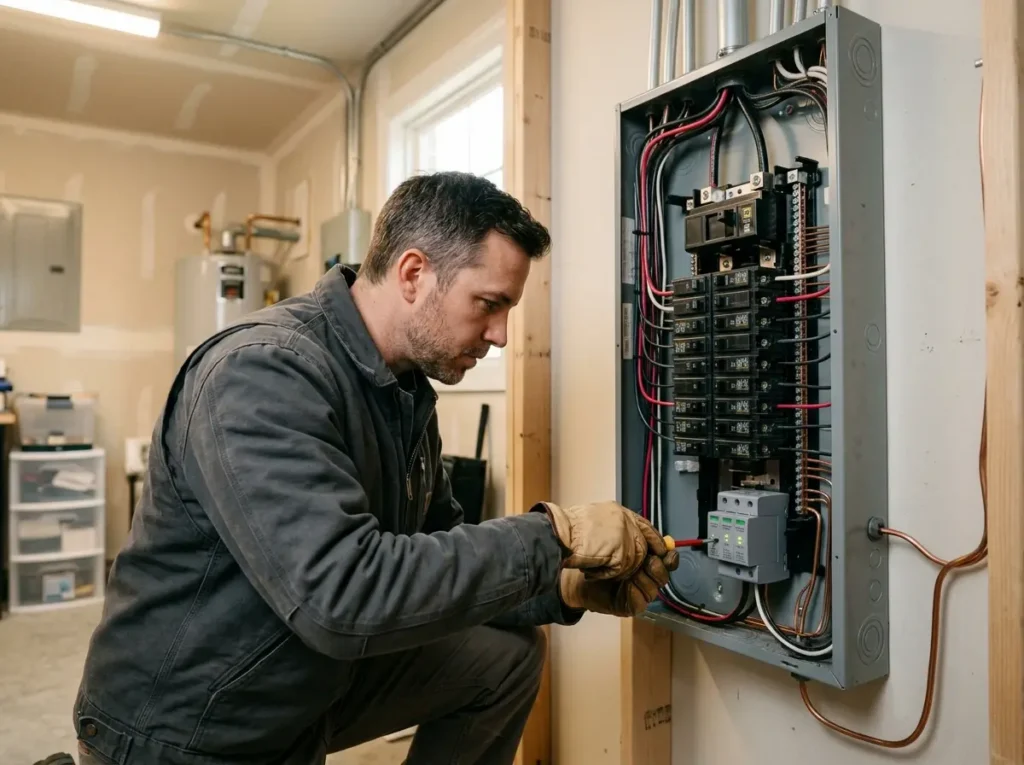
- Panel upgrade for EV recommendation if your calculated load exceeds 80% of your panel rating
- Selection between hardwired vs plug-in based on your charger model, local amendments, and whether you need portability
- EVSE mounting at proper height (48 inches to cord reach) and location within cord length of your charge port
- Circuit wiring with correctly sized copper conductors (6 AWG for 50A, 4 AWG for 60-80A) and dedicated breaker
- NEMA 14-50 outlet installation using industrial-grade receptacles rated for repeated plug/unplug cycles
- Post-installation testing including voltage under load, ground continuity, and GFCI trip verification
- Client training on charging schedules, duty cycle expectations, and troubleshooting common error codes
How Long Does EV Charger Installation Take?
A straightforward Level 2 EV charger installation in Jacksonville where the garage is attached and the electrical panel has available capacity takes 2 to 3 hours. This includes mounting the EVSE, running conduit or Romex through the garage wall, installing a new 40A to 60A breaker, connecting all wires, and testing the system. A NEMA 14-50 outlet installation takes slightly less time, typically 1.5 to 2.5 hours, because there is no EVSE mounting or programming involved. If your panel is on the opposite side of the house and your garage has no attic access, we may need 3 to 5 hours to run cable through crawlspaces or trenching for a subpanel. Tesla home charger installation requires an additional 30 to 60 minutes for configuration of amperage settings, Wi-Fi connection, and commissioning through the Tesla One app. Panel upgrade for EV is a separate project requiring 6 to 8 hours plus utility coordination and inspection, typically scheduled on a different day. The most time-consuming scenario is a detached garage with an undersized feeder — we first install a new subpanel with adequate capacity, then perform the EV charger installation on a second visit. We provide flat-rate pricing with no hourly surprises and always give you a completion time estimate before unloading tools.
Why Load Calculation Separates Professionals from Amateurs
Any handyman can wire a NEMA 14-50 outlet. Very few understand why that outlet might trip your main breaker or melt your panel bus bars after six months of nightly charging. The difference is load calculation — a NEC requirement that most residential electricians skip because it takes time and reveals problems clients do not want to hear. Here is the math: a typical home in Jacksonville running central AC (30-40A), electric dryer (30A), oven (40A), and lighting (10-15A) already exceeds 80% of a 100A panel. Adding a 50A EV charger pushes demand to 150A or more. Your main breaker will trip eventually, and repeated tripping weakens the breaker until it fails completely. Our load calculation identifies this before you spend money on incompatible equipment. We then offer three solutions: a panel upgrade for EV to 200A ($2,500-4,500), installation of an EVSE with load management that monitors your home's total draw and reduces charging current dynamically ($300-600 adder), or derating your charger to a lower amperage (for example, 32A instead of 48A) that fits within your available capacity. We explain every option with pros, cons, and real costs. For hardwired vs plug-in, we typically recommend hardwired for permanent installations because it eliminates the NEMA 14-50 outlet as a failure point — outlets can overheat during prolonged 8-hour charging sessions. Plug-in makes sense if you plan to move or take your EVSE with you. Every EV charger installation we complete in Jacksonville includes a load calculation report you can keep for your records and share with your insurance company if requested.
Call our team in Jacksonville to schedule your load calculation and EV charger installation quote. We tell you what your panel can handle before you buy equipment that might not work.