

Bathroom Exhaust Fan Installation in Safety Harbor, Clearwater – Humidity Destroys Bathrooms Slowly
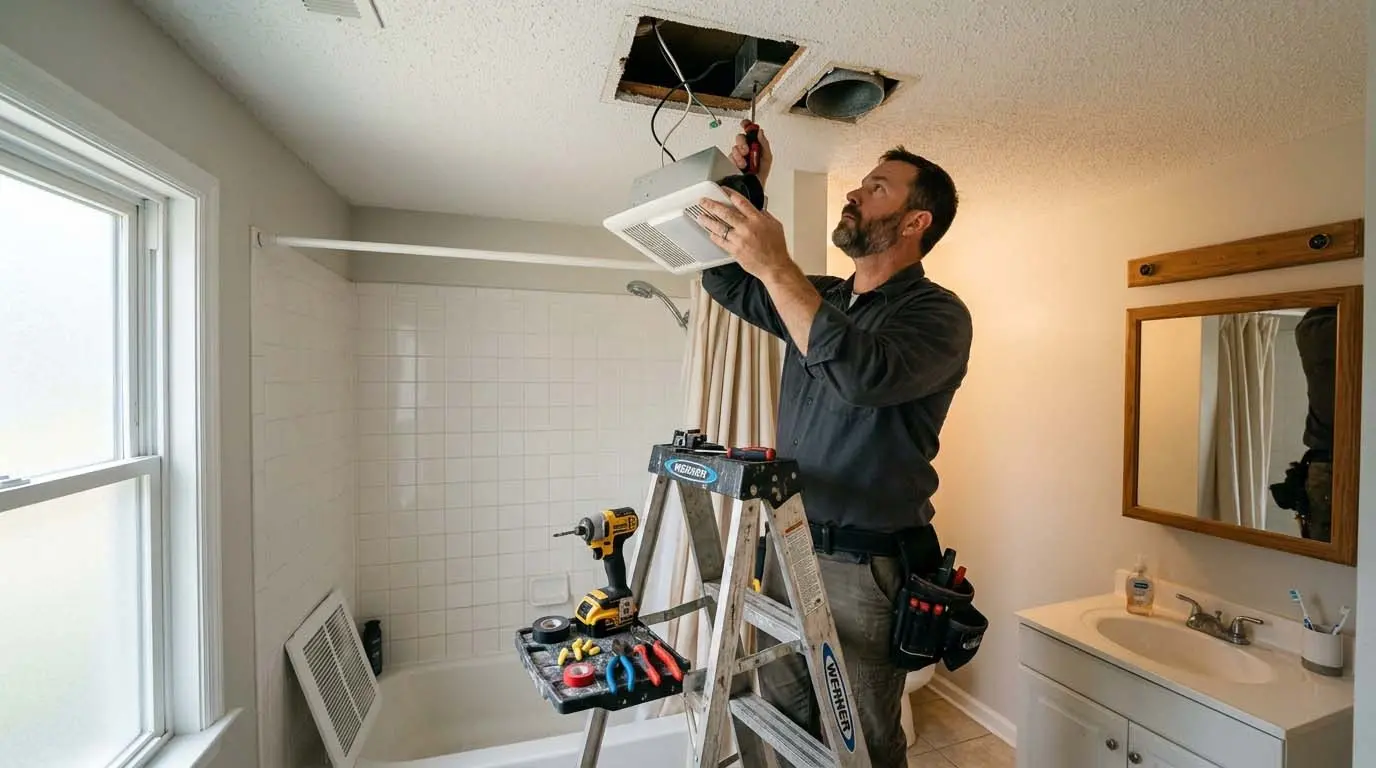
Peeling paint near the shower. A musty smell that never quite disappears. Black specks in the corners of the ceiling. These are not cleaning problems. They are ventilation failures. Homes in Safety Harbor, Clearwater without properly sized and correctly installed bathroom exhaust fans trap moisture inside walls, ceilings, and vanities. That moisture feeds mold, rusts light fixtures, and rots window frames. Our organization stops this damage with professional bathroom exhaust fan installation, bathroom fan replacement, and install bathroom fan with light that removes humidity efficiently and quietly.
Signs Your Bathroom Ventilation Is Failing
Many homeowners in Safety Harbor, Clearwater live with inadequate fans without realizing the long-term cost. Our team identifies these common problems during every bathroom fan replacement visit:
- A fan that runs but leaves mirrors fogged 20 minutes after a shower (undersized CFM for bathroom fan rating or blocked ducting)
- An existing fan so loud that family members avoid turning it on (4.0+ sones, typical of builder-grade units from the 1990s)
- Cold air dripping from the fan grille (missing or failed backdraft damper)
- A fan that vibrates or makes grinding noises (failing motor or loose mounting)
- Bathroom fan venting installation that exits into the attic instead of outdoors — a code violation that causes roof sheathing rot
None of these issues improve with time. A fan that dumps moist air into an attic soaks insulation and grows mold on framing. A fan that moves too little air allows humidity to penetrate drywall joints. Our organization solves each problem permanently.
Time Estimates for Bathroom Exhaust Fan Services
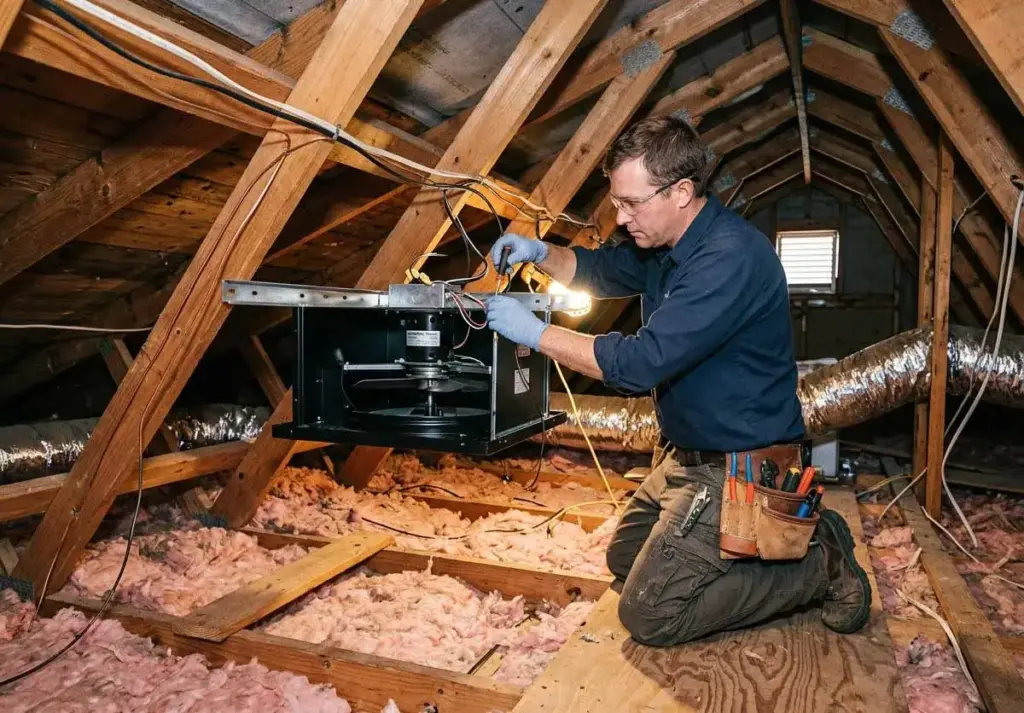
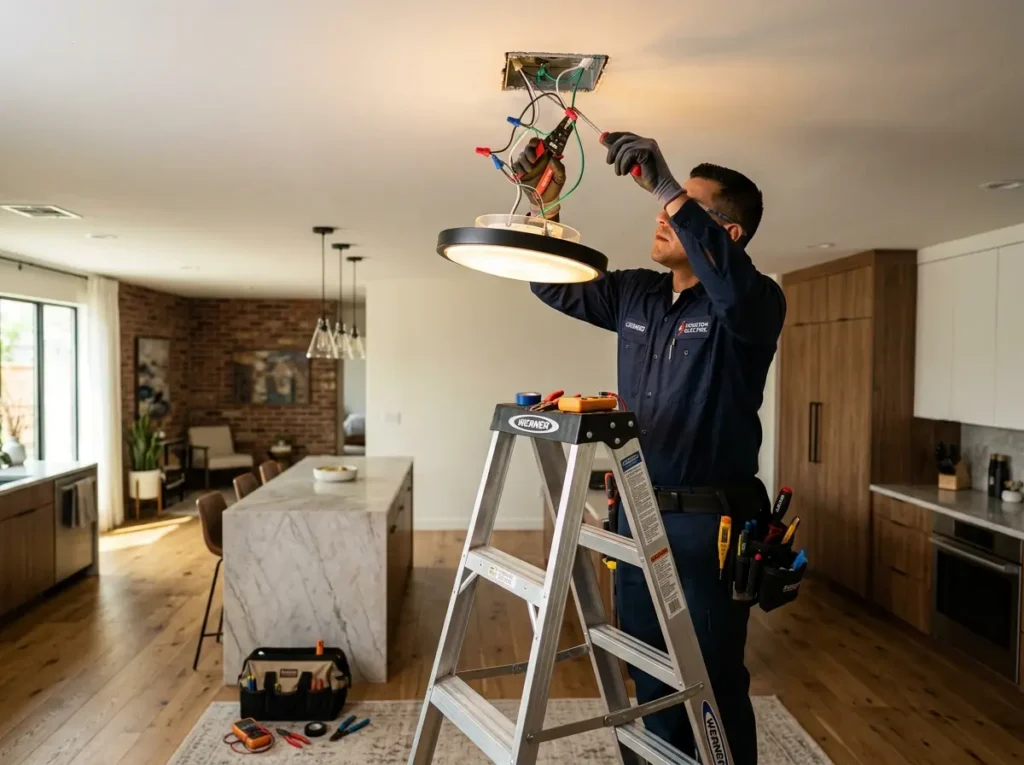
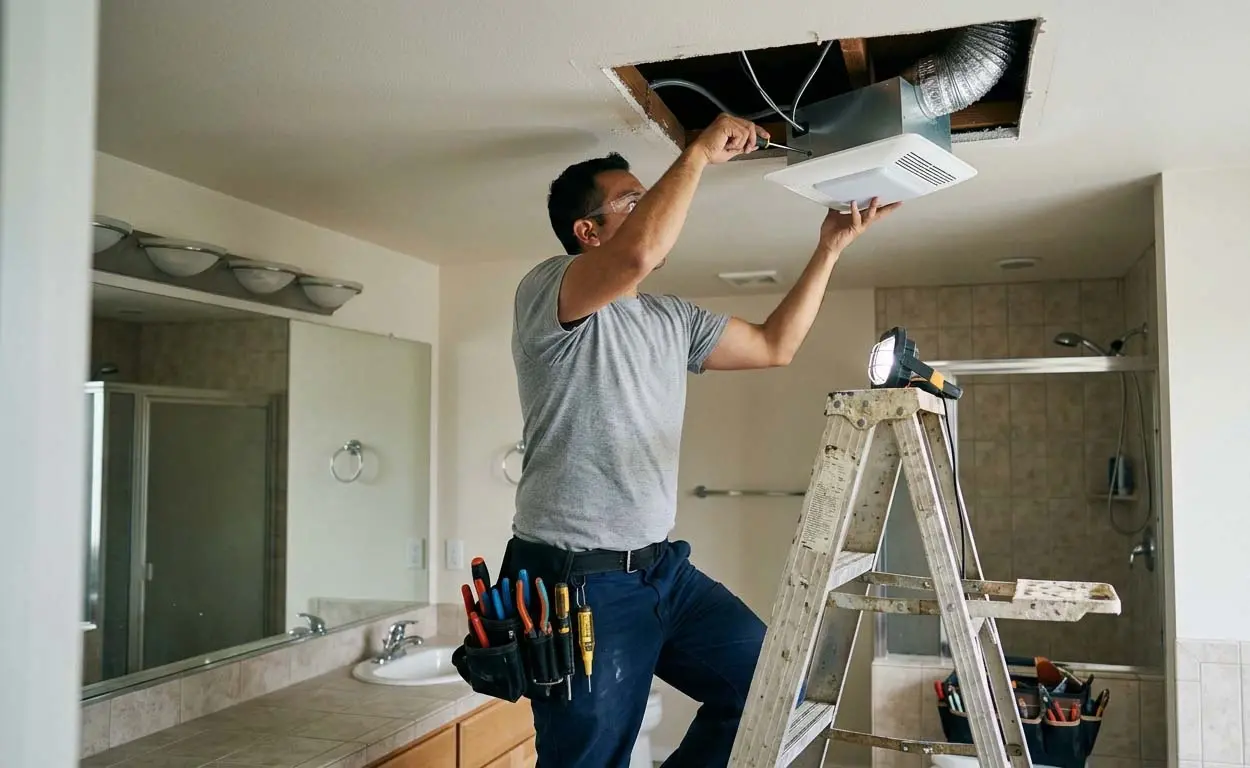
Our organization provides realistic timelines so you know what each job requires. Bathroom fan replacement where the new fan fits the existing ceiling opening (same brand or similar dimensions) takes 60 to 90 minutes including wiring connection, duct reattachment, and grille installation. Install bathroom fan with light where no fan currently exists requires 3 to 5 hours including new switch wiring, ceiling hole cutting, fan mounting, and ducting. Quiet bathroom exhaust fan installation with premium Panasonic or Delta Breez models takes the same time as standard fans but includes sound baffle testing. Bathroom fan venting installation with new flexible or rigid duct through the attic and a proper roof vent or wall cap requires 2 to 3 hours plus roofing work. Humidity sensing fan installation adds 15 to 20 minutes for sensor calibration and mode selection. Inline bathroom fan installation (fan motor mounted in the attic, grille only visible in the bathroom) takes 4 to 6 hours including motor mounting, long duct runs, and electrical connections. Bathroom fan ducting and roof vent retrofitting for an existing fan that currently vents into the attic runs 2 to 4 hours including attic work, roof pentration, and flashing installation.
Beyond Any Fan – Proper Sizing, Ducting, and Code Compliance
Many homeowners in Safety Harbor, Clearwater assume that any fan is better than no fan. Our organization knows otherwise. CFM for bathroom fan calculation determines the correct air movement. For bathrooms under 100 square feet, multiply the square footage by 1 (example: 80 CFM for an 80 square foot bathroom). For larger bathrooms, calculate CFM = cubic feet ÷ 7.5 (example: a 10x12 bathroom with 8 foot ceilings is 960 cubic feet ÷ 7.5 = 128 CFM). Undersized fans leave humidity behind. Oversized fans waste energy and can pull sewer gases from traps. Bathroom fan ducting and roof vent routing must be correct. Duct length should be as short and straight as possible. Flexible duct (the cheap foil type) creates turbulence and collects lint — we use rigid metal duct or semi-rigid aluminum whenever accessible. The duct must slope slightly downward toward the exterior termination to drain any condensation. Bathroom fan venting installation that terminates through the roof requires a proper roof cap with a bird screen and flashing. Termination in a soffit (under the eave) is allowed in some codes but risks drawing moist air back into attic vents. Termination directly into an attic or crawlspace is never allowed by modern codes. For homeowners wanting Energy Star exhaust fan models, we select units that meet strict energy efficiency requirements while providing adequate CFM and low sone ratings. Humidity sensing fan installation adds automatic operation — perfect for families who forget to turn on the fan. These sensors detect rapid humidity increases and run the fan until humidity returns to normal levels, then shut off automatically. For the quietest possible operation, inline bathroom fan installation places the motor remotely in the attic, connected by insulated duct to a ceiling grille. The only sound in the bathroom is moving air, not motor noise.
Every bathroom exhaust fan installation concludes with intake testing (tissue held to the grille should stay attached), duct path inspection, exterior termination verification, sound level confirmation, and homeowner demonstration of controls. Our reputation in Safety Harbor, Clearwater rests on bathrooms that dry completely after every shower — no lingering moisture, no mold, no damage. Schedule your bathroom fan installation today and stop letting humidity ruin your home from the inside.