
Diagnosing What Other Electricians Miss in Deltona Lighting Systems
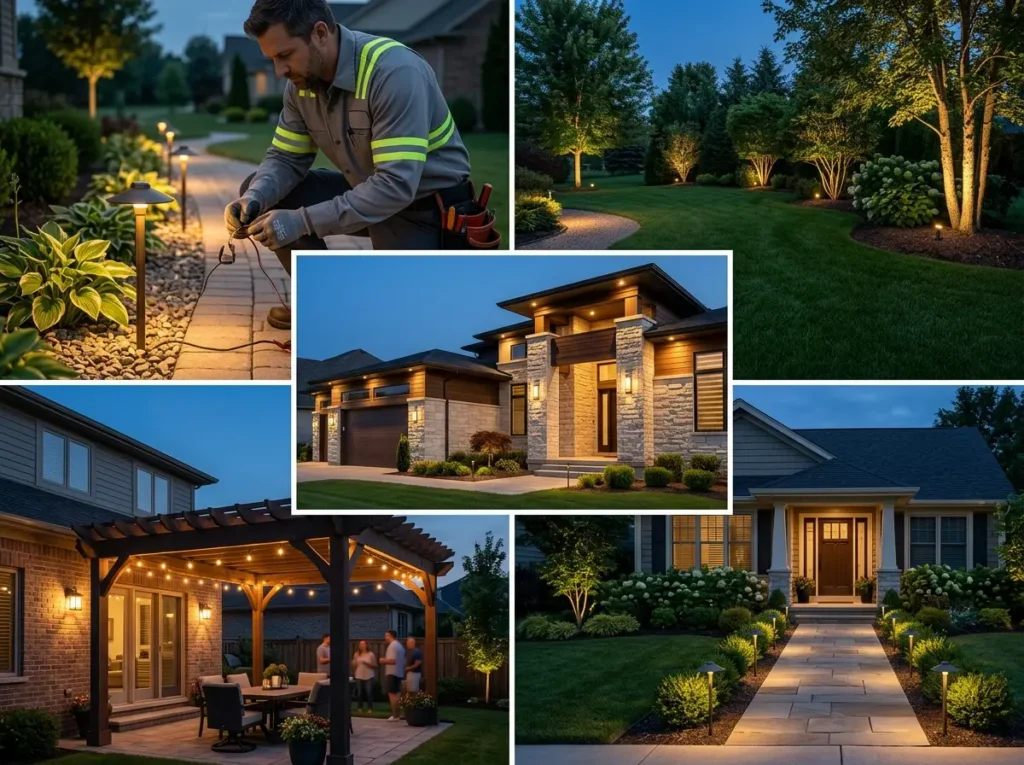
A flickering light is rarely just a loose bulb. A dimmer that hums is rarely just a cheap dimmer. Our lighting installation and repair services start with root cause analysis — we find why your lights fail before we replace a single fixture. For Deltona homeowners, this means no return visits for the same problem and no wasted money on parts that do not solve the issue. We handle light fixture installation for new chandeliers and sconces, recessed lighting installation for dark rooms, under cabinet lighting for dark countertops, track lighting installation for art galleries and long hallways, and complete light dimmer repair for systems that buzz or flicker.
Six Lighting Failures We Can Fix (And One We Cannot)
First, a light fixture that works sometimes and not others. Loose neutral at the switch or fixture — we find it with a voltage drop test under load. Second, recessed lighting installation that trips the AFCI breaker every few days. The electronic driver in an old can light is leaking current — we perform LED retrofit with a driverless wafer. Third, under cabinet lighting that dims after 30 minutes of use. Overheating driver — we relocate the driver to a cabinet void or replace with a higher-current model. Fourth, track lighting installation with heads that droop after aiming. Worn friction joints — we replace heads or install new tracks with positive-locking mechanisms. Fifth, chandelier installation where one arm stays dark while the rest work. Broken internal wire or cracked socket — we disassemble, rewire the arm, or replace the entire socket cluster. Sixth, light dimmer repair where LEDs never turn completely off. Ghost current from the dimmer's minimum load — we install a minimum load resistor or replace the dimmer with a zero-crossing model. The one failure we cannot fix: a fixture that has exceeded its rated lifespan and is no longer manufactured. In that case, we help you select a modern equivalent and perform a complete light fixture installation with new mounting hardware.
When you schedule lighting installation and repair in Deltona, our diagnostic process includes:
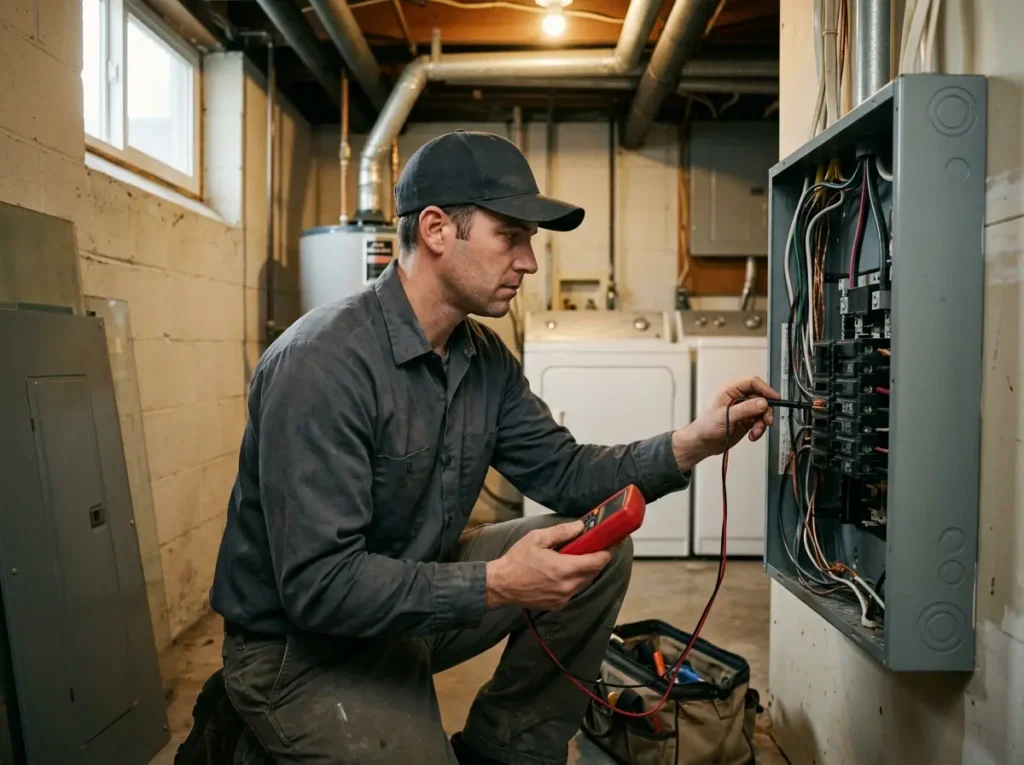
- Voltage reading at the fixture with the switch on (should be 115-125V AC)
- Voltage reading at the fixture with the switch off (should be 0V — anything else indicates a wiring fault)
- For recessed lighting installation, thermal switch function test (should reset within 10 minutes after cooling)
- For under cabinet lighting, driver output test (should match LED tape voltage, typically 12V or 24V DC)
- For track lighting installation, rail continuity test between all segments and the live adapter
- For chandelier installation, weight test of ceiling box (hang 50 pounds for 1 minute, measure deflection)
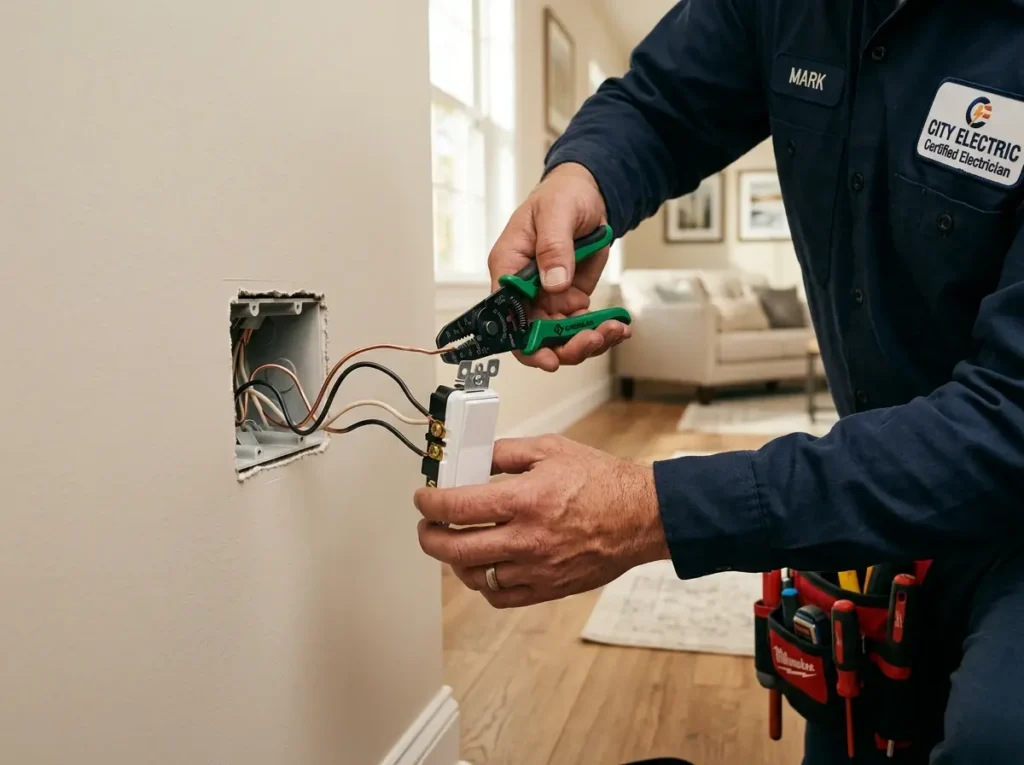
- For light dimmer repair, minimum load test (dimmer must see at least its rated minimum wattage)
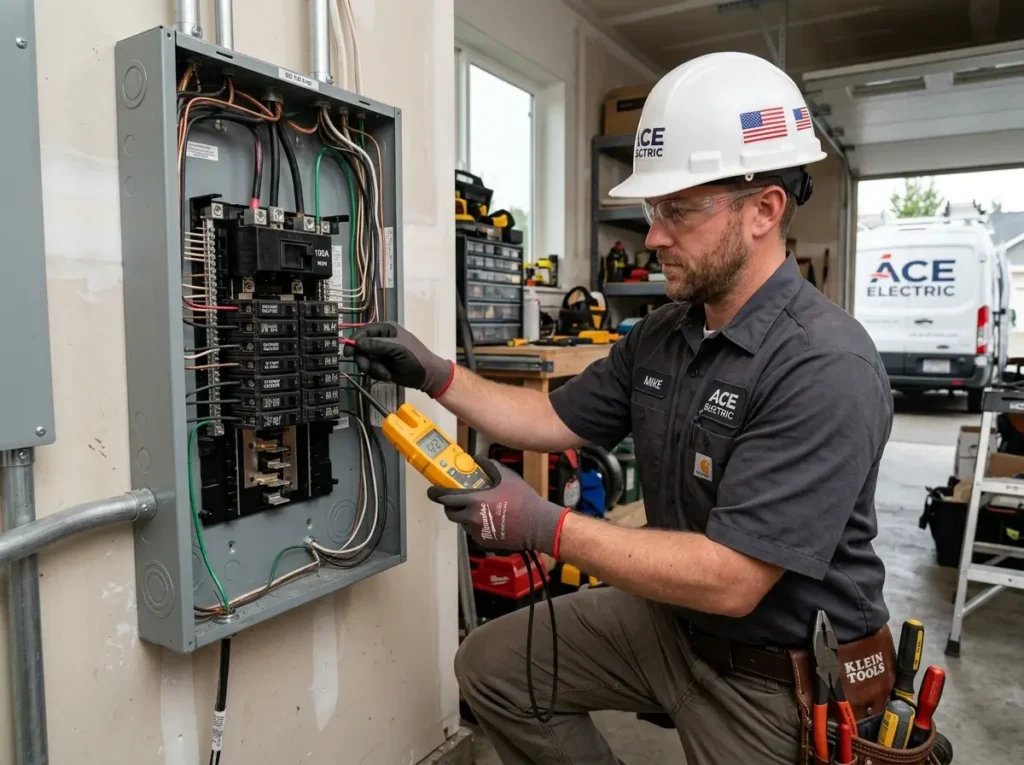
- For any installation, ground continuity verification from fixture to panel
How Long Will Your Lighting Repair or Installation Take?
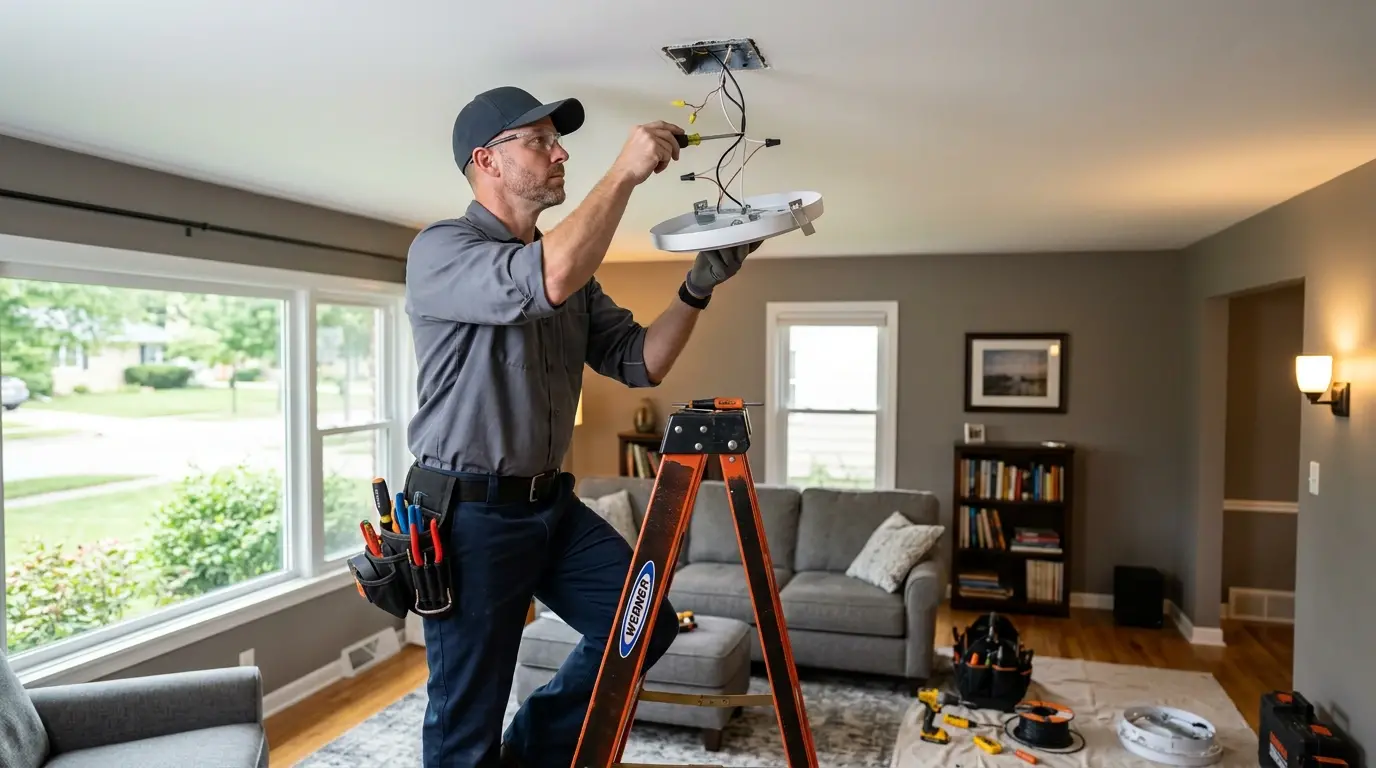
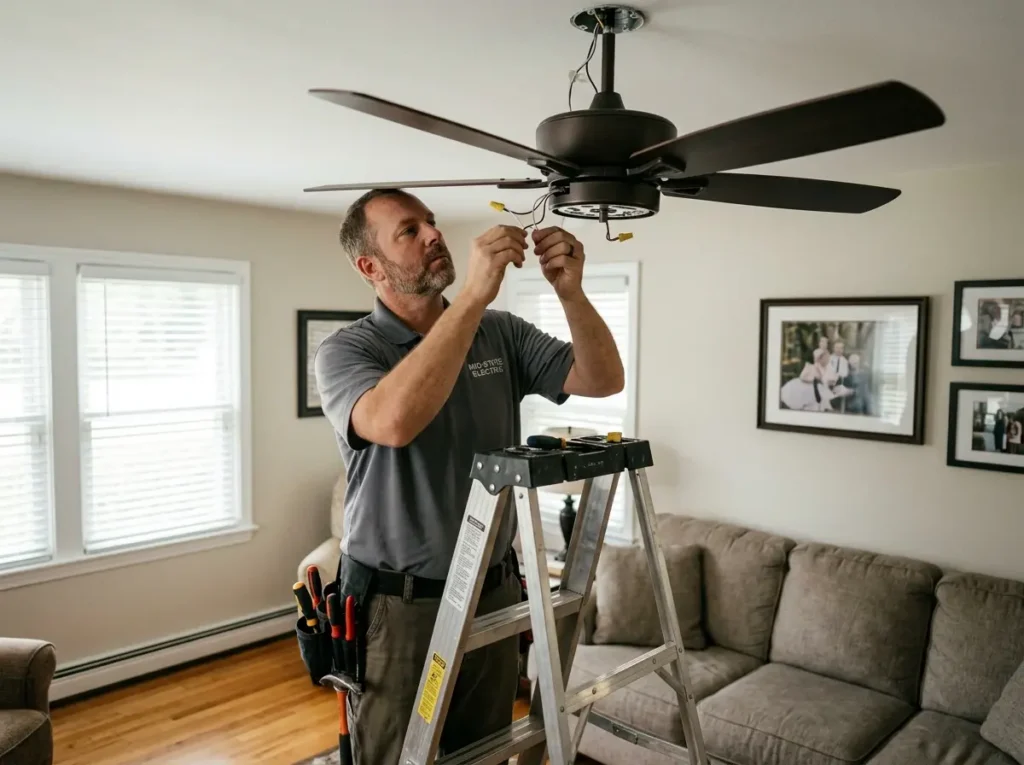
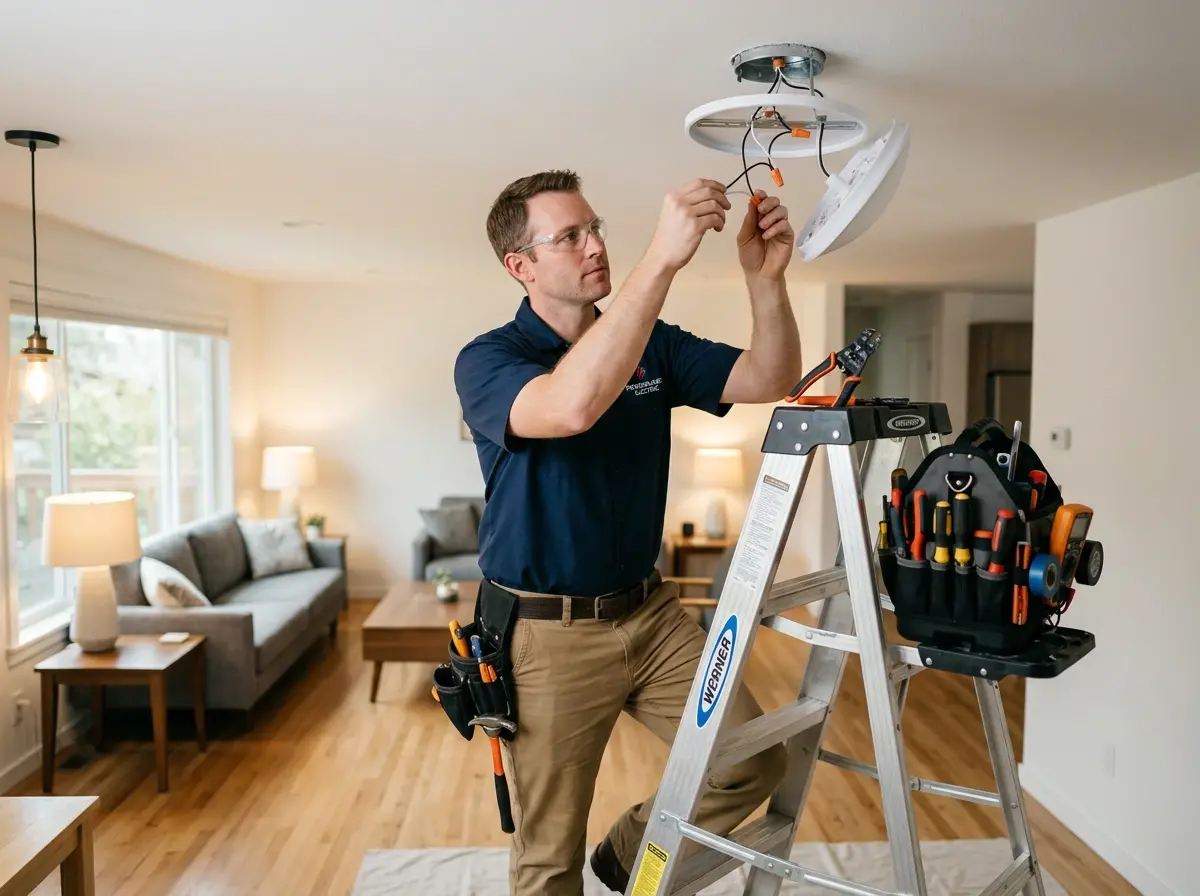
A light fixture installation replacing one existing fixture takes 1 to 1.5 hours on average. That includes turning off the breaker, removing the old fixture, inspecting the box for damage, mounting the new bracket, stripping wires, making connections, hanging the fixture, adding bulbs and shades, and cleaning up. If the new fixture is significantly heavier than the old one and we need to install a fan brace box, add 1 to 1.5 hours for attic access or hole cutting. If the new fixture has a different mounting pattern and the existing box needs repositioning, add 1 to 2 hours. A single recessed lighting installation where no can exists takes 2 to 3 hours for the first light, and 45 minutes to 1 hour for each additional light on the same circuit run. Under cabinet lighting installation takes 4 to 6 hours for a typical Deltona kitchen because we must drill through cabinet bottoms, hide wires inside cabinet interiors, mount drivers inside pantries, and connect to a switch at counter height. Track lighting installation takes 2 to 3 hours for a standard 4-foot rail, plus 30 minutes per additional rail segment. Chandelier installation varies wildly by complexity. A simple 8-light chandelier takes 2 hours. A 24-light crystal chandelier with multiple tiers and glass shades takes 4 to 6 hours — most of that is assembly and hanging crystals. Light dimmer repair is the fastest job at 30 minutes for a standard dimmer swap, but if the problem is not the dimmer itself, we may spend 1 to 2 hours tracing the circuit to find the real culprit (often a shared neutral or an incompatible LED driver). The most time-consuming Deltona lighting project we encounter is adding recessed lighting installation to a room with no attic access and plaster ceilings. We cannot use standard hole saws on plaster (they shatter), so we use a drywall cutout tool with carbide bits. Plaster dust is extreme, and we spend a full hour on cleanup alone. That project runs 6 to 8 hours for four lights. We always give you a firm timeline with a 30-minute buffer and call immediately if unexpected issues arise.
Why Flush Mount vs Semi-Flush Matters for Your Deltona Home's Safety and Comfort
Flush mount fixtures sit directly against the ceiling. Semi-flush fixtures drop 4 to 8 inches on a stem or chain. The difference is not just aesthetics. In a room with a 7-foot ceiling, a semi-flush fixture at 8 inches puts the bottom at 6 feet 4 inches from the floor. Anyone over 6 feet tall will hit their head. We measure your ceiling height and the occupants' heights before recommending flush mount vs semi-flush. For chandelier installation over a dining table, we hang the fixture so the bottom is 30-34 inches above the table surface — high enough to see across the table, low enough to provide intimate light. For foyer chandeliers, the bottom should be at least 7 feet above the floor. For recessed lighting installation in a kitchen, we space wafer lights 4 feet apart for general lighting, and directly above the counter edge for task lighting. For under cabinet lighting, we position LED tape at the front edge of the cabinet underside so light hits the countertop, not the backsplash. For track lighting installation over a kitchen island, we position heads at 45-degree angles to avoid casting shadows on the person working below. For LED retrofit of old recessed cans, we choose retrofit modules with color temperature selection switches (2700K, 3000K, 3500K, 4000K, 5000K). Most Deltona homeowners prefer 3000K for living areas (slightly warm but not yellow) and 4000K for kitchens and home offices (crisp white). For light dimmer repair, we verify that your dimmer is rated for the total LED wattage you have installed. A 150-watt LED dimmer cannot handle 200 watts of LED load, even though 200 watts of LED is only 2 amps. The dimmer's internal electronics overheat. We install a 300-watt or 600-watt LED-rated dimmer instead. Every lighting installation and repair we complete in Deltona includes a 15-minute walkthrough where we show you how to clean your fixtures, replace bulbs in hard-to-reach spots, and recognize early warning signs of driver failure.
Call our team in Deltona for lighting installation or repair that fixes the root problem — not just the symptom. We leave dark corners illuminated and flickering lights steady.