
Attic Fan Installation in Westside Park, Gainesville – Stop Cooking Your Home From the Top Down
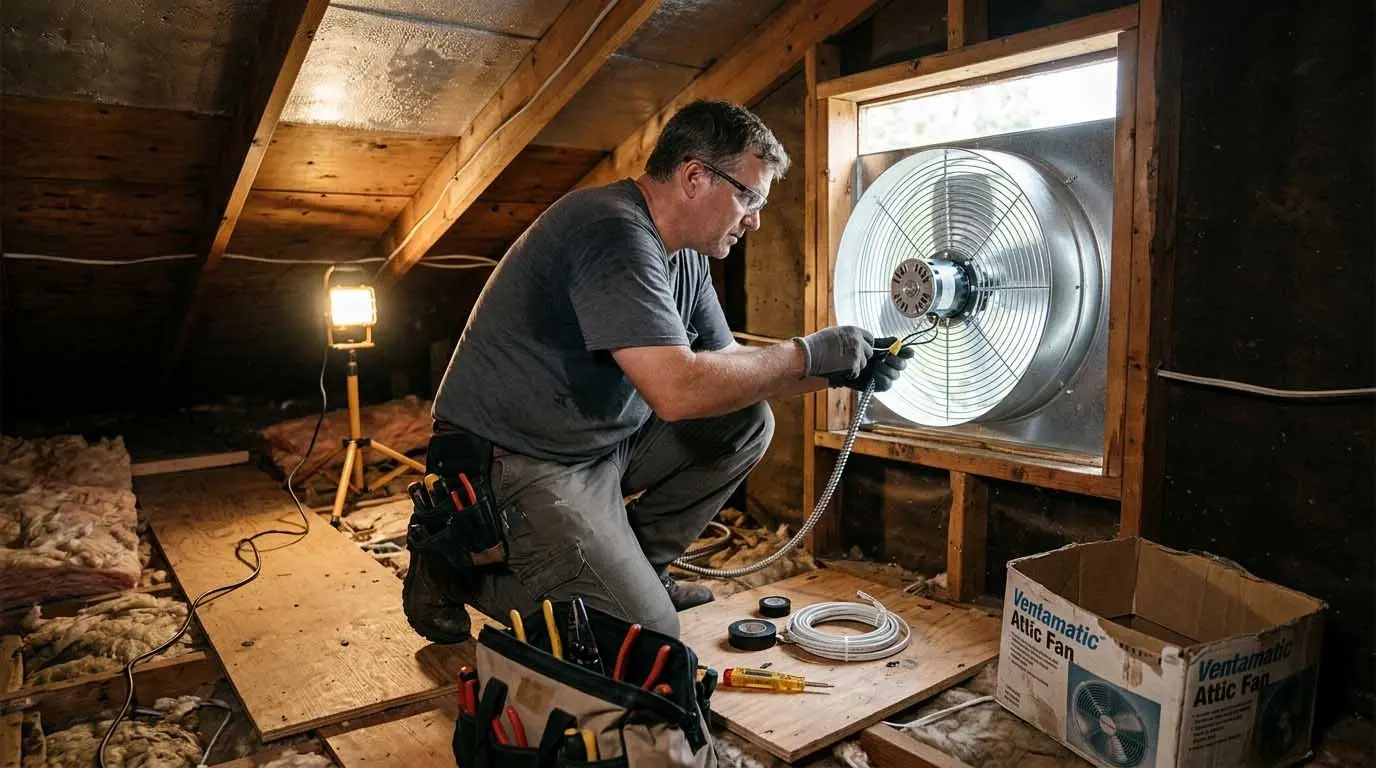
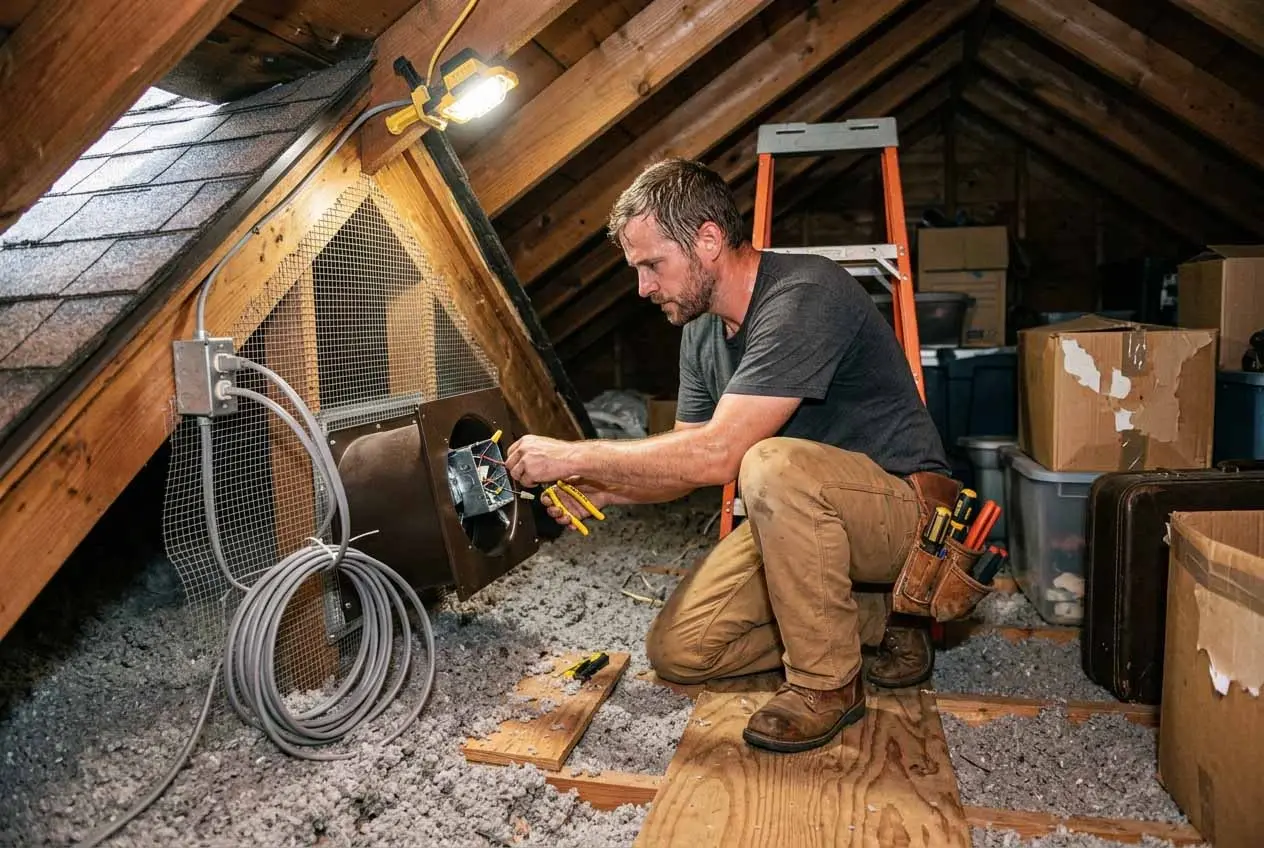
Walk into any attic in Westside Park, Gainesville during July and the heat hits like an oven. Dark shingles absorb sunlight all day, turning enclosed spaces into superheated chambers. That 150-degree air does not stay upstairs. It moves through ceiling cracks, recessed light housings, and unsealed attic hatches, forcing your air conditioner to work overtime just to keep the second floor livable. Our organization breaks this cycle with professional attic fan installation, roof mounted attic fan, and solar attic fan installation that removes superheated air before it migrates into your living space.
Hidden Costs of an Unventilated Attic
Most homeowners in Westside Park, Gainesville do not realize how much an overheated attic costs them until the fan goes in. Our team sees these problems every summer:
- Upstairs bedrooms that stay 5 to 10 degrees warmer than the main floor even with AC running constantly
- Cooling bills 15 to 20 percent higher than identical homes on the same street
- Asphalt shingles curling at the edges and losing granules years before their rated lifespan
- HVAC ductwork running through the attic absorbing heat and delivering lukewarm air
- Winter condensation on roof sheathing from inadequate ventilation (mold and rot starting silently)
An attic fan installation does not fix every problem, but it addresses all of these. Removing hot air at the source allows your insulation to work as designed. Reducing attic temperature from 150°F to 110°F cuts heat transfer into living spaces dramatically. Proper summer ventilation also preserves winter ventilation effectiveness, preventing the moisture buildup that rots framing.
Time Estimates for Attic Fan Services
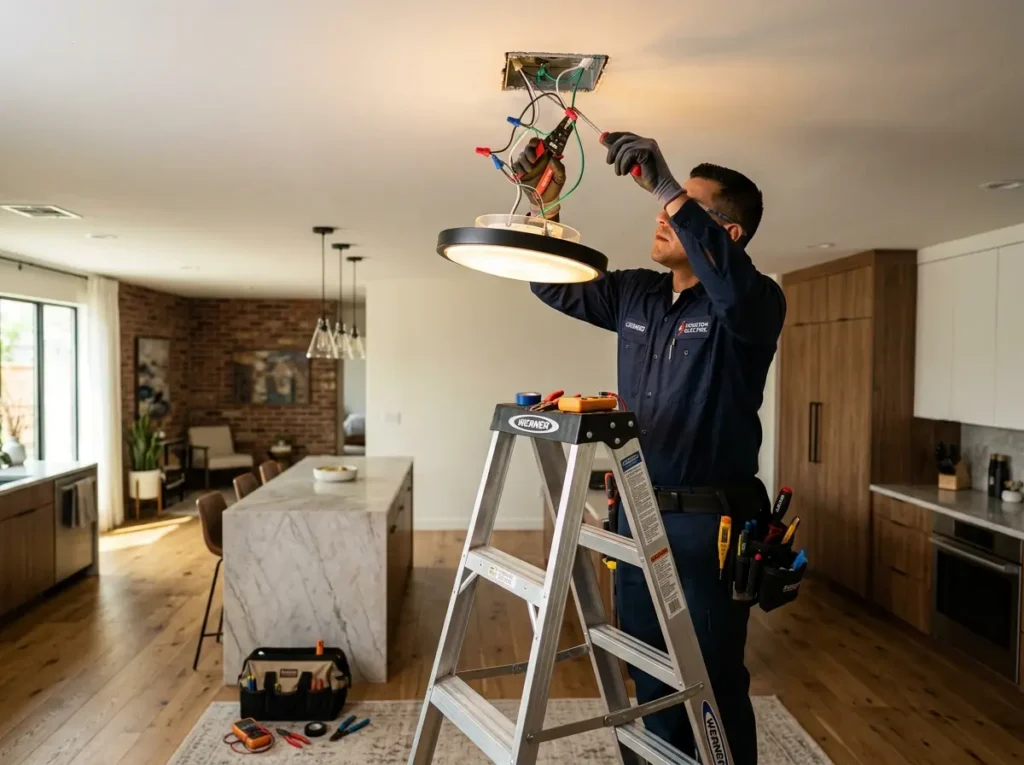
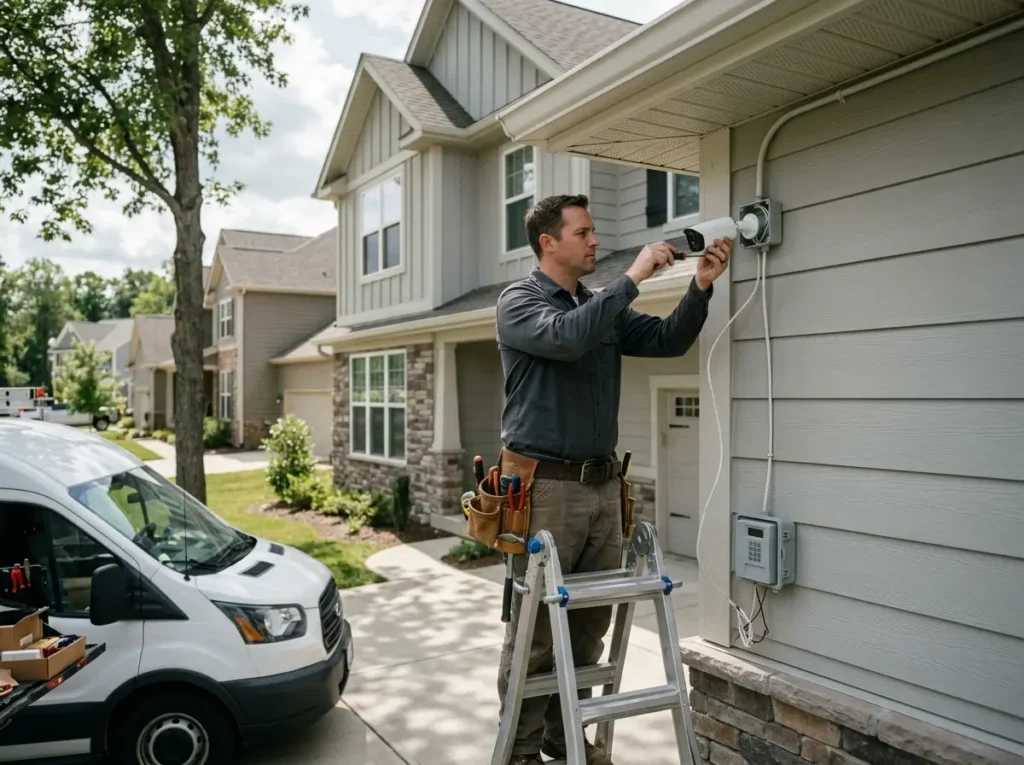
Our organization provides realistic timelines so you know what each job requires. A gable attic fan installation replacing an existing passive vent in the gable wall takes 2 to 3 hours including fan mounting, wiring to a nearby power source, and thermostat installation. Solar attic fan installation on an existing roof with good southern exposure requires 3 to 5 hours including roof penetration, flashing installation, and solar panel connection (no wiring to the house). Roof mounted attic fan installation with new electrical wiring from a nearby switch or from the attic pull chain requires 4 to 6 hours including structural framing adjustment, roof flashing, and circuit connection. Attic fan thermostat installation for an existing fan that lacks automatic control takes 45 to 90 minutes including sensor placement and wiring. Attic fan sizing and CFM calculation is always performed before any installation — each fan must match attic square footage (typically 1 CFM per square foot of attic floor area). Powered attic ventilator replacement (removing an old failed unit and installing a new one in the same opening) takes 2 to 4 hours. Attic fan humidistat installation for winter moisture control adds 30 minutes to a thermostat upgrade.
Beyond Any Fan – Balanced Ventilation, Proper Intake, and Correct Sizing
Many homeowners in Westside Park, Gainesville assume that bigger fans work better. Our organization knows that attic ventilation requirements demand balance, not just brute force. A powered attic fan installed without adequate intake vents (soffit vents or low gable vents) pulls conditioned air from your living spaces through ceiling leaks — literally sucking expensive cooled air into the attic and exhausting it outdoors. This negates any benefit and increases energy use. We never install an attic fan without first verifying that existing intake venting meets code minimums (1 square foot of net free vent area per 300 square feet of attic floor when using a powered fan). Attic fan sizing and CFM calculation follows a simple but critical formula: multiply attic floor square footage by 1.0 for moderate climates, or higher for extreme heat regions. Oversized fans short-cycle (run briefly, shut off, repeat) which reduces efficiency. Undersized fans never catch up to solar heat gain. For clients choosing solar attic fan installation, we confirm roof orientation and shading — a fan on a north-facing slope under a tree is worthless. For roof mounted attic fan installation, we use proper flashing and sealing to prevent water entry, unlike handymen who rely on caulk alone. For gable attic fan installation, we mount fans securely to studs, not just through sheathing, eliminating vibration noise that drives homeowners crazy. The question of whole house fan vs attic fan is common. A whole house fan pulls air from open windows through living spaces and into the attic — great for evening cooling but ineffective for daytime attic heat removal. An attic fan specifically targets roof cavity heat. Many homeowners benefit from both: attic fan for summer daytime heat, whole house fan for evening flush cooling. We install whichever serves your needs.
Every attic fan installation concludes with thermostat calibration, intake vent verification, noise testing (units should be barely audible on the floor below), and homeowner demonstration of manual or automatic controls. Our reputation in Westside Park, Gainesville rests on attics that stay within 20 degrees of outside temperatures — not 50 degrees hotter. Schedule your attic fan consultation today and let your second floor feel like the first floor again.