
Smoke & Carbon Monoxide Detector Installation in Lake Rolling Hills, Lakeland – The 10-Minute Upgrade That Saves Lives
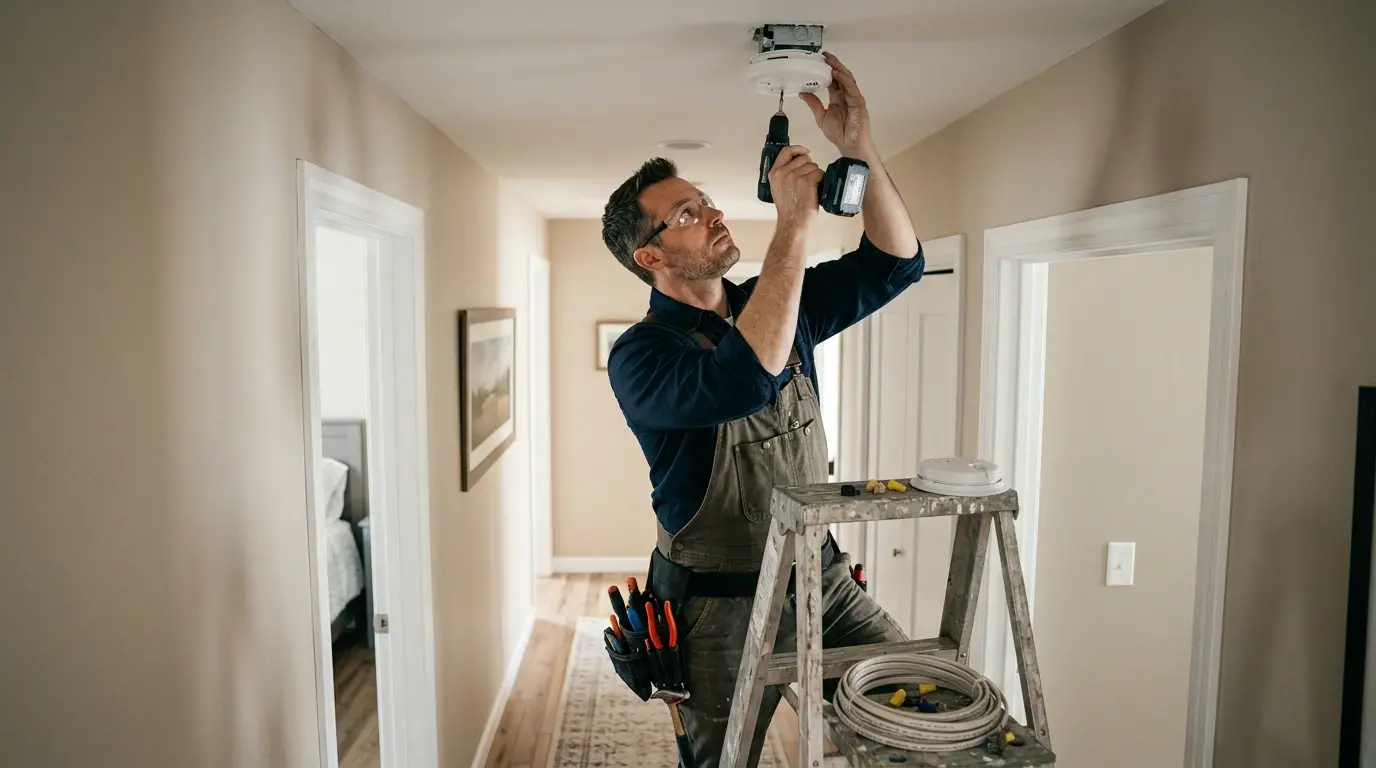
A chirping smoke detector is not an annoyance. It is a warning that your safety system is failing. Worse, many homes in Lake Rolling Hills, Lakeland have detectors past their 10-year expiration date with sensors that no longer respond to smoke. Others have battery-only units where hardwired smoke detector installation is required by current code. And carbon monoxide? This odorless gas kills without warning while families sleep. Our organization installs life-saving protection correctly: smoke detector installation in every required location, CO detector installation on every level, and interconnected smoke alarms that wake everyone at once.
Why Most Homes in Lake Rolling Hills, Lakeland Are Not Fully Protected
Walk through any neighborhood and you will find detectors mounted too high, too close to kitchens, or missing entirely from hallways. Our team corrects these dangerous gaps daily:
- Smoke detector placement code requires alarms inside every bedroom, outside each sleeping area, and on every level including basements
- CO detector installation must be placed near sleeping areas and on each floor (many homes have none)
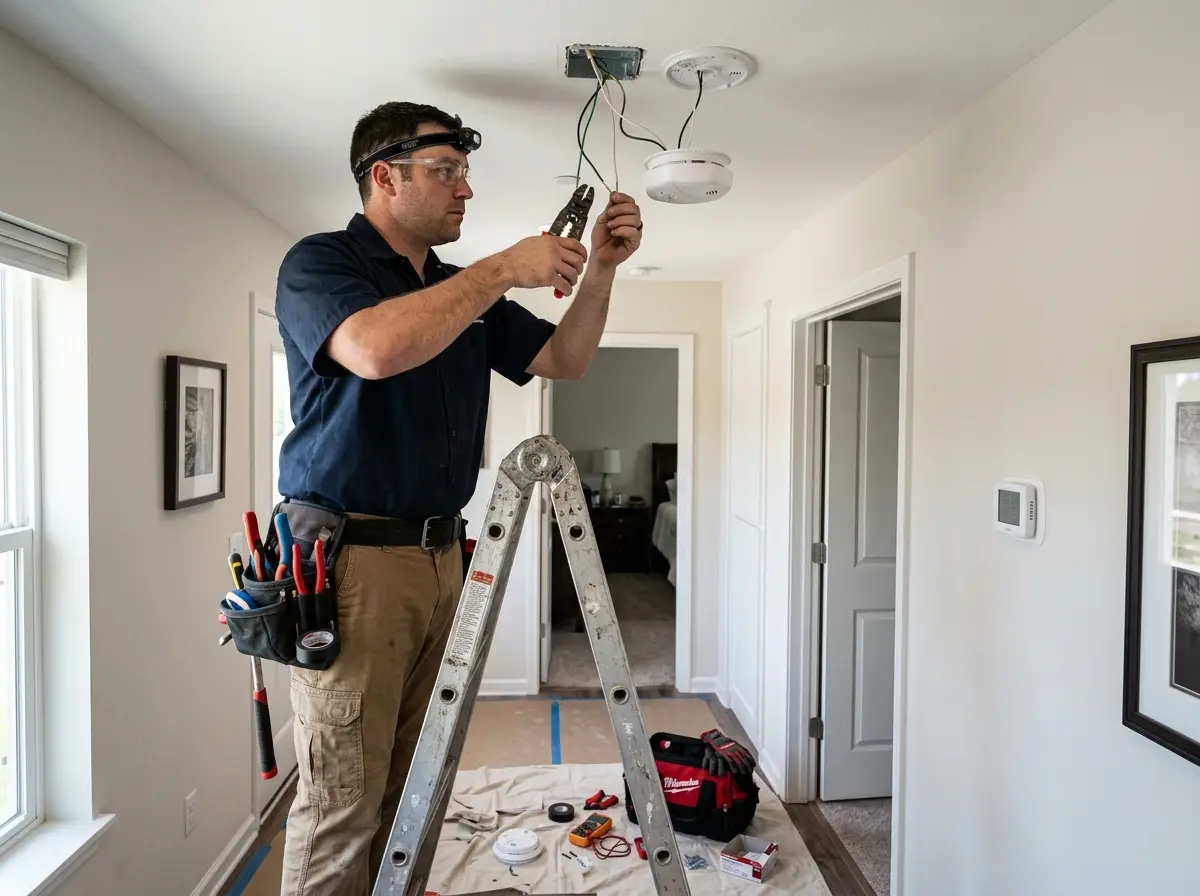
- Hardwired smoke detector installation is mandatory in most jurisdictions for new construction or major renovations
- Interconnected hardwired alarms mean one fire triggers every alarm — battery-only units cannot do this without wireless interconnect
- Combination smoke and CO detector units save space but must be installed with correct orientation and spacing
Smoke detector beeping replacement is often misunderstood. A chirp every 30 to 60 seconds usually means a low backup battery. A longer chirp pattern or continuous beeping may indicate end-of-life (after 10 years) or a sensor contamination issue. Our organization tests every detector before leaving because a false-sensing unit is almost as dangerous as no detector at all.
How Long Detector Installation and Replacement Takes
Our organization provides honest timelines so you know what to expect. A single smoke detector installation (battery-only) takes 10 to 15 minutes including mounting and testing. Hardwired smoke detector installation to replace an existing wired unit takes 15 to 20 minutes per detector. First Alert alarm installation for a home needing 5 to 6 new battery-powered units runs 45 to 75 minutes. Interconnected hardwired alarms for a typical 2,500 square foot home (6 to 8 detectors) requires 1.5 to 2.5 hours including wiring verification, interconnect signal testing, and battery backup installation. Nest Protect installation for smart detectors takes 20 to 30 minutes per unit plus app setup (additional 10 to 15 minutes per homeowner). A full combination smoke and CO detector installation covering all code-required locations in a two-story home with basement typically runs 2 to 3 hours.
Beyond Basic Detectors – Smart Upgrades and Code Compliance
Many homeowners in Lake Rolling Hills, Lakeland do not realize that smoke detector placement code has changed significantly in the last decade. Older homes with detectors only in hallways fail modern requirements. Our organization follows NFPA 72 standards: detectors mounted at least 4 inches from wall-ceiling intersections, never within 10 feet of cooking appliances unless they have photoelectric sensors or silence features, and always with carbon monoxide detectors on every floor including basements and attics used as living space. For clients wanting modern convenience, Nest Protect installation adds smartphone alerts, low-chamber warnings before full alarms, and pathway lighting during nighttime emergencies. First Alert alarm installation remains a trusted choice for homeowners needing reliable, affordable protection without smartphone features. Interconnected hardwired alarms are our strongest recommendation because they create a unified system. When one detector senses smoke or CO, every alarm in the house sounds — giving your family maximum warning time to escape. For homes without existing wiring, we install wireless interconnected systems that meet code requirements without tearing open walls.
Every detector installation concludes with location verification using code checklists, button testing, interconnect testing (for linked systems), battery installation dated and recorded, and homeowner demonstration of silence and test features. Our reputation in Lake Rolling Hills, Lakeland rests on systems that will wake your family during a real emergency — not chirp harmlessly while danger builds. Schedule your detector installation assessment today and close the safety gaps your home has likely had for years.