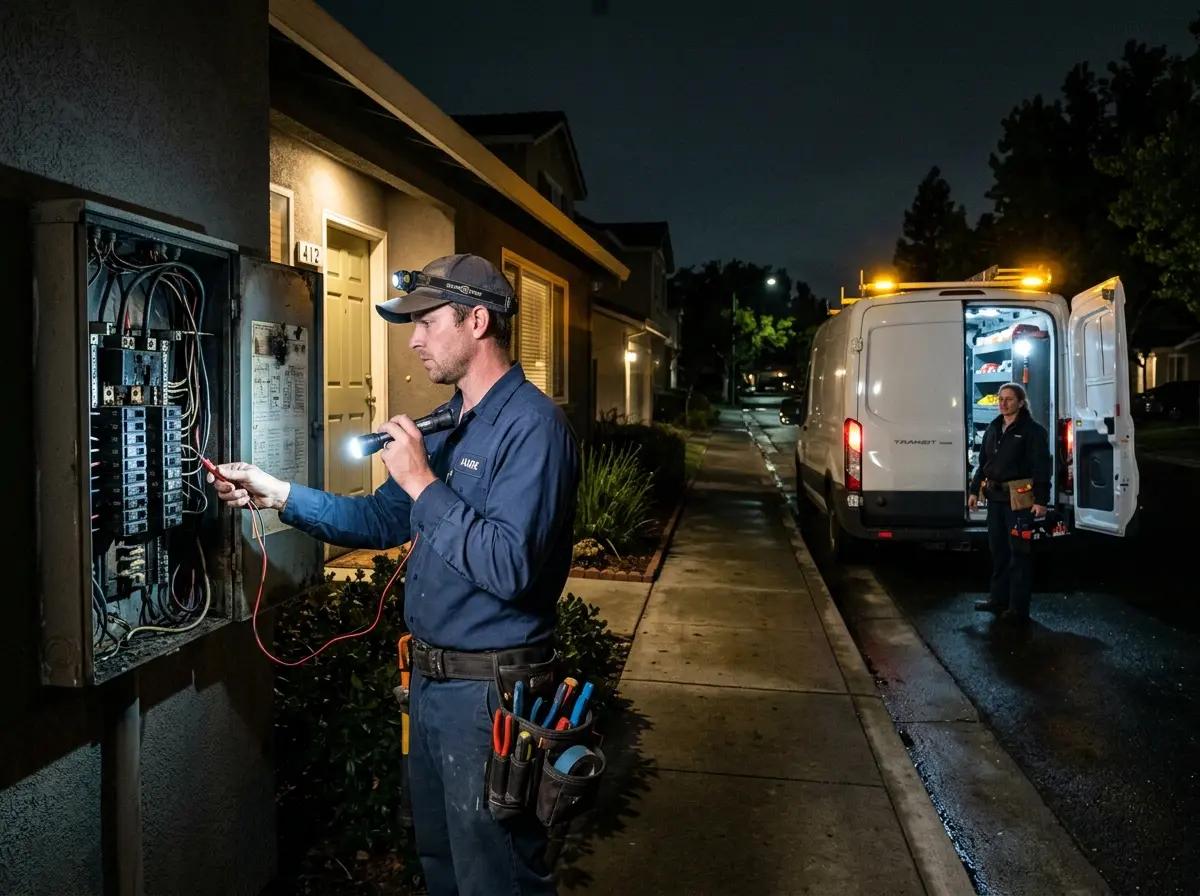
When Your Palm Bay Home Starts Whining, Crackling, or Smelling — Do Not Wait
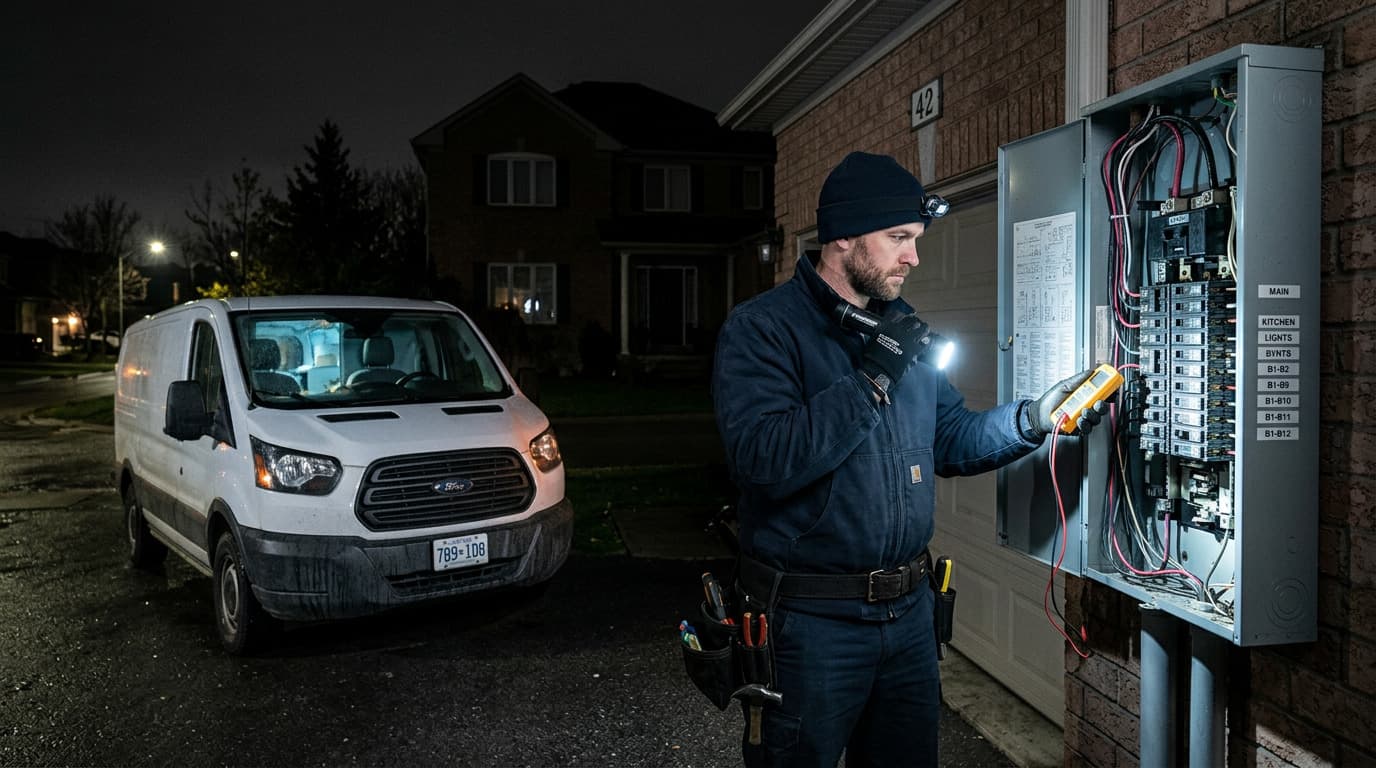
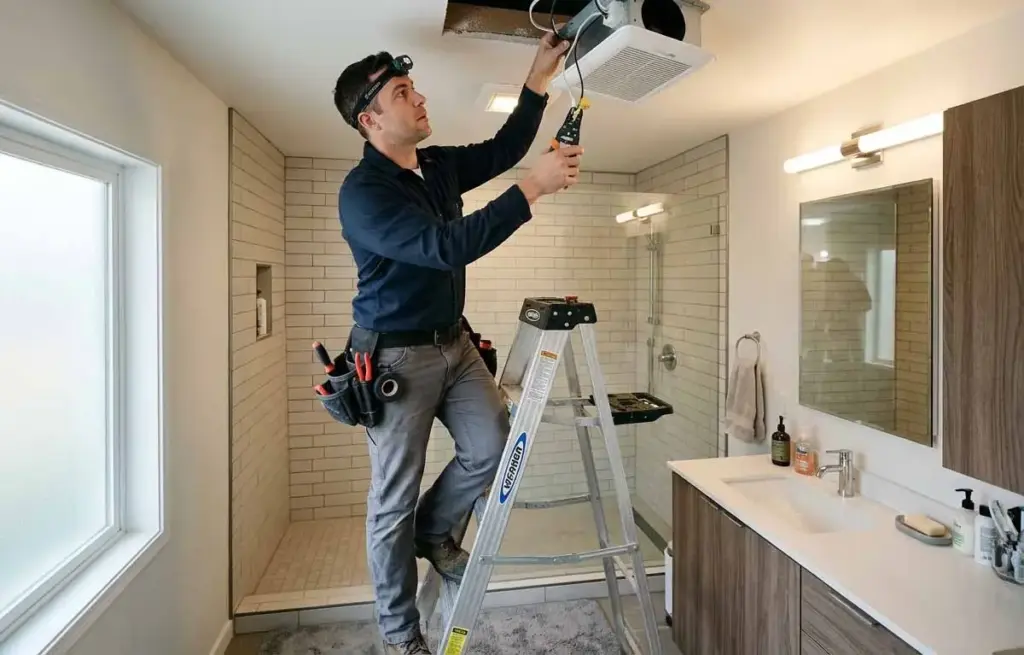
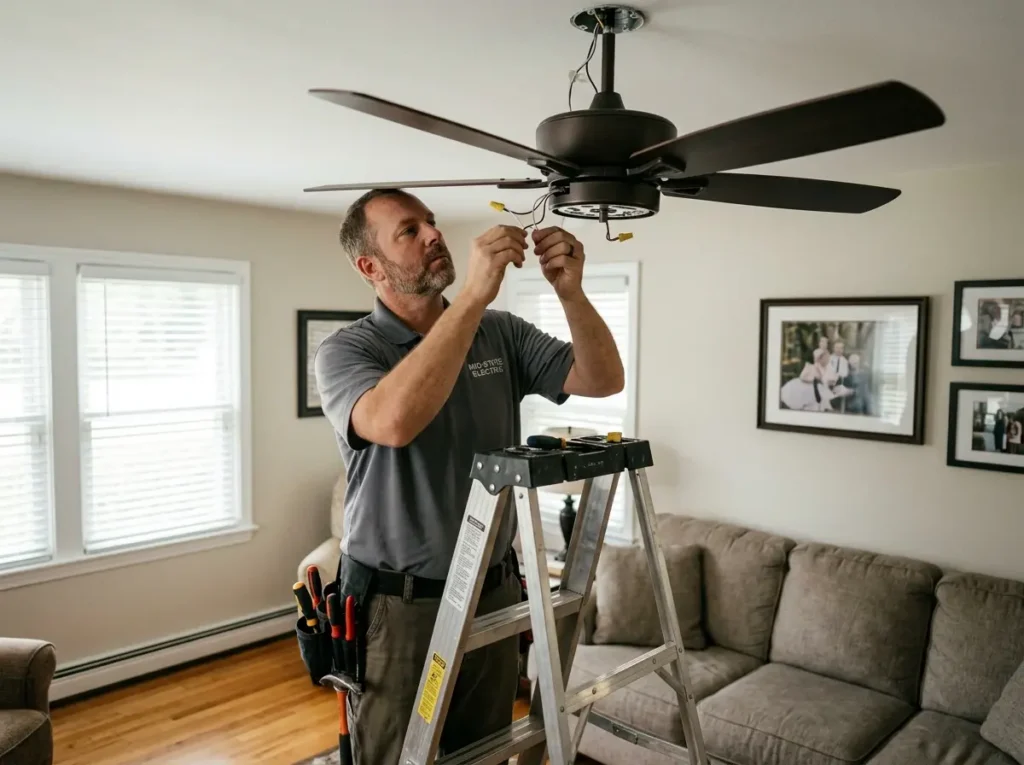
A crackling sound from outlet is not just annoying — it is the sound of an electrical arc inside your wall. That arc generates temperatures higher than 3,000°F, enough to ignite wood studs and insulation within minutes. Our emergency electrical services prioritize these life-threatening calls. We respond to homes across Palm Bay with no power in part of house, sparking outlet repair needs, and circuit breaker tripping repeatedly. We diagnose burning smell from panel conditions that indicate failing breakers, melted bus bars, or loose utility connections. For homes with partial power loss — lights dim in some rooms but bright in others — we identify whether the problem is a lost neutral (dangerous to appliances) or a tripped subpanel feeder.
Six Emergency Scenarios We Solve Every Month in Palm Bay
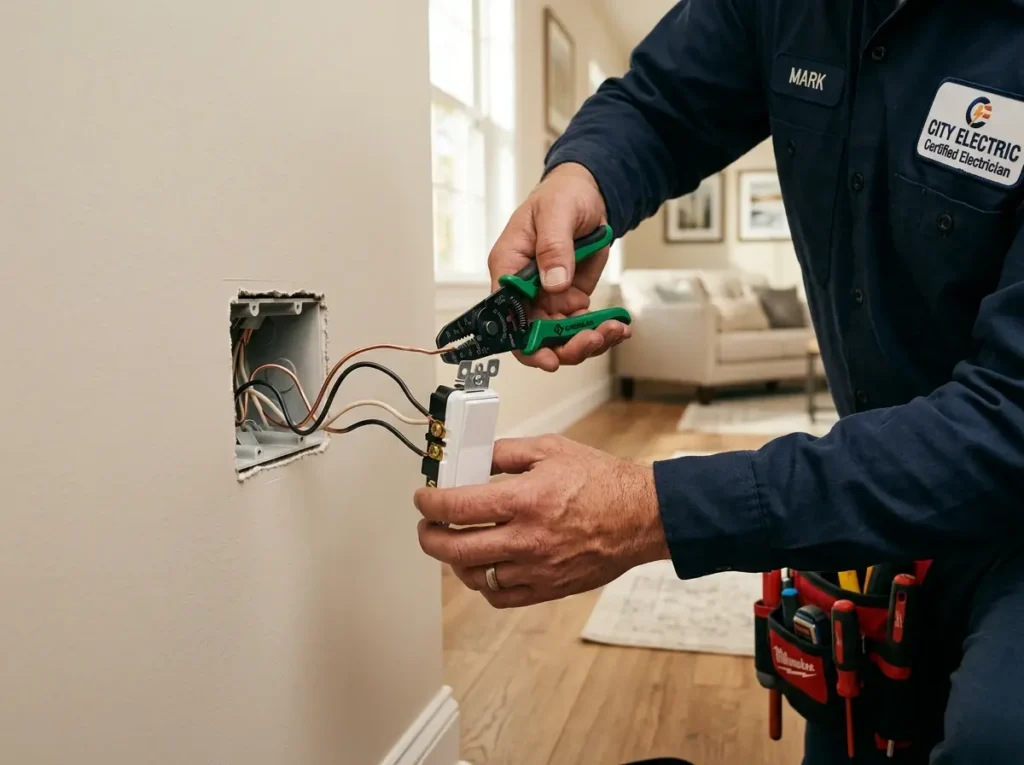
First, no power in part of house but rest of home works fine. Often a tripped GFCI outlet that has gone unnoticed, a tripped subpanel breaker, or a failed connection in an attic junction box. We trace the circuit and restore power (30 minutes to 2 hours). Second, circuit breaker tripping repeatedly immediately after reset. Short circuit somewhere on that branch — often a damaged appliance cord, a nail through a wire, or a failed outlet. We disconnect the circuit, find the fault with a circuit tracer, and repair (1-3 hours). Third, crackling sound from outlet or switch. Arcing inside the box — we replace the device, inspect the wiring for damage, and torque all connections (45 minutes). Fourth, burning smell from panel. Most common cause: a loose main breaker connection or a failing breaker that has overheated. We open the panel, thermal scan every connection, tighten lugs, and replace any damaged breakers (1-2 hours). Fifth, partial power loss where lights flicker and appliances run strangely. Nearly always a lost neutral — the utility neutral connection has failed, causing voltage to swing between 60V and 180V. We test voltages, tighten the utility connection if safe, or call the utility for emergency repair (1 hour diagnosis, repair depends on utility response). Sixth, overhead service repair after a storm tears down your weatherhead or mast. We secure the wires, install temporary supports, coordinate with the utility, and schedule permanent repair (2-4 hours for temporary fix, 4-6 hours for permanent).
Our emergency response process in Palm Bay focuses on stabilization before permanent repair:
- Phone assessment — we ask specific questions to identify life-threatening hazards (smoke, arcing, water contact)
- Arrival within 60-90 minutes for urgent calls (crackling, burning smell, partial power loss with refrigerator off)
- Immediate hazard mitigation — we turn off the affected circuit or main breaker if needed
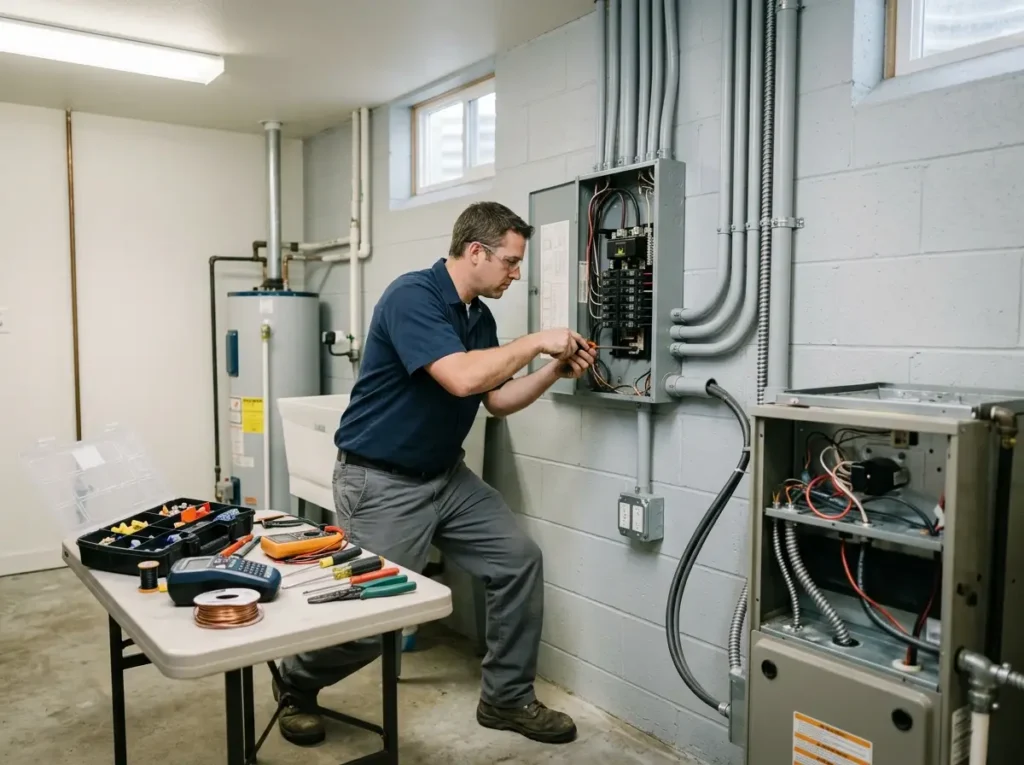
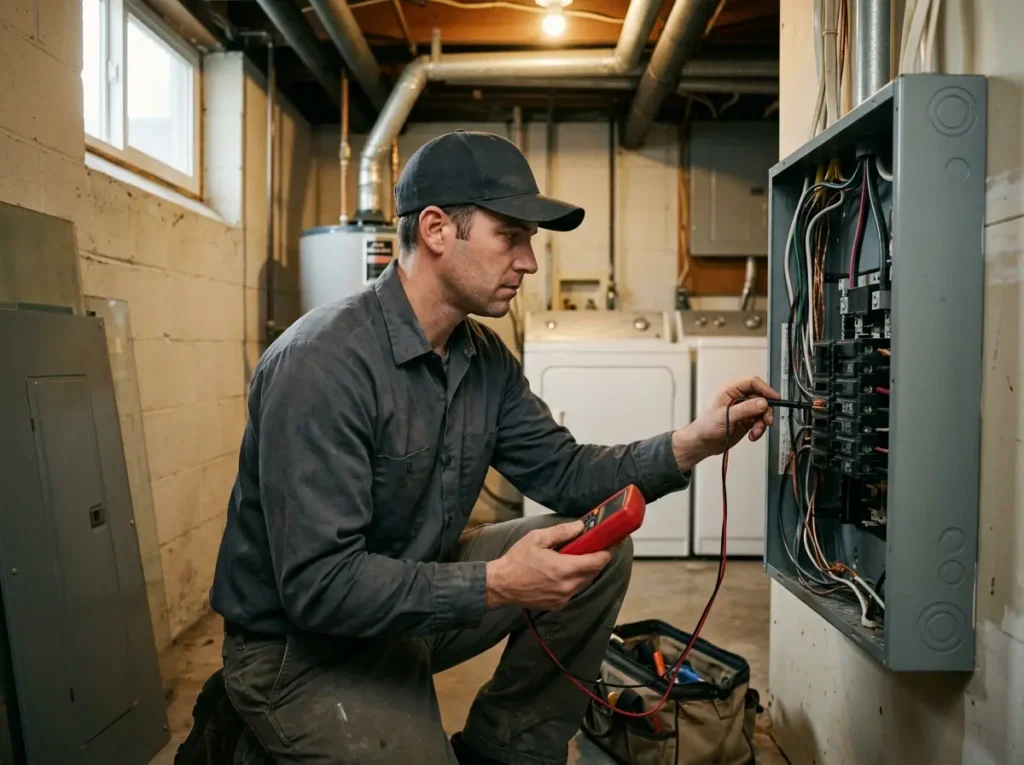
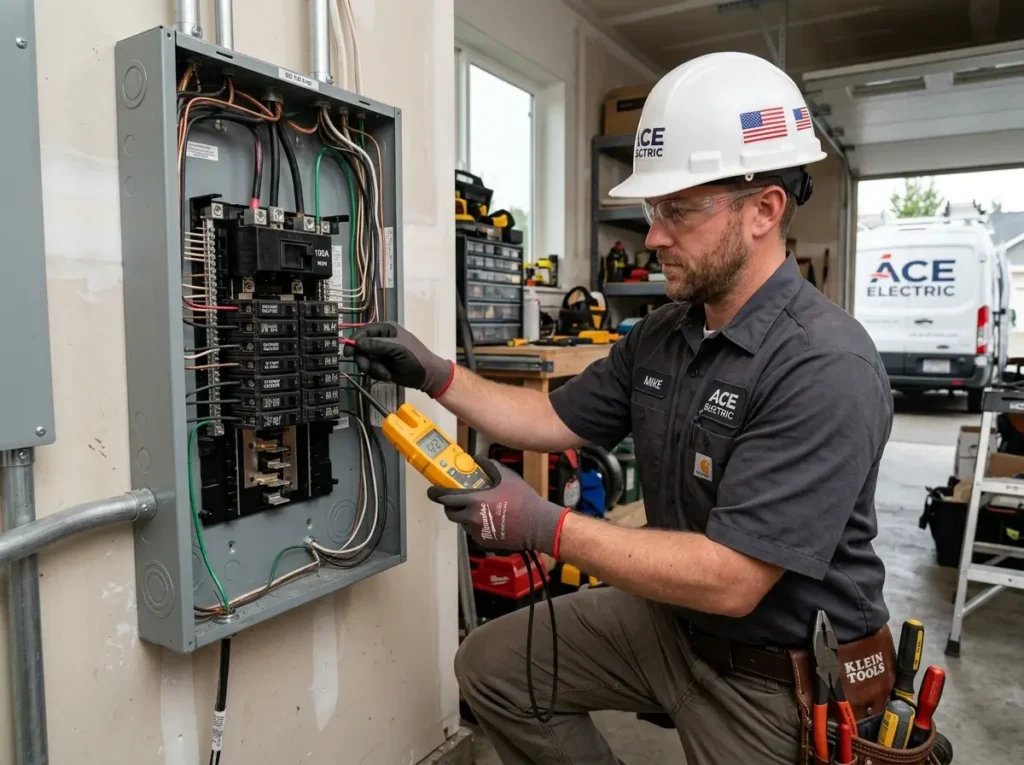
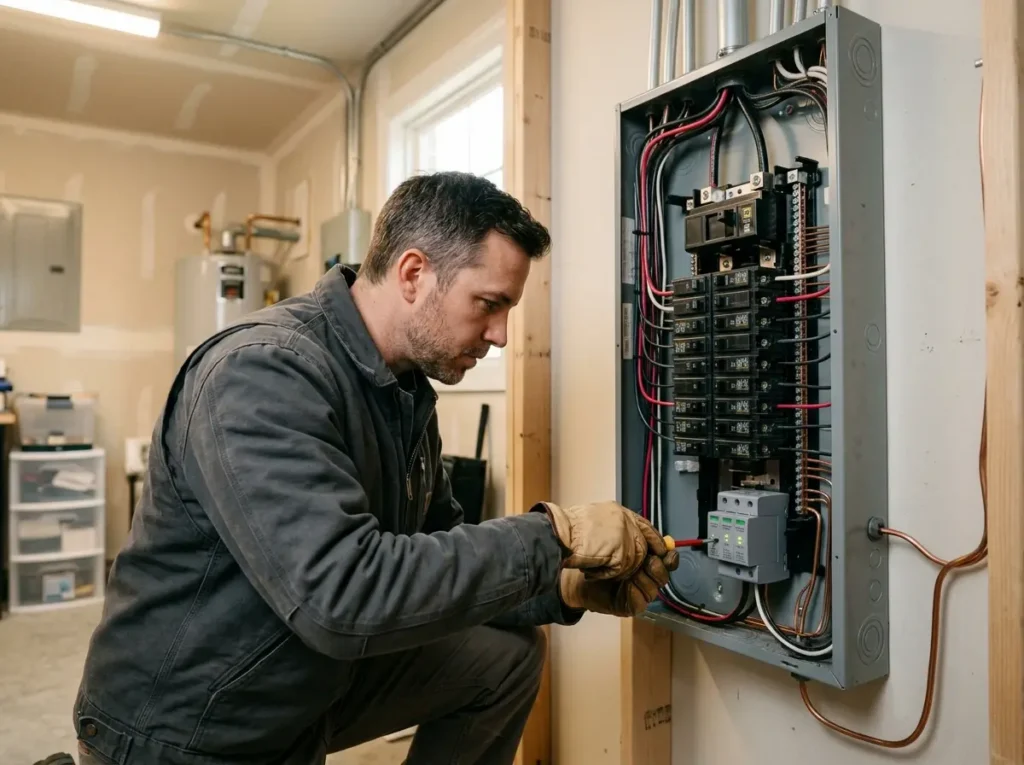
- Diagnosis — thermal imaging, voltage testing, circuit tracing to find the root cause
- Temporary fix — we restore power safely, even if permanent repair requires a return visit with parts
- Permanent repair quote — we provide a written estimate for the full fix, which you can schedule for a non-emergency time
How Long Does Emergency Electrical Repair Take?
A sparking outlet repair takes 30 to 60 minutes from arrival to completion. We turn off the circuit, open the box, remove the damaged outlet, inspect the wires for burn damage, install a new commercial-grade outlet, torque every screw, and restore power. If the wires themselves are burned (insulation melted), we cut back to undamaged section — adding 15-30 minutes. A circuit breaker tripping repeatedly diagnosis takes 1 to 2 hours if the problem is a shorted appliance or overload. We unplug everything on the circuit, try to reset the breaker. If it holds, we plug devices back one by one until the fault appears. If the breaker still trips with nothing plugged in, the problem is in the wiring — a nail through Romex or a failed outlet. We trace the circuit with a tone generator, locate the fault, cut out the damaged section, and splice in new wire (2-4 hours). Burning smell from panel diagnosis takes 1 to 2 hours. We open the panel, thermal scan every connection. If we find a hot breaker or lug, we tighten the connection. If the breaker is damaged, we replace it (30 minutes). If the main breaker lugs are loose, we tighten them (30 minutes) but if the bus bar is melted, we recommend panel replacement (scheduled separately, not an emergency repair). No power in part of house with no tripped breakers takes 30 minutes to 2 hours. We check GFCI outlets first (90% of cases — a tripped GFCI in a bathroom or garage kills power to downstream outlets). If no tripped GFCI, we check subpanels, then trace the circuit back to the panel looking for a failed connection. Partial power loss with flickering lights and strange appliance behavior is a lost neutral diagnosis. We measure voltage at the panel: if we see 60V on one leg and 180V on the other, the utility neutral is lost. We call the utility immediately — they own the neutral connection to the transformer. Our role is to turn off the main breaker to protect your appliances until the utility arrives. That takes 30 minutes including utility coordination. The most time-consuming emergency is overhead service repair. If the weatherhead is ripped off and wires are down, we secure the area, turn off the main breaker, and call the utility to de-energize the drop. We then install a temporary mast or cap the service, usually 2-4 hours. Permanent repair (new mast, weatherhead, and service entrance cable) takes 4-6 hours and requires a permit and utility reconnection — often scheduled for the next day. We always provide a written emergency report before leaving, documenting what we found, what we fixed temporarily, and what permanent repair is needed.
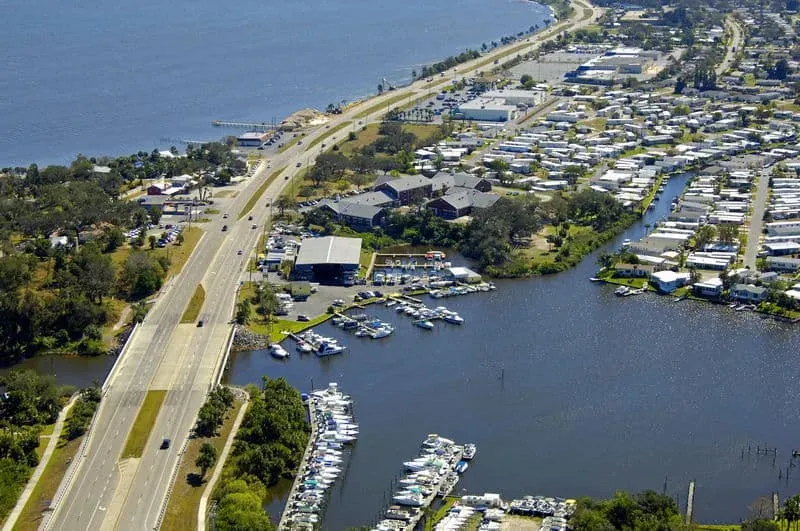
Why Partial Power Loss Is More Dangerous Than a Complete Outage
A complete outage is annoying but safe. You lose power everywhere, so you know something is wrong. Partial power loss is insidious. Some lights work fine. The microwave runs but sounds strange. The refrigerator compressor cycles but never gets cold. This is the signature of a lost neutral — the most dangerous residential electrical emergency. In a normal 120/240V system, the neutral wire carries the imbalance between the two 120V legs. When the neutral breaks, voltage on each leg floats based on whatever loads are connected. One leg might rise to 180V while the other drops to 60V. Your 120V appliances on the 180V leg receive 50% more voltage than designed — motors overheat, electronics fail, compressors seize. Your appliances on the 60V leg may not run at all, or may run inefficiently and overheat. We treat every partial power loss call as urgent, because every minute the lost neutral exists, your appliances are degrading. Our diagnosis is simple: we measure voltage between each hot leg and neutral at your panel. If the voltages are not within 3% of 120V (115V to 125V), we suspect a lost neutral. We then measure voltage between the two hot legs — should be 240V ± 5%. If we see uneven voltages (60V/180V), we call the utility immediately. We also turn off your main breaker to stop the damage, explain what is happening, and wait with you until the utility arrives. For crackling sound from outlet, we educate Palm Bay homeowners: the sound is from loose connections arcing. The arc heats the wire and the outlet until eventually the connection fails completely or ignites surrounding material. If you hear crackling, stop using that outlet, turn off the circuit if safe, and call for emergency service. For burning smell from panel, we explain that overheating components produce a distinct fishy or plastic odor. That smell means something inside your panel is already melting. Turn off the main breaker if you can do so safely, and call immediately. For circuit breaker tripping repeatedly, we help homeowners understand the difference between overload (trips after 5-10 minutes of use) and short circuit (trips instantly as soon as you flip the breaker). Overload means you have too many appliances on one circuit — move some to other outlets. Short circuit means there is a direct hot-to-neutral or hot-to-ground connection — call us because that is a fire hazard. Every emergency electrical service call we complete includes a 15-minute safety briefing: we explain what caused the problem, how to recognize it in the future, and what to do while waiting for help. We also provide a magnetic card for your refrigerator with our emergency number and a checklist: crackling → turn off circuit, burning smell → turn off main breaker, partial power loss → call us and unplug sensitive electronics.
Call our emergency team in Palm Bay now. Do not sleep with a crackling outlet or a burning smell in your home. We will come immediately, make it safe, and explain everything.