

Why Your St. Petersburg Home's Breakers Keep Tripping (And Why Replacing Them Never Works)
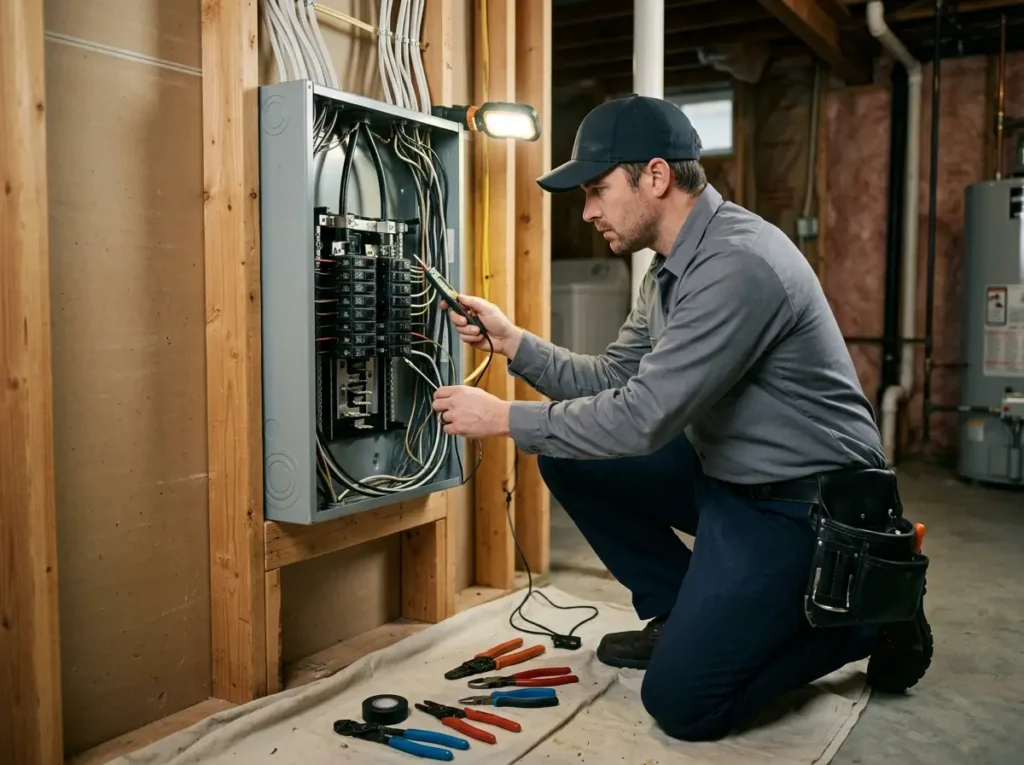
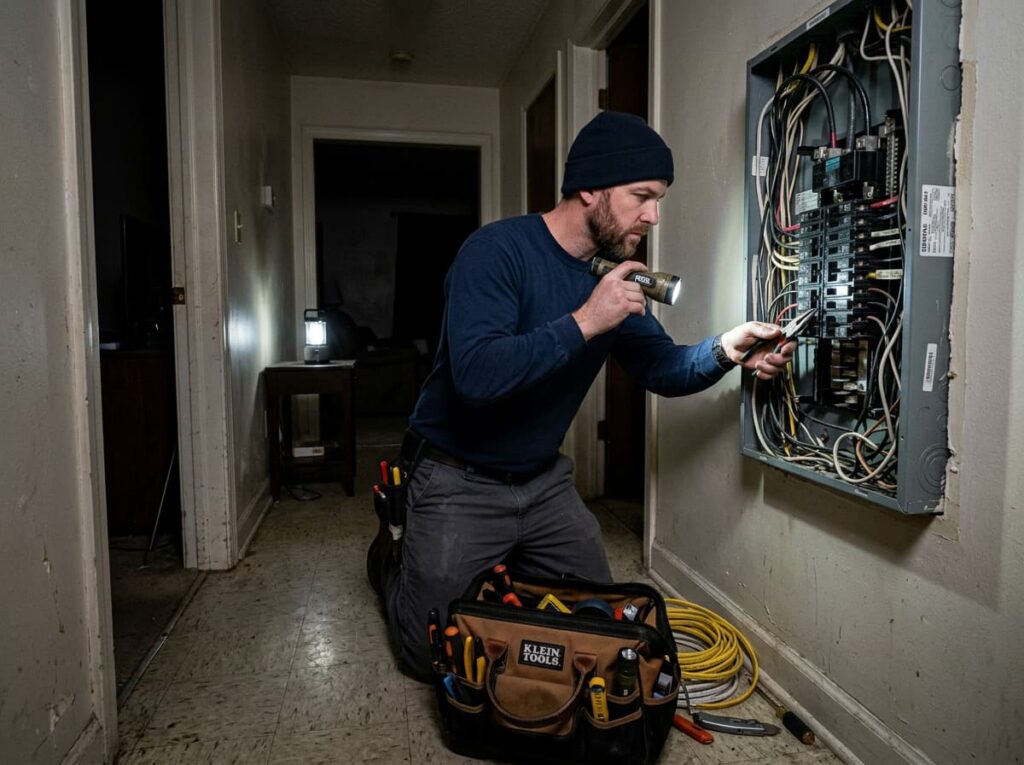
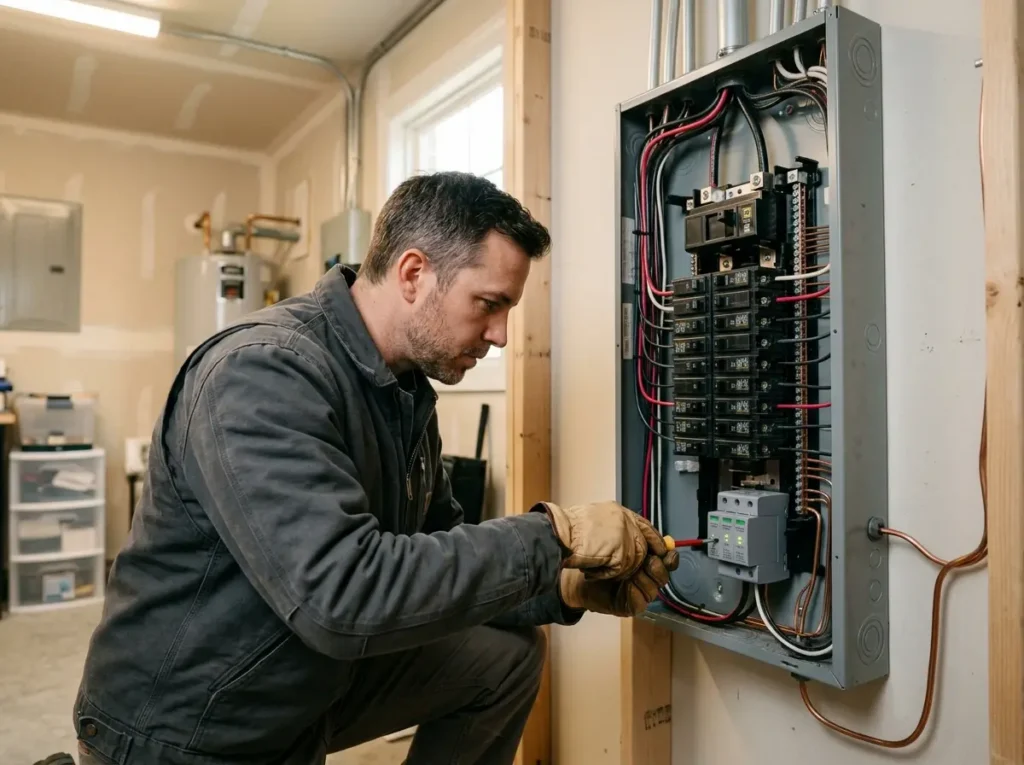
You replaced the breaker twice. The kitchen still trips when you use the toaster and microwave together. The living room AFCI still trips randomly at 2 AM. The GFCI in the bathroom trips every time it rains. Our electrical troubleshooting and circuit breaker troubleshooting services find the root cause — not just swap parts. We perform a home electrical panel inspection to identify overloaded circuit finder conditions, bad connections, and dangerous panel brands (Federal Pacific, Zinsco). Using arc fault diagnosis, we determine whether your AFCI trips are caused by damaged wires, shared neutrals, or defective appliances. Our GFCI trip troubleshooting isolates nuisance tripping to specific devices or wiring faults.
Six Reasons Your Breakers Keep Tripping — And How We Fix Each
Reason one: overloaded circuit finder confirms you are drawing 18 amps on a 15-amp breaker. Fix: move appliances to other circuits or run a new dedicated circuit (2-4 hours). Reason two: short circuit from a nicked wire where a nail pierced Romex. Fix: locate the nail with thermal imaging scan or circuit tracer, cut out damaged section, splice in new wire (2-6 hours). Reason three: ground fault where hot wire touches metal box. Fix: open the box, find the pinch point, tape or replace the wire (1-2 hours). Reason four: failing AFCI breaker — they do fail after 10-15 years. We test with arc fault diagnosis calibrator; if the breaker fails the test, replacement takes 30 minutes. If it passes but still trips, the problem is on the circuit. Reason five: shared neutral on AFCI circuit — a common DIY mistake where neutrals from two circuits are tied together. We trace the circuit, separate the neutrals, and install a two-pole AFCI if required (2-4 hours). Reason six: moisture in outdoor GFCI or bathroom GFCI from failed seal. We replace the weatherproof cover, seal the box, and replace the GFCI (1-2 hours).
Our electrical safety inspection and troubleshooting process in St. Petersburg focuses on finding the real cause, not masking symptoms:
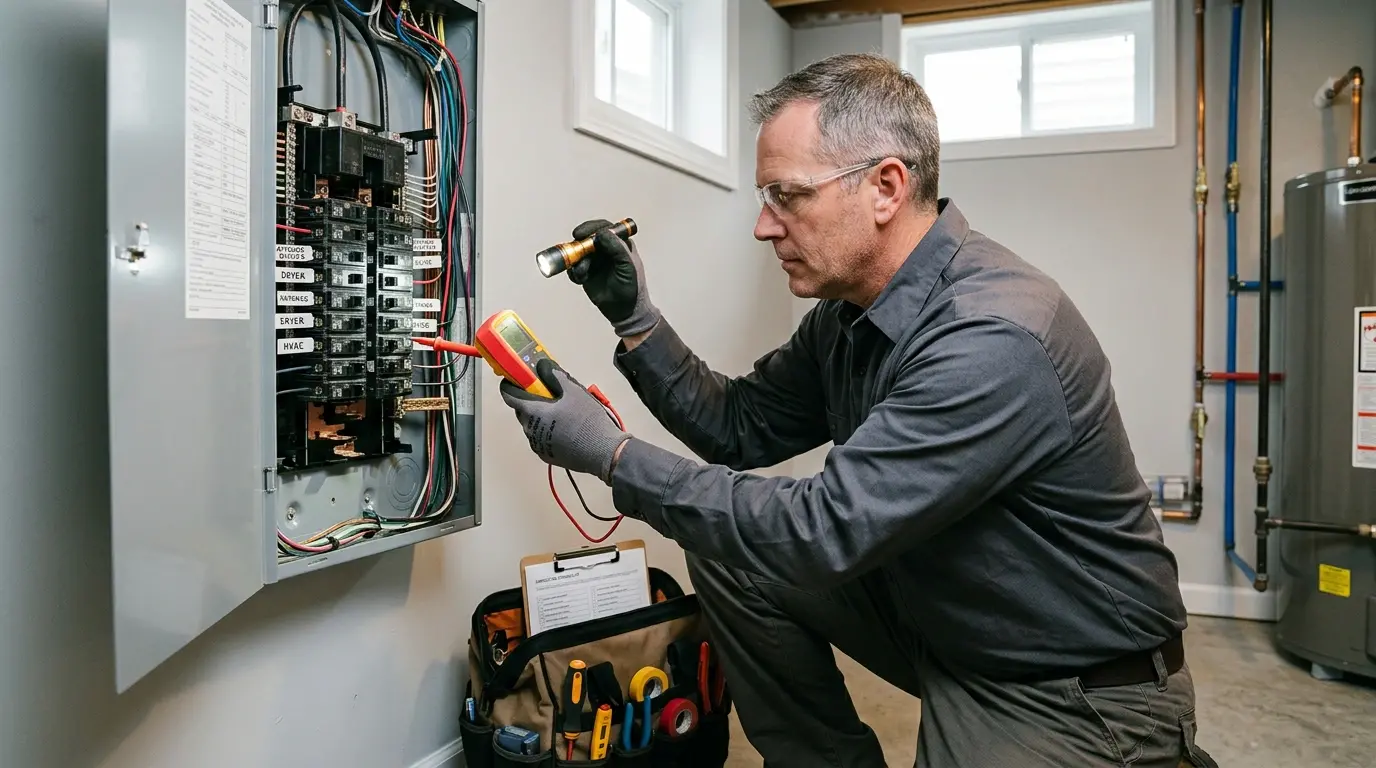
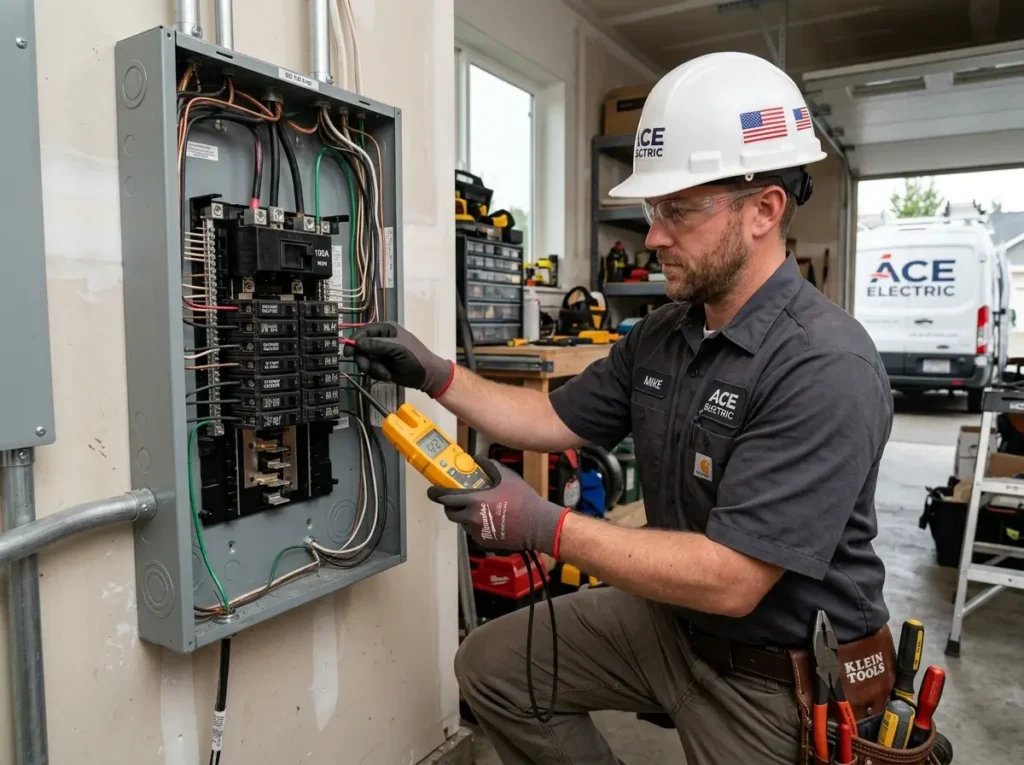
- Home electrical panel inspection — brand verification (FPE, Zinsco, Eaton, Siemens, Square D), bus bar condition, double-tap detection
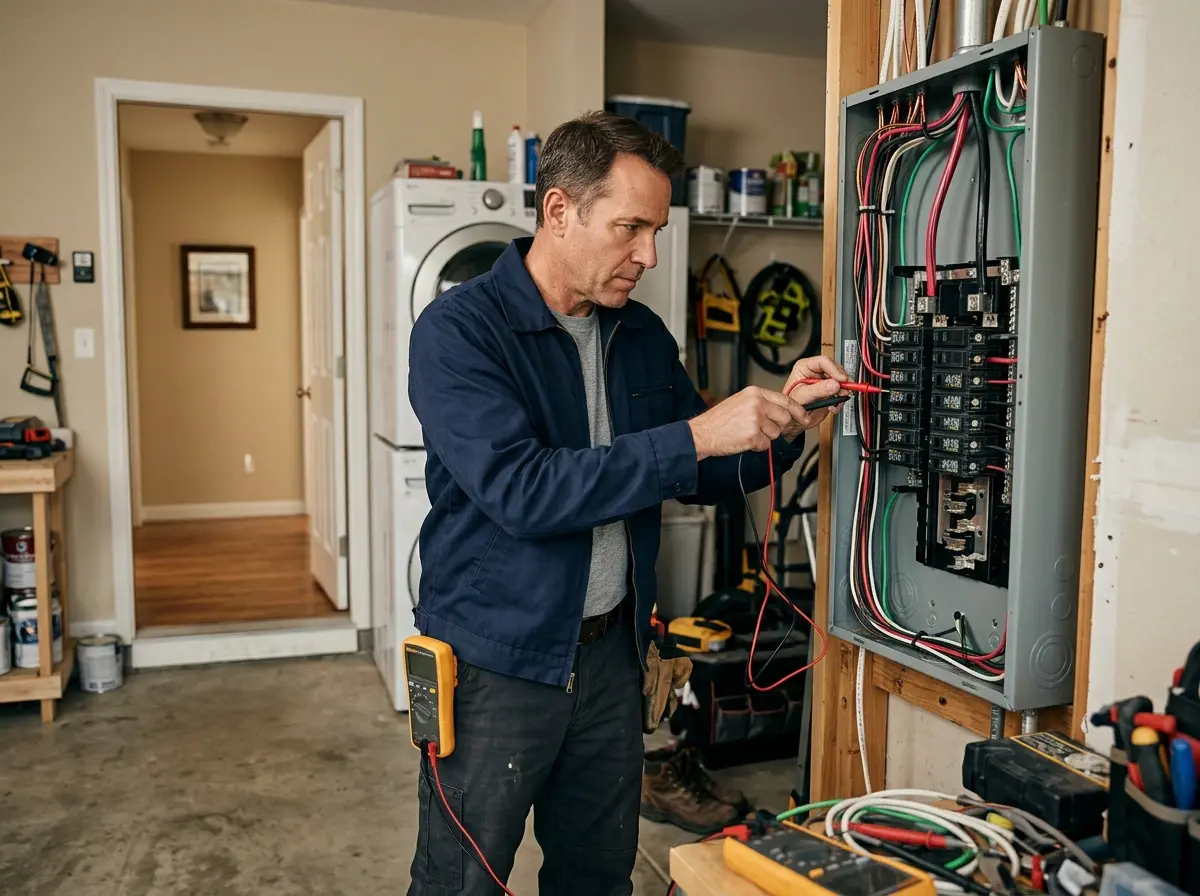
- Overloaded circuit finder measurement — clamp meter on every circuit while you run typical loads
- Arc fault diagnosis — AFCI tester with adjustable arc level to verify breaker response
- GFCI trip troubleshooting — test trip time, then isolation test to identify which device or section of circuit is leaking current
- Voltage drop testing — verify stable voltage under varying loads
- Thermal imaging scan — identify overheating components that standard testing misses
- Written report with photos, measurements, and prioritized repair recommendations
How Long Does Electrical Troubleshooting Take?
A simple circuit breaker troubleshooting for a known problem ("this breaker trips when I plug in the space heater") takes 1 hour. We measure the heater's draw (1500W = 12.5A), check the circuit's other loads, and either recommend a different outlet or a new dedicated circuit. A complex intermittent AFCI trip ("the bedroom breaker trips randomly every few days") takes 2 to 4 hours. We first verify the breaker itself with arc fault diagnosis testing (30 minutes). If the breaker passes, we disconnect sections of the circuit, test each, and often find a loose neutral in a switch box or a damaged wire behind a wall. GFCI trip troubleshooting for a bathroom outlet that trips when it rains takes 1 to 2 hours. We inspect the exterior GFCI on the same circuit (often the real cause), seal the outdoor box, and replace both GFCIs if needed. A full electrical safety inspection for a home purchase or before installing an EV charger takes 2 to 3 hours for a 2,000 square foot St. Petersburg home. This includes home electrical panel inspection, thermal imaging scan, overloaded circuit finder measurements on all circuits, and GFCI testing on every protected outlet. The most time-consuming scenario is tracing a shared neutral on an AFCI circuit. The two circuits may be on different phases, and the shared neutral creates current on the neutral that the AFCI sees as a ground fault. We must open every junction box on both circuits, trace every wire, and sometimes run a new neutral wire — 4 to 8 hours. For intermittent problems that do not occur during our visit, we install a power quality logger on your panel for 48 hours. The logger records voltage, current, and fault events. We return, download the data, and analyze. This adds a second visit (30 minutes to install the logger, 30 minutes to retrieve it) plus analysis time (1-2 hours). We charge the same hourly rate for data analysis as for on-site work, but we only bill for actual time. We always provide a written troubleshooting plan before starting: what we will test, in what order, and how long each step should take.

Why AFCI and GFCI Protection Matters — And Why Nuisance Tripping Has a Fix
AFCI breakers prevent arc faults — sparks inside your walls from loose connections, damaged wires, or nails driven through cables. Arc faults cause 30,000 home fires each year. GFCI breakers prevent ground faults — current leaking to ground through a person (shock) or through water. GFCI protection has reduced home electrocutions by 80% since its introduction. But both devices nuisance trip, and that frustration leads homeowners to replace them with standard breakers — illegal and dangerous. Our arc fault diagnosis finds the real cause: a shared neutral (most common), a damaged appliance cord plugged into an outlet on the circuit, or actual arcing from a loose connection. We can fix all three. For shared neutrals, we either separate the neutrals into individual runs or install a two-pole AFCI that is designed for shared neutrals. For damaged appliance cords, we help you identify which appliance is causing the fault (often an old vacuum cleaner or space heater). For loose connections, we open the last junction box on the circuit and torque every screw. For GFCI trip troubleshooting, most nuisance trips are caused by moisture in exterior boxes, shared neutrals, or daisy-chained GFCIs (more than one on the same circuit). We replace weatherproof covers with in-use covers, seal boxes with silicone, and eliminate redundant GFCIs. For overloaded circuit finder work, we use a simple test: clamp the circuit, run every appliance you normally use on that circuit. If the reading exceeds 80% of the breaker rating (12A on a 15A breaker, 16A on a 20A), the circuit is overloaded. We recommend either moving loads to other circuits or installing a new dedicated circuit. For home electrical panel inspection, we photograph panel brand and model. If we see Federal Pacific (FPE) Stab-Lok or Zinsco, we provide a written warning: these panels have known failure rates between 25-60%, depending on the study. Most insurance companies will require replacement or may deny claims. We provide a quote for panel replacement and a letter for your insurance company documenting our findings. For thermal imaging scan, we provide every infrared image in your report. A 10°F delta (difference between similar breakers) is a yellow flag — monitor. A 30°F delta is a red flag — replace immediately. Every electrical troubleshooting investigation we complete includes a discussion of what we found, what we fixed, and what you should watch for. We also give you a simple checklist: if your breaker trips more than twice per month, call us before it becomes a fire.
Call our troubleshooting team in St. Petersburg for diagnosis that finds the real cause, not just a temporary fix. We will stop the trips and keep your family safe.