
The Hidden Ground Failure That Is Leaving Your Cape Coral Home Unprotected
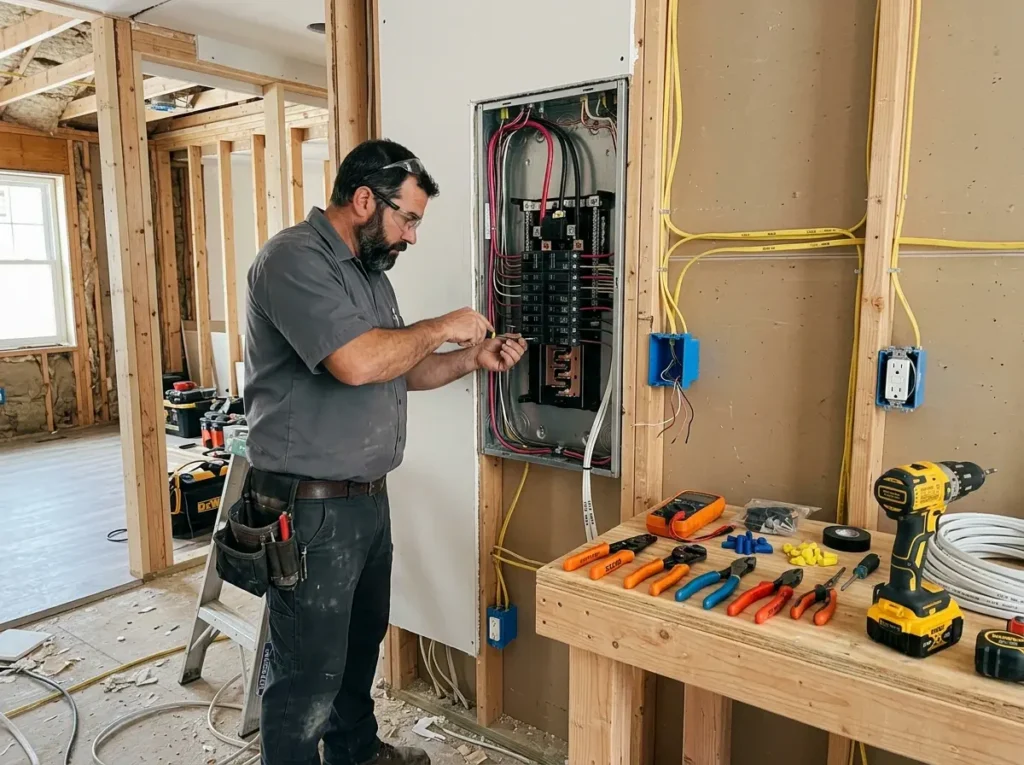
You bought a surge protector strip for your home office. Your home inspector said the outlets are three-prong. You assume you are protected. But in many Cape Coral homes built before 1970, those three-prong outlets have no ground wire connected—an open ground condition that makes every surge protector useless. Our whole house surge protection and electrical grounding repair services start with a complete ground integrity test. We verify your home grounding service from the ground rod installation outside to every outlet inside. Only after we confirm a low-resistance path to earth do we install Type 2 SPD devices or any other surge protector installation.
Five Grounding Failures We Find Weekly in Cape Coral Homes
First, the missing ground rod — some older homes have no ground rod at all, just a connection to a metal water pipe that may have been replaced with PVC. Second, the cut ground wire — renovations where someone snipped the ground wire and never reconnected it. Third, the floating ground — a ground wire attached to nothing inside a junction box. Fourth, the bootleg ground — a dangerous DIY trick where someone connected the ground screw to the neutral wire, fooling outlet testers but creating a shock hazard. Fifth, the corroded connection — a ground rod clamp that has rusted apart underground. We find each of these during our home grounding service inspection. We also identify homes where GFCI vs grounding confusion led to improper installations — GFCI outlets protect people but do not create a ground path. For three prong outlet upgrade in ungrounded homes, we explain the NEC grounding requirements options: run a new ground wire, install GFCI protection with "No Equipment Ground" labels, or rewiring the circuit entirely.
Every surge protection and grounding project we complete in Cape Coral follows this sequence:
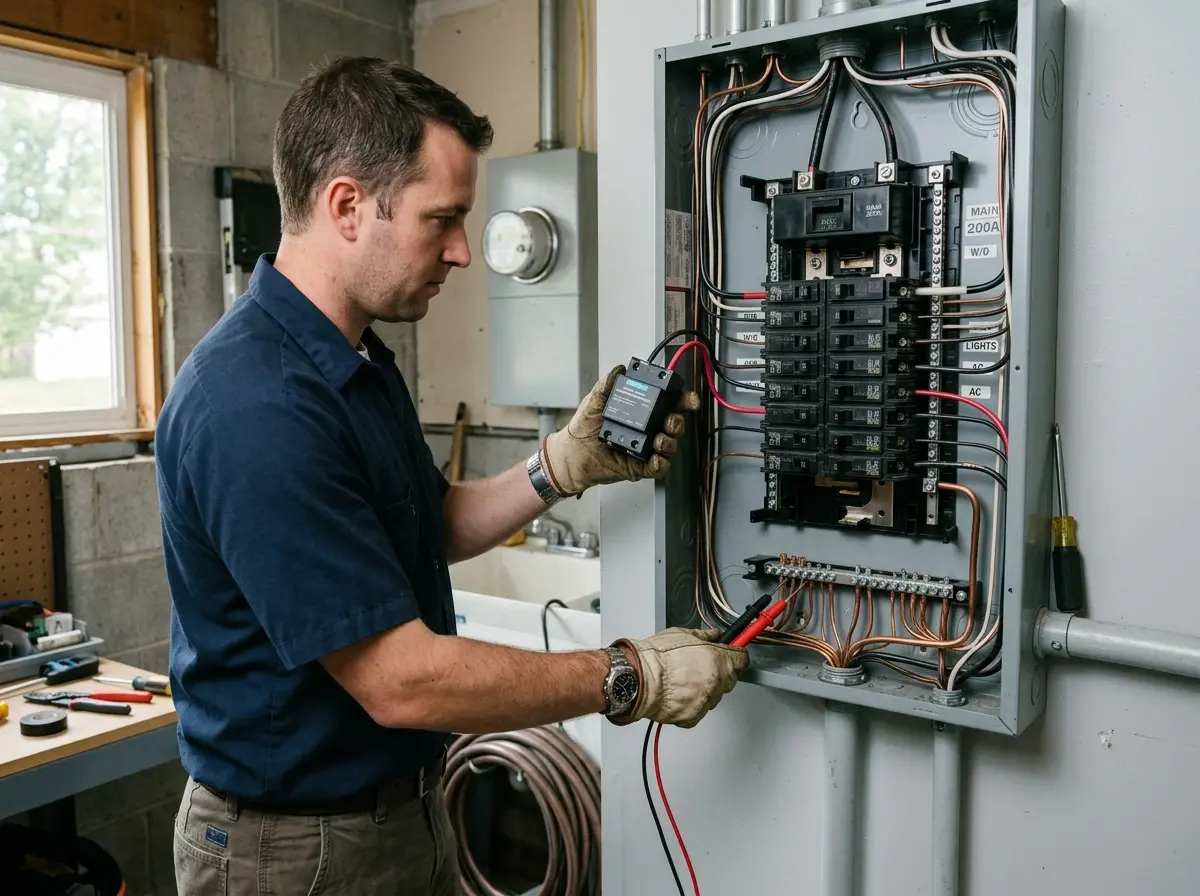
- Ground integrity testing — we measure resistance from each outlet to the actual earth (should be under 25 ohms per NEC)
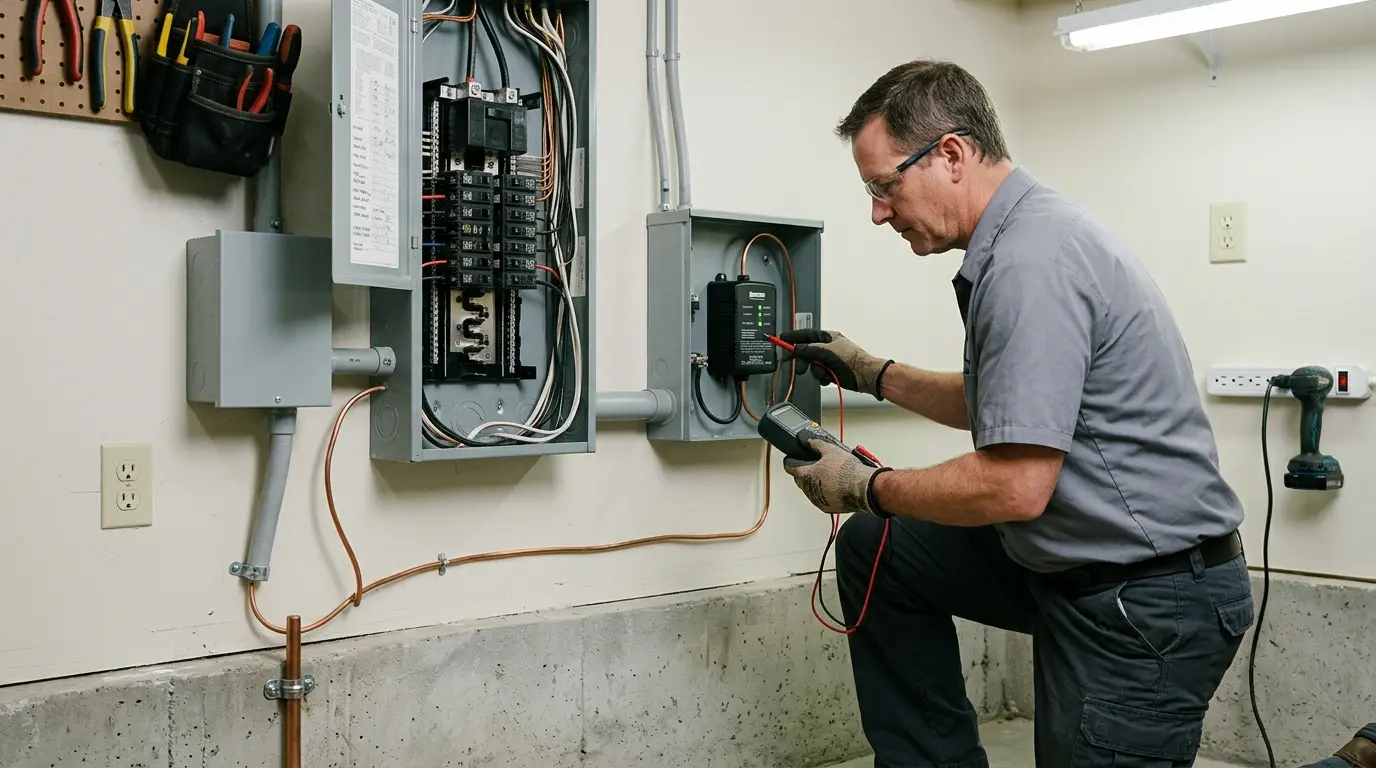
- Ground rod installation verification — we locate all ground rods, check clamps and conductors, and install additional rods if needed
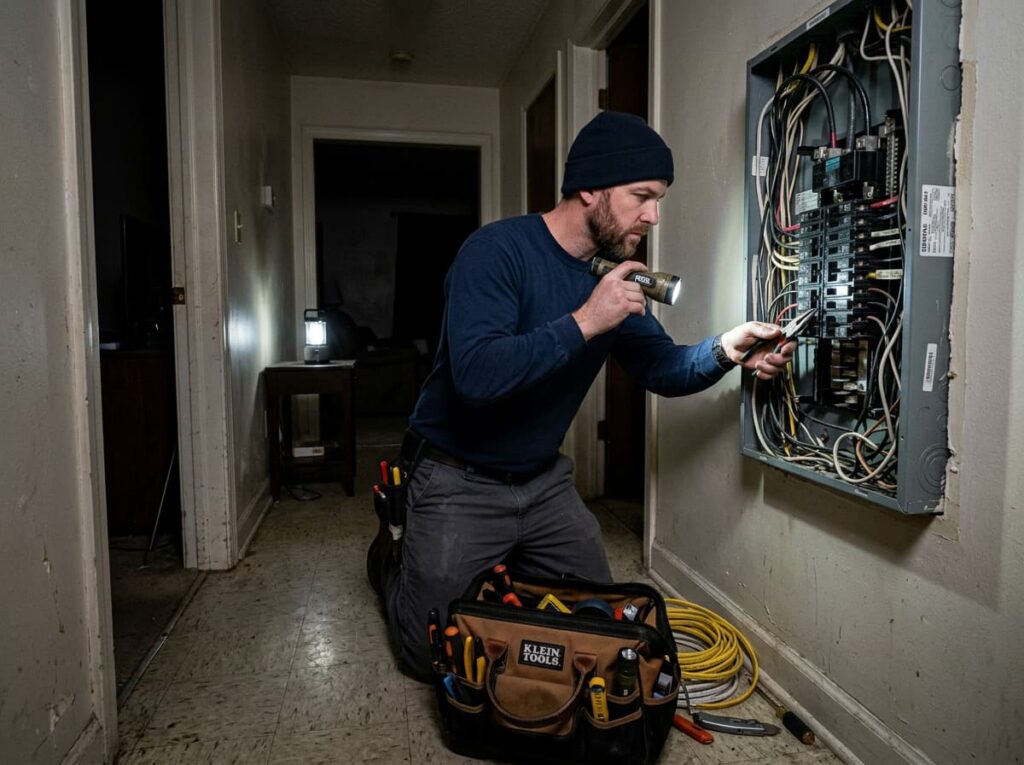
- Open ground repair — for individual outlets, we trace the circuit to find the break and restore the ground path
- Three prong outlet upgrade — for ungrounded circuits, we either run a new ground wire or install GFCI with proper labeling
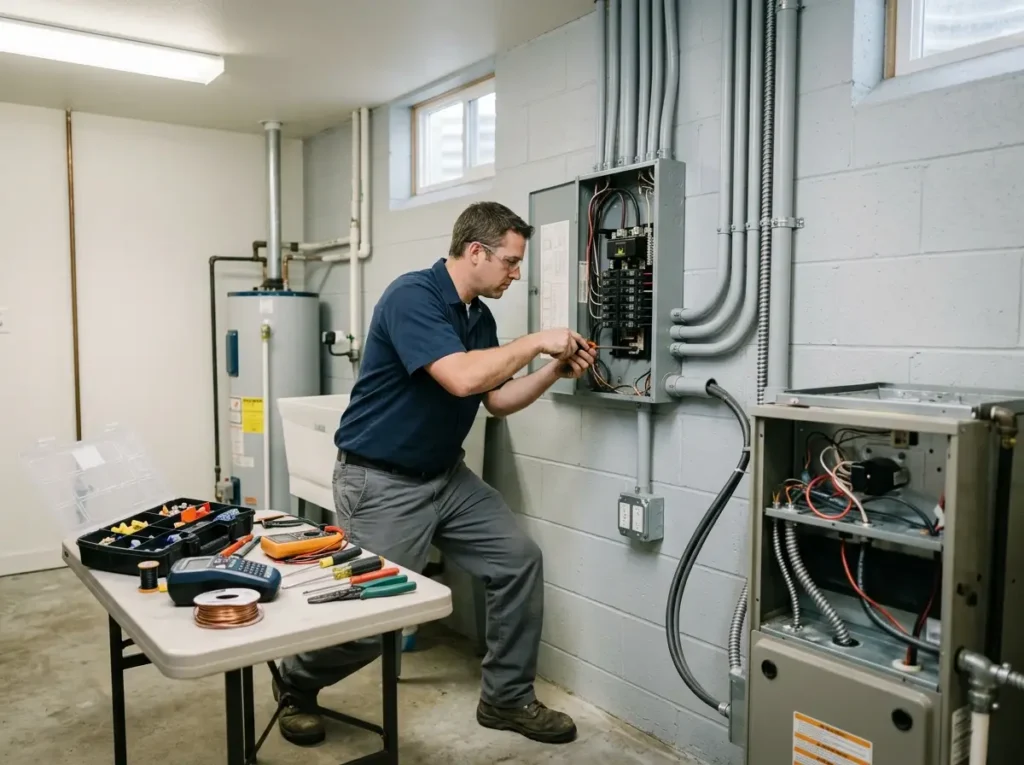
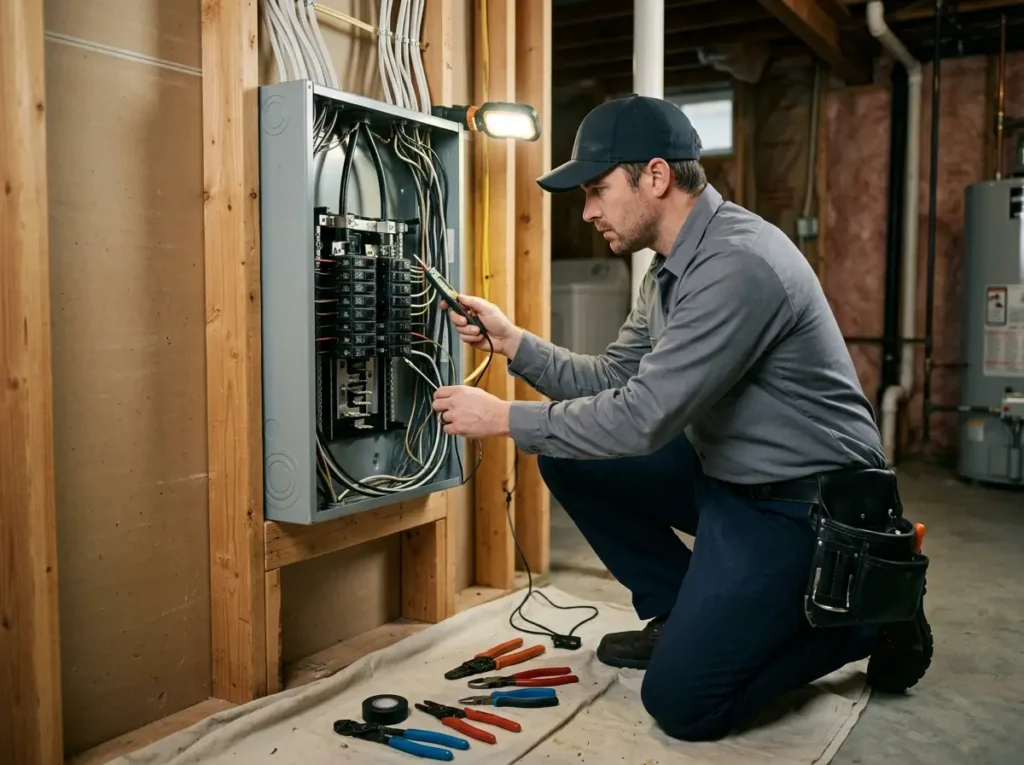
- Type 2 SPD installation — we mount the device in the main panel, connect to a dedicated double-pole breaker, and verify surge clamping voltage
- Post-installation testing — we simulate surges with a specialized tester and document clamping response time
How Long Does Grounding or Surge Protection Work Take?
An open ground repair for a single outlet typically takes 45 minutes to 2 hours. We open the outlet, the switch box, and any junction boxes on the same circuit, tracing the ground wire to find where it was disconnected or cut. If the ground wire is intact but not connected to the panel, we may need to run a new ground wire from the panel to that circuit location — adding 2-4 hours. Ground rod installation for a home with no existing ground rod takes 2 to 3 hours. We drive one or two 8-foot copper rods into the earth (using a hammer drill or sledge depending on Cape Coral soil conditions), connect a continuous #6 or #4 copper wire to the rods, and run it to the main panel's ground bus. Rocky soil can double this time. A full home grounding service for a 2,000 square foot Cape Coral home with multiple open grounds takes 4 to 8 hours, including testing every outlet, repairing all open ground conditions, and installing supplemental ground rods if needed. Type 2 SPD installation takes 1 to 2 hours: we open the main panel, mount the device, connect it to a 20A or 30A double-pole breaker, and verify that the device's LED indicator shows proper operation. If your panel is full with no empty breaker slots, we add a subpanel or rearrange circuits — adding 2-4 hours. Three prong outlet upgrade for an entire ungrounded house (replacing 40-60 two-prong outlets with GFCI-protected three-prong outlets) takes 4 to 8 hours. We install GFCI breakers or GFCI outlets at the first receptacle on each circuit, then label every downstream outlet "GFCI Protected / No Equipment Ground." The most time-consuming scenario is a Cape Coral home where the original ground rod is present but corroded beyond use and buried under a concrete patio. We must install a new ground rod elsewhere (sometimes 50+ feet from the panel), trench a wire path, and pour a new concrete patch — a two-day project. We always provide a written report after grounding work, showing before/after resistance readings, locations of all ground rods, and a diagram of your home's grounding system for your insurance company.
Why Whole House Surge Protection Without Proper Grounding Is Like a Seatbelt with No Buckle
A Type 2 SPD works by diverting surge voltage to ground. If your home's grounding path has high resistance (or no path at all), that surge voltage has nowhere to go. Instead, it reflects back into your electrical system, jumping from wire to wire inside your panel, often destroying the surge protector itself and leaving your appliances exposed. Our approach: fix the ground first, then add the surge protection. For homes with open ground conditions, we explain GFCI vs grounding clearly: GFCI outlets monitor current imbalance between hot and neutral. If you touch a live wire, GFCI trips in 0.025 seconds, saving your life. But GFCI does nothing for a lightning strike — that surge travels on hot and neutral together, so GFCI sees no imbalance and does not trip. Your electronics fry. Only a low-impedance ground path allows a Type 2 SPD to work. For homes with two-prong outlets and no ground wires, we offer three prong outlet upgrade via two methods: running a new ground wire (best, but expensive) or installing GFCI protection with "No Equipment Ground" labels (code-approved, protects people, but does not enable surge protection). We present both options with clear costs and let Cape Coral homeowners decide based on their budget and whether they plan to install whole house surge protection. For homes with ground rods but poor soil conductivity (sandy or rocky Cape Coral soil), we install multiple ground rods spaced 6 feet apart or use a ground plate to achieve NEC-mandated 25 ohms or less. For NEC grounding requirements, we follow Article 250 — the ground rod must be at least 8 feet long, driven fully into earth, with a continuous conductor to the panel, no splices. We photograph every installation step. For electrical grounding repair in homes with metal water pipe grounds, we verify that the pipe is still metal (not replaced with PVC) and that the water meter has a bonding jumper across it. Missing jumpers are common and create a path to ground only when water flows — not safe. We add jumpers using #4 copper. Every whole house surge protection installation we complete includes a surge counter (recording how many surges the device has clamped) and a remote indicator light (so you can see from across the room that protection is active). We also provide a surge log sheet to record any nearby lightning strikes and corresponding clamping events — useful for insurance claims if appliances still get damaged.
Call our grounding and surge team in Cape Coral for a complete ground integrity inspection. We will show you whether your home is truly protected — or just pretending to be.