

Why Your Hollywood Pool Could Be Electrifying — And How NEC 680 Prevents It
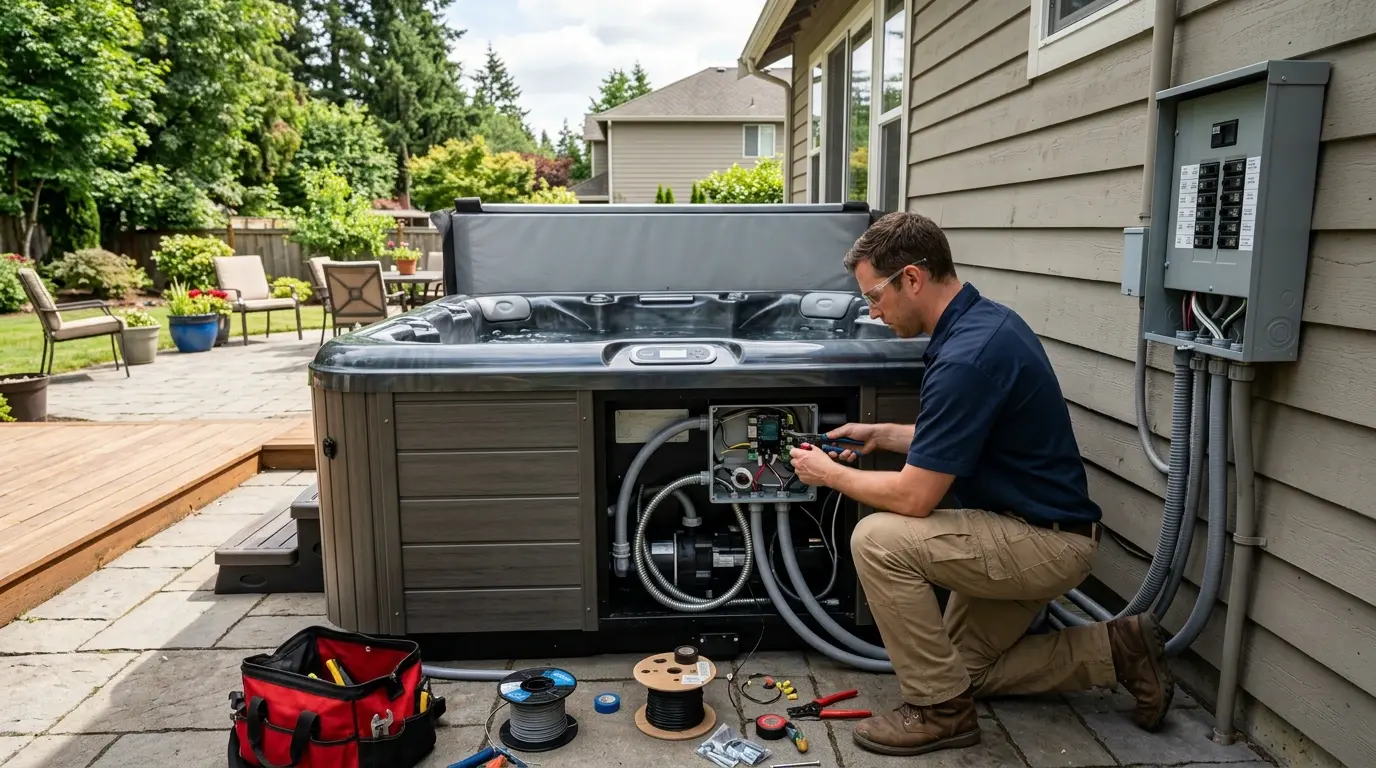
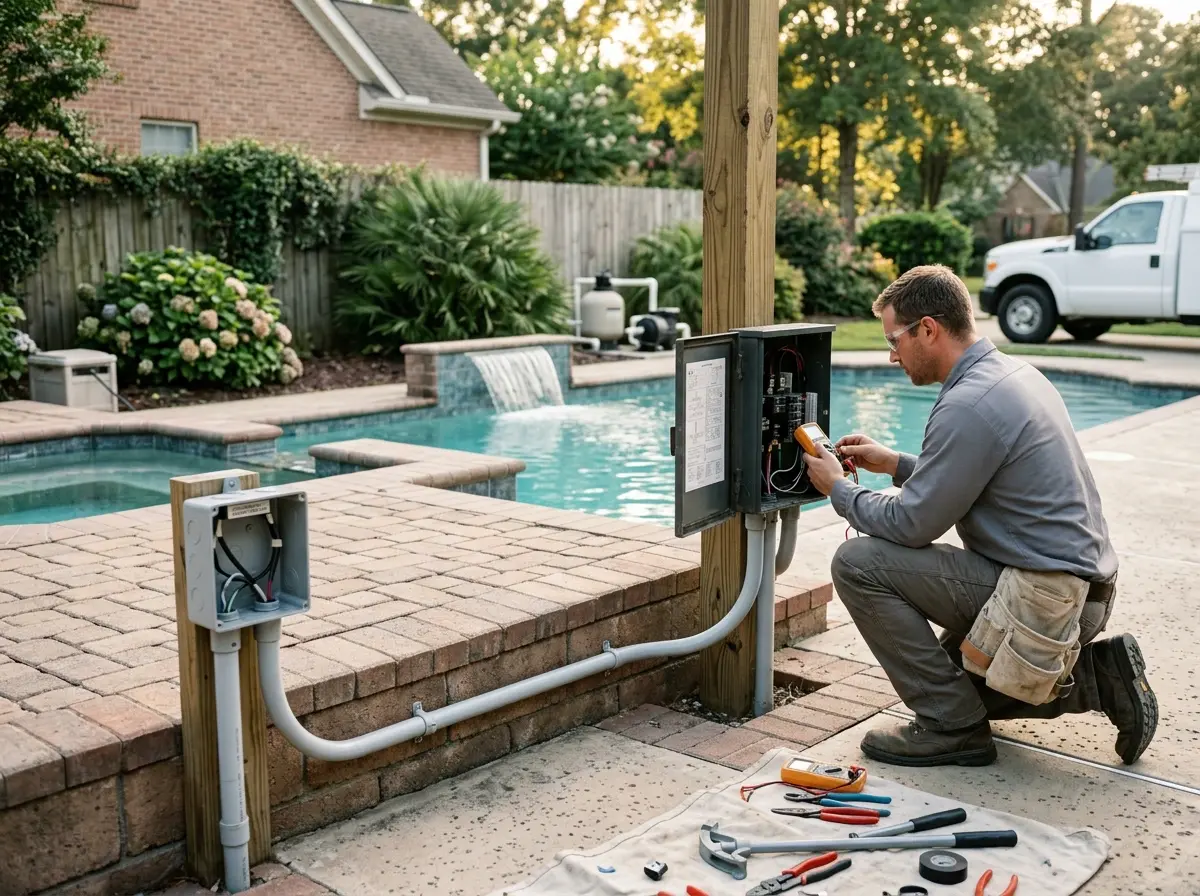
A child climbs the metal ladder to jump into your pool. A faulty pump motor energizes the handrail. The child touches the water — now at a different electrical potential — and receives a shock that paralyzes muscles. The child drowns. This is not hypothetical. The National Electrical Code dedicates an entire article — NEC 680 — to preventing exactly this scenario. Our pool and hot tub electrical wiring services focus on equipotential bonding, the process of connecting every metal component around your Hollywood pool so they all sit at the same voltage. We install pool pump wiring with GFCI protection swimming pool, mount spa disconnect panels within sight of hot tubs, and verify that every ladder, handrail, light niche, pump motor, and even the water itself is bonded together.
Five Pool & Spa Electrical Failures We Correct
First, missing equipotential bonding — the most common and most dangerous deficiency. We install a bonding grid around new pools or add bonding wires to existing pools by exposing the rebar and attaching clamps (2-6 hours depending on access). Second, pool light transformer that still outputs 120V instead of the modern 12V requirement. We replace the transformer and the underwater fixture (3-5 hours). Third, pool pump wiring without GFCI protection swimming pool — code requires GFCI for all pool pumps since 2008. We replace the breaker or add an inline GFCI (1-2 hours). Fourth, spa disconnect panel located too far from the hot tub or not within sight. We relocate the disconnect or install a new one at the required distance (5-50 feet, within sight) — 2-4 hours. Fifth, above ground pool electrical with no bonding at all — the metal pool frame, pump, and ladder are floating, creating shock risks. We bond everything to a common ground rod and equipotential grid (2-4 hours).
Our pool electrical process in Hollywood follows NEC 650 requirements step by step:
- Verify that every metal component within 5 feet of the pool or spa is bonded (ladder, handrail, diving board base, pump, heater, light ring, rebar in concrete)
- Install pool light transformer with 12V output for underwater lighting (120V fixtures are no longer code-compliant for new installations)
- Install GFCI protection swimming pool for all pump circuits, lighting circuits, and any receptacle within 20 feet of the water
- Mount spa disconnect panel between 5 and 50 feet from the hot tub, within sight, with GFCI breaker included
- For above ground pool electrical, bond the metal pool frame to the pump motor and to a ground rod (if required by local amendment)
- For plaster bond wire, we ensure the bonding wire is embedded in the pool shell before plastering (new construction only)
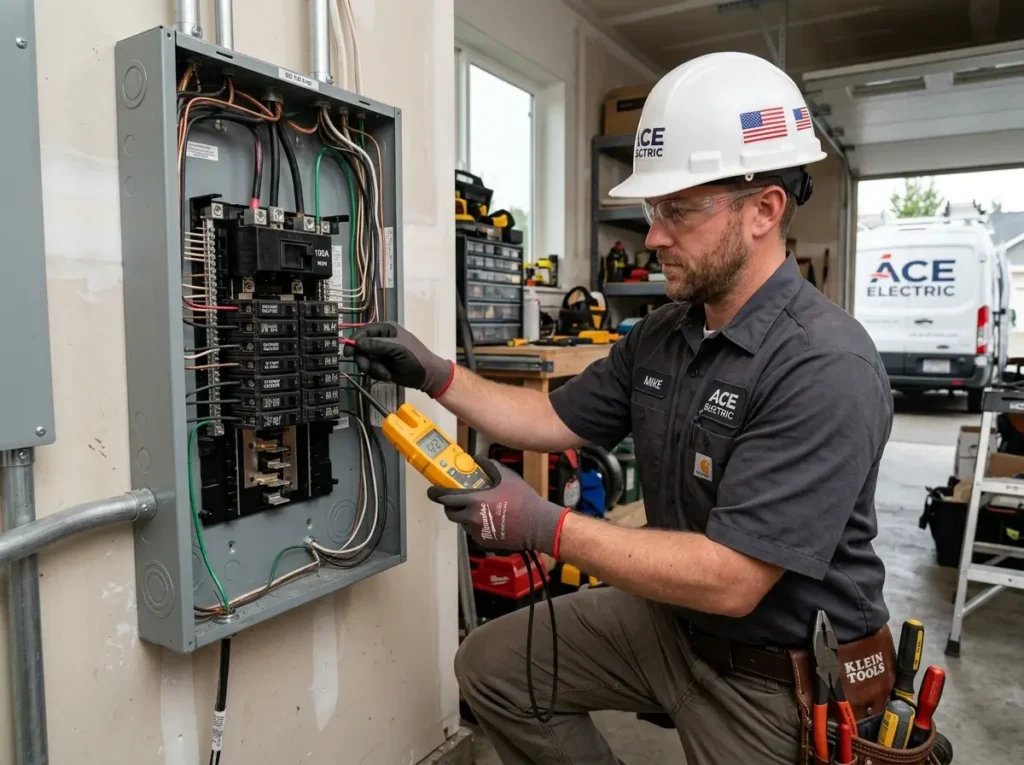
- Test all bonding connections with a specialized bond meter (not a standard multimeter) to verify resistance under 1 ohm
How Long Does Pool or Hot Tub Electrical Work Take?
A pool pump wiring replacement for an existing pump (same voltage, same amperage, same location) takes 1.5 to 2.5 hours. We disconnect the old pump, remove the old wiring from the conduit, pull new 12/2 or 10/2 wire (depending on pump size), install a new GFCI protection swimming pool breaker at the panel if not already present, and connect the pump. If the existing pump had no GFCI protection and we must replace the breaker, add 30 minutes. A bonding and grounding pool inspection and repair for an existing in-ground pool takes 2 to 4 hours. We locate all bonding points (ladder bases, handrail anchors, light niche, pump bond lug), test continuity between them, and add bonding wires where missing. If we must expose concrete to attach bonding clamps to rebar, add 2-4 hours for demo and patching. A spa disconnect panel installation for a new hot tub takes 4 to 6 hours. We run 6/3 or 8/3 Romex from the main panel to the disconnect location (usually on an exterior wall near the tub), mount the weatherproof disconnect, install a GFCI breaker inside it, then run liquid-tight conduit from the disconnect to the hot tub's control box. A pool light transformer installation for a new underwater light takes 3 to 5 hours. We mount the transformer at least 8 inches above water level (per code), run 12V cable from the transformer to the pool light niche, pull the old light cord, connect the new low-voltage fixture, and test. For above ground pool electrical for a seasonal pool, we typically install a dedicated 20A GFCI receptacle within 10-20 feet of the pool (per code), then bond the pool frame using a #8 copper wire to a ground rod. That takes 2 to 3 hours. The most time-consuming scenario in Hollywood is a pool built before 1990 with no bonding grid. We must break concrete around the pool deck, expose the rebar, attach bonding clamps, and pour new concrete — 2-3 days of work involving concrete cutting and finishing. We always provide a written quote that separates electrical work from concrete work, and we can recommend a concrete contractor if we do not perform that service.

Why Equipotential Bonding Is Not the Same as Grounding
Grounding provides a path for fault current to return to the panel and trip a breaker. Bonding connects all metal parts together so they remain at the same electrical potential. In a pool, bonding is more critical than grounding. If a pump motor fails and energizes the handrail, but the handrail is bonded to the water via a bonding plate, every surface rises to the same voltage — no current flows through a swimmer touching both. Without bonding, the handrail could be 100V while the water is 0V, and a swimmer touching both becomes the conductor. NEC 680 requires equipotential bonding for nearly all metal components within 5 feet of the pool or spa. We verify bonding using a specialized bond meter that injects current and measures resistance. The required resistance is under 1 ohm from any bonded component to the bonding grid. For pool pump wiring, we install GFCI protection swimming pool breakers rated for motor loads (some GFCIs are not rated for pumps and will nuisance trip). We use Hubs, or Square D GFCI breakers designed for pool equipment. For spa disconnect panels, the disconnect must be within sight of the hot tub — meaning you can see the disconnect from the tub's location without obstructions. The distance must be at least 5 feet (so you cannot reach the disconnect from the water) and not more than 50 feet (so you can shut off power quickly in an emergency). We mount disconnects on a post or exterior wall, with a weatherproof enclosure and a clearly labeled ON/OFF switch. For pool light transformer installation, we mount the transformer at least 8 inches above the water level or 4 inches above the deck if the deck is higher than the water. The 120V side of the transformer must have GFCI protection; the 12V side does not, but the low-voltage cable must be buried at least 6 inches deep and run in conduit if within 10 feet of the pool. For above ground pool electrical, many homeowners assume that because the pool is temporary and has a pre-wired pump cord, no bonding is needed. But many Hollywood jurisdictions now require bonding for any pool with over 42 inches of water depth, regardless of permanence. We check local amendments before starting work. For plaster bond wire, during new pool construction we ensure the bonding wire is tied to the rebar cage before shotcrete, and that the wire extends out of the shell at a point above the water line for future connection to the pump and heater. If we encounter a pool with no plaster bond wire, we install a bonding plate in the skimmer or in the plumbing line to bond the water itself. Every pool and hot tub electrical project we complete includes a final bond test report showing resistance readings between every bonded component, signed and dated, for your insurance company and local building department.
Call our pool and spa electrical team in Hollywood before you fill your new pool or before your next swim season. We will make sure your backyard is safe, code-compliant, and ready for inspection.