
The Silent Killer in Your Inverness Home — And the Chirp You Have Been Ignoring
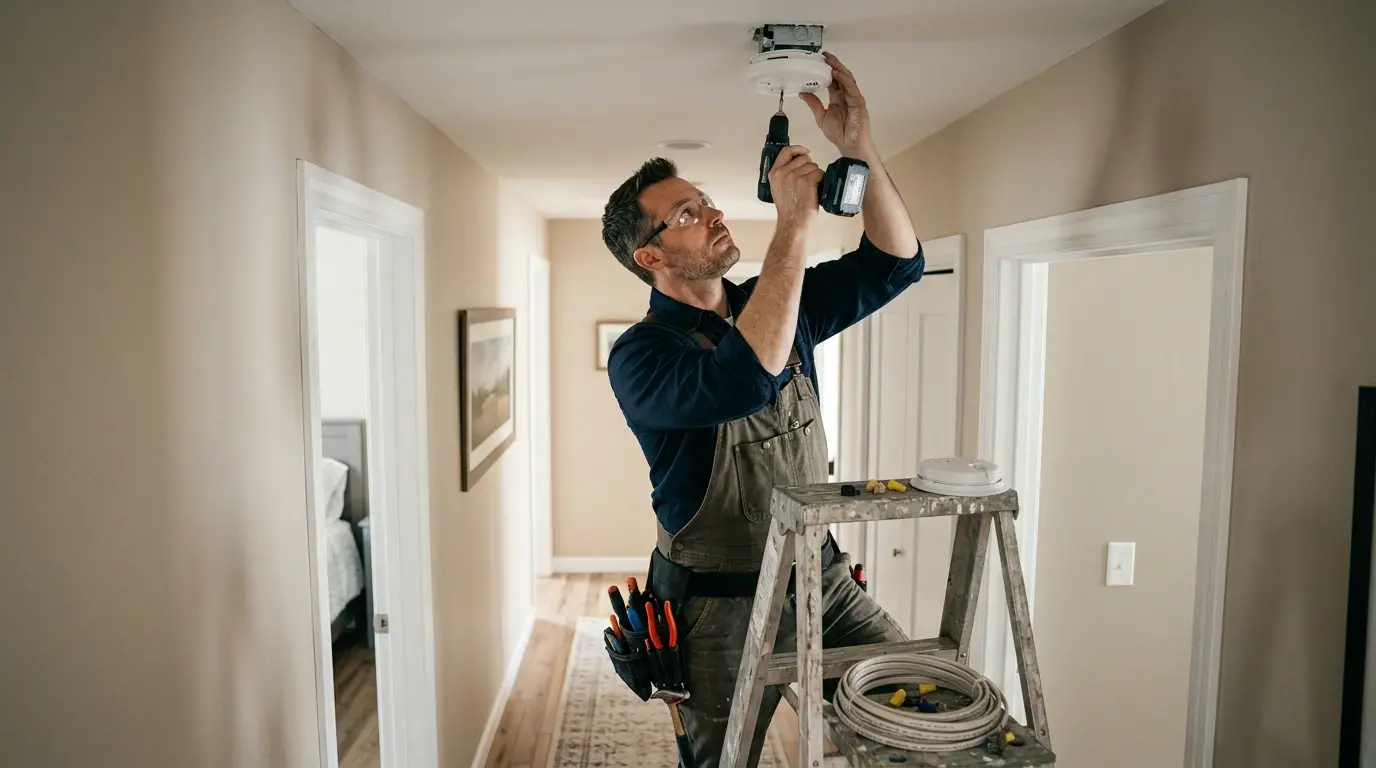
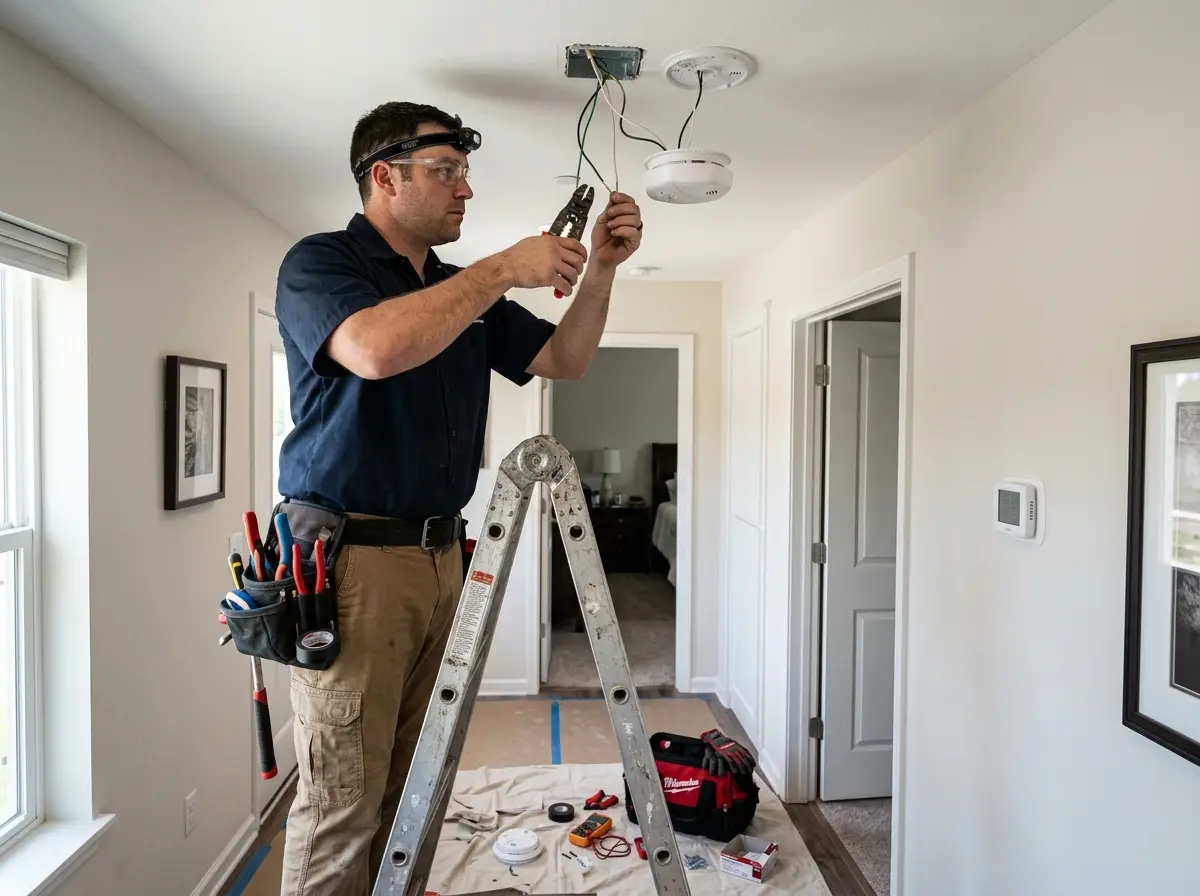
Carbon monoxide has no color, no smell, no taste. By the time you feel CO exposure symptoms — headache, dizziness, nausea, confusion — you and your family may have only minutes to evacuate. Yet most Inverness homes have outdated or missing carbon monoxide detector installation. Our smoke detector installation and carbon monoxide detector installation services prioritize this invisible threat. We install UL listed CO detectors on every level of your home, especially near attached garages and gas-fired appliances. We also perform hardwired smoke detector replacement for units that have reached their end-of-life signal, and we create interconnected smoke alarms systems that meet current codes for home sales.
Six Detector Issues That Trigger Home Sale Repairs in Inverness
When you sell your Inverness home, the buyer's inspector will flag every detector deficiency. Issue one: detectors over 10 years old (end-of-life signal present or not). We replace all aging units with new hardwired smoke detector or sealed 10-year battery models. Issue two: missing CO detectors on any level. We add carbon monoxide detector installation to every floor, plus one outside each sleeping area. Issue three: no interconnection between smoke alarms. We install interconnected smoke alarms using wireless technology to meet code without running new wires. Issue four: incorrect placement near bedrooms — missing detectors inside bedrooms or in hallways. We add units per NFPA 72 standards. Issue five: battery-only detectors in a home that has hardwiring available. We convert to hardwired smoke detector with battery backup during the sale repair negotiation. Issue six: no smoke and CO detector combo units in hallways where both threats exist. We install combination units to satisfy multiple requirements with one device.
Our detector services in Inverness focus on code compliance and family safety:
- Pre-sale detector inspection — we provide a written report identifying every deficiency with repair cost estimates
- Same-day replacement for detectors showing end-of-life signal or physical damage
- Carbon monoxide detector installation on every level — we explain why CO detectors need replacement every 5-7 years (sensors degrade faster than smoke sensors)
- Interconnected smoke alarms installation via wireless technology — no attic wiring required, perfect for finished homes
- Smoke and CO detector combo installation in central locations — saves ceiling space and battery changes
- CO exposure symptoms education — we provide refrigerator magnets listing symptoms so your family knows when to evacuate
- Nest Protect installation for homeowners who want smartphone alerts and self-testing features
How Long Does Detector Work Take for Home Sale or Safety Upgrade?
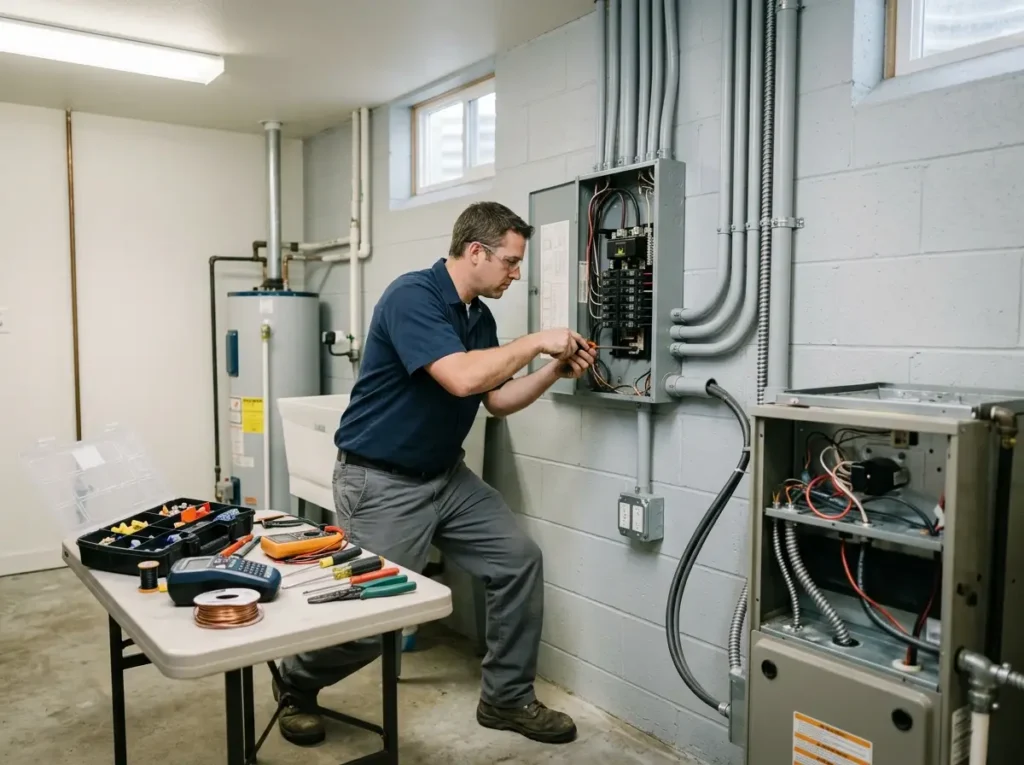
A pre-sale detector inspection for a typical Inverness home takes 1 to 1.5 hours. We check every detector's age (manufacturing date stamped on back), test each one with smoke spray and CO calibration gas (for CO units), verify placement near bedrooms, and test interconnection if present. We provide a written report with photos. Replacing 5-10 outdated detectors takes 2 to 4 hours if existing wiring is present (hardwired smoke detector replacement). If we are replacing battery-only units with hardwired units (adding new wiring), plan on 4-8 hours plus drywall patching. Adding missing CO detectors to a home with none takes 1 to 2 hours to mount 3 units (basement, main level, upper level) and test. Interconnected smoke alarms installation using wireless interconnect takes 2 to 3 hours for a full home: we replace all existing detectors with wireless-capable models, pair them using a smartphone app or button sequence, and test that every unit triggers when any unit senses smoke. No wiring required. A full sale-ready detector package (replace all detectors, add CO on every level, install wireless interconnected smoke alarms, provide compliance certificate) takes 4 to 6 hours for a 2,000 square foot home. For Nest Protect installation, add 30 minutes for Wi-Fi setup and smartphone app configuration. The most time-consuming scenario is a home with no hardwiring at all where the homeowner wants hardwired smoke detector installation with wired interconnection. We must run new 14/3 Romex from the panel to every bedroom and hallway — 6 to 10 hours for a 2-story Inverness home, plus drywall repair. In this case, we usually recommend wireless interconnected smoke alarms instead, saving 4-8 hours and avoiding drywall damage. We always present both options with cost and time comparisons before starting work.
Why CO Exposure Symptoms Are Often Misdiagnosed — And Why UL Listed Detectors Matter
Each year, hundreds of people die from carbon monoxide poisoning in their homes. Many more survive with permanent brain damage. The tragedy is that most deaths are preventable with proper carbon monoxide detector installation. CO is produced by incomplete combustion from gas furnaces, water heaters, gas ranges, fireplaces, portable generators, and vehicles left running in attached garages. The early CO exposure symptoms — headache, dizziness, weakness, nausea, confusion — mimic the flu or food poisoning. People go to bed thinking they will feel better in the morning. They never wake up. UL listed detectors meet strict testing standards for sensitivity and false-alarm resistance. We only install UL listed carbon monoxide detector units. For homes with gas appliances, we recommend low-level CO detectors (sensitive to 5-10ppm rather than the code-minimum 30-70ppm) because chronic low-level exposure causes long-term health issues even if not immediately dangerous. Regarding end-of-life signal, CO detectors have a shorter lifespan than smoke detectors — typically 5-7 years versus 10 years. The end-of-life chirp for a CO detector is similar: a chirp every 30-40 seconds that continues after battery replacement. We mark installation dates on every CO detector and schedule a reminder call for replacement at 5 years. For placement near bedrooms, smoke detectors need to be inside every bedroom and outside each sleeping area. Carbon monoxide detectors need to be outside each sleeping area but inside bedrooms is optional unless the bedroom contains a gas fireplace or attached garage. For smoke and CO detector combo units, we install them only in central locations (hallways, living rooms) because combo units are larger and may not fit properly in bedroom ceilings. For interconnected smoke alarms, we test the wireless range between floors before finalizing installation. In large Inverness homes with concrete floors or metal lath and plaster (common in older homes), wireless signals may not penetrate. In those cases, we install wired interconnection or use a hybrid system with multiple wireless bridges. For Nest Protect installation, we configure the "Pathlight" feature (motion-activated night light) and "Heads-Up" warning (a verbal alert before the full alarm — "There is smoke in the kitchen" gives you time to check before the siren blasts). We also show you how to silence false alarms from your phone, preventing the frustration that leads people to remove batteries permanently. Every detector installation we complete includes a laminated card inside your panel door listing every detector's location, type, replacement date, and battery change schedule (if applicable). We also give you a refrigerator magnet listing CO exposure symptoms so your whole family knows the warning signs.
Call our safety team in Inverness before your home sale inspection or before the next heating season. We will bring your detectors up to code and teach you the signs of the silent killer.