
What Your Miami Lakes Home's Electrical System Is Hiding Behind Its Walls
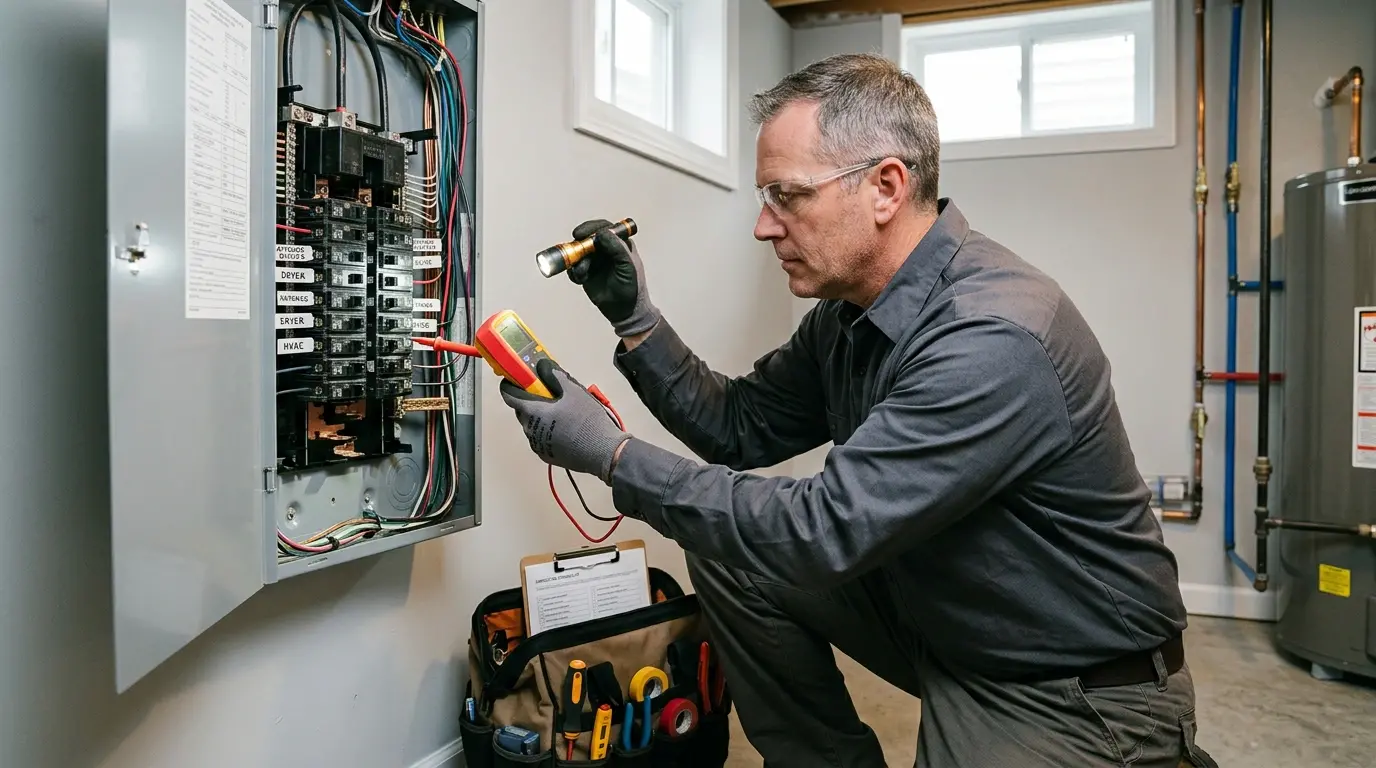
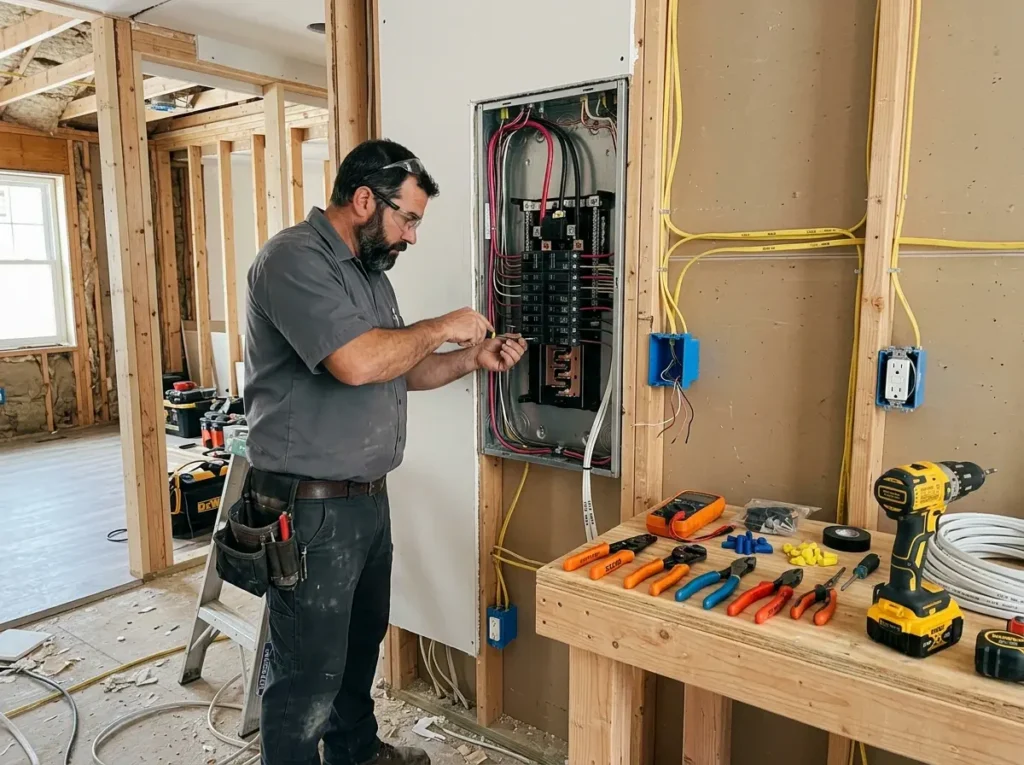
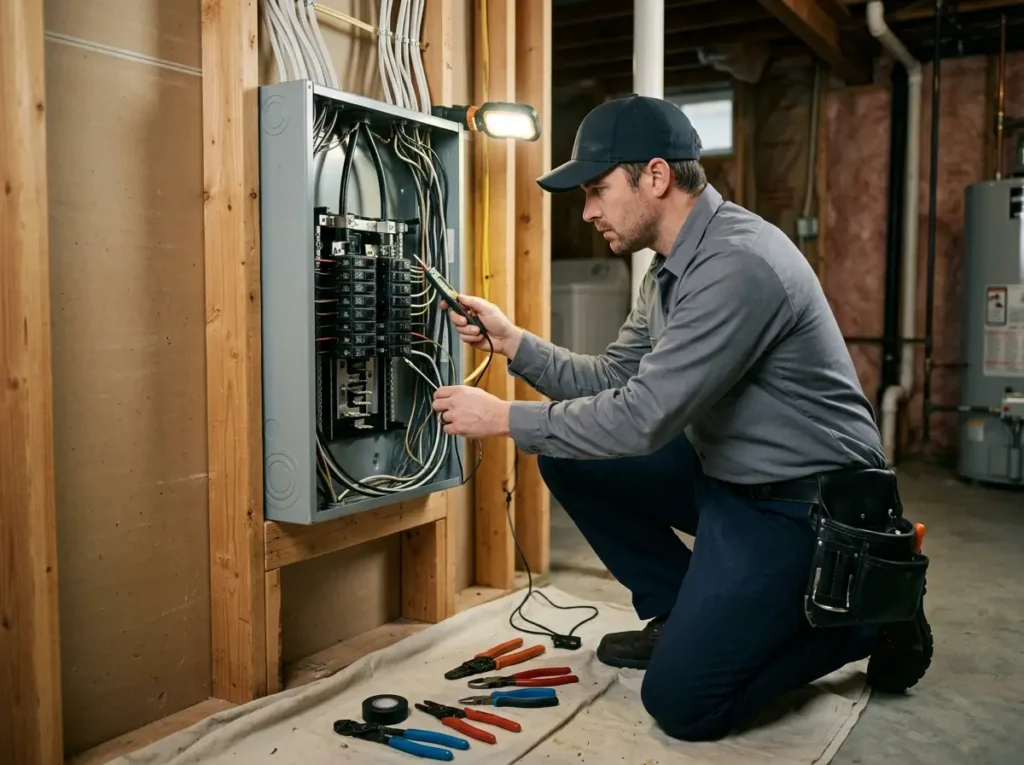
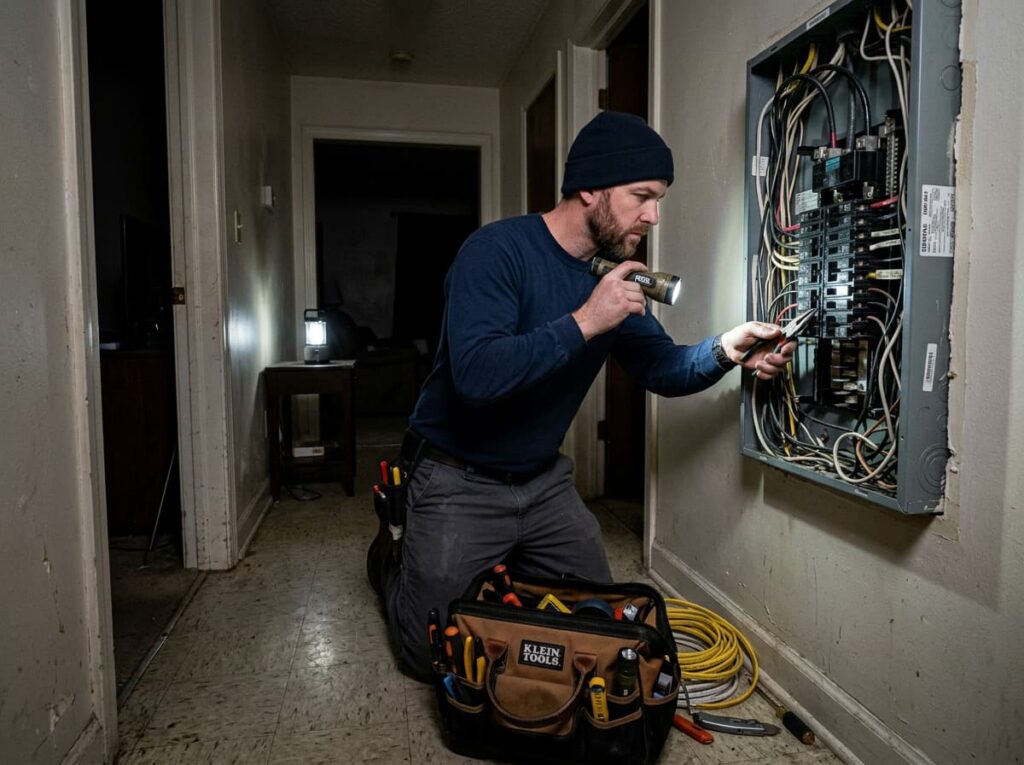
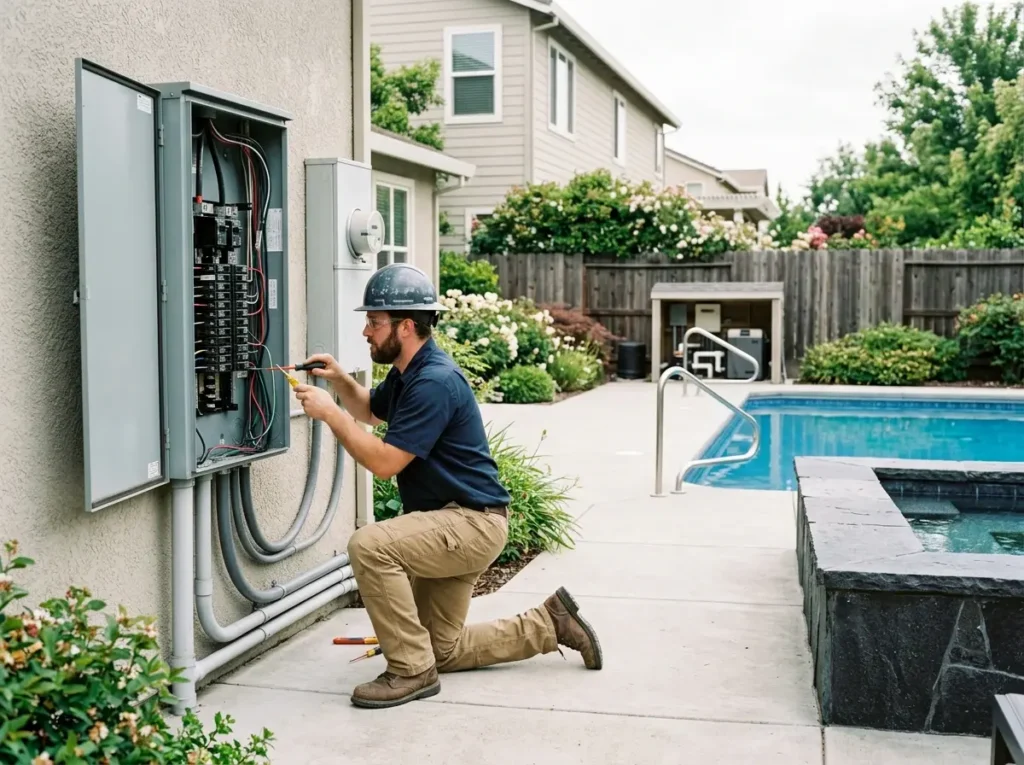
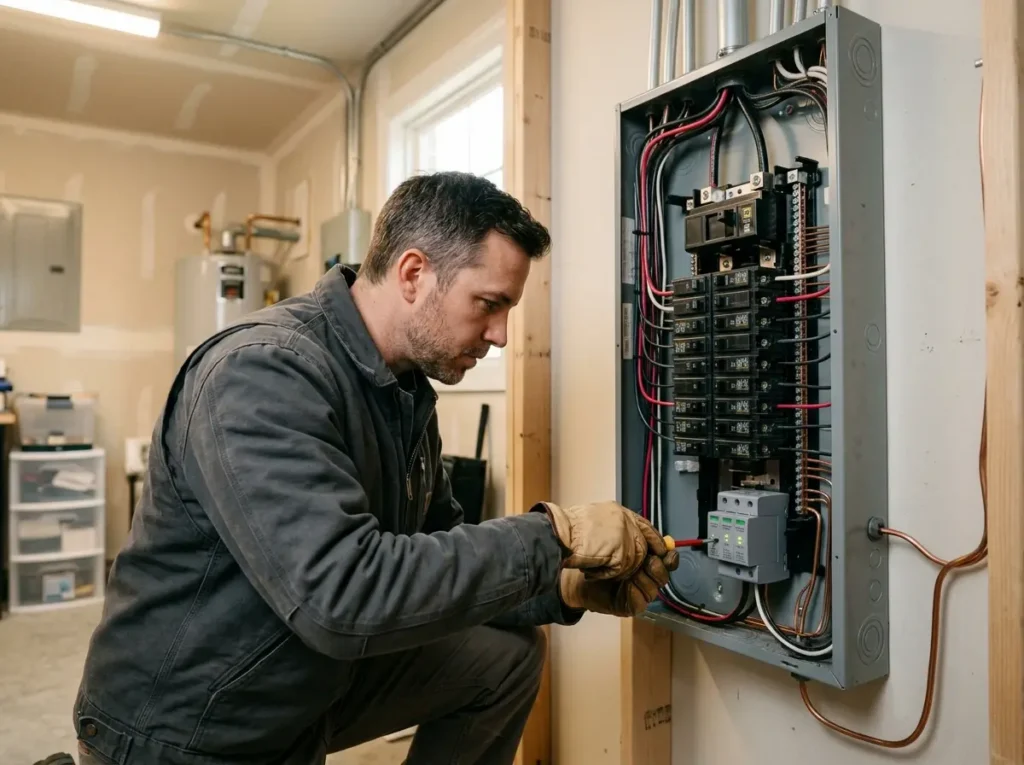
A standard home inspector walks through your Miami Lakes home with a plug-in tester and a screwdriver. They note which outlets are reversed and which breakers are labeled wrong. They miss the real dangers: the 150°F breaker that will fail next month, the corroded neutral connection arcing inside your panel, the voltage drop that is slowly destroying your compressor. Our electrical inspection home and electrical troubleshooting services use thermal imaging scan and voltage drop testing to see what human eyes cannot. We perform a home electrical panel inspection that identifies overheating breakers, loose lugs, and bus bar corrosion before they cause a fire. For mystery trips, our circuit breaker troubleshooting pinpoints the exact condition — overloaded circuit finder, arc fault diagnosis, or failing appliance.
Seven Hidden Problems We Find with Thermal Imaging and Testing
First, a breaker that runs at 140°F when it should be 90°F — the thermal imaging scan shows it glowing on our camera. This breaker will fail within months. Second, an overloaded circuit finder condition — one circuit carrying 18 amps on a 15-amp breaker, hidden behind a panel that feels cool but is silently overheating wires. Third, loose neutral connections causing voltage drop testing failures — lights dimming when the AC starts is not normal. Fourth, arcing inside a junction box that standard testers cannot detect — our arc fault diagnosis identifies the characteristic high-frequency noise. Fifth, GFCI nuisance tripping caused by shared neutrals or moisture — we perform GFCI trip troubleshooting by isolating circuits and testing each device. Sixth, Federal Pacific or Zinsco breakers that fail to trip during overload — we photograph the panel brand and provide a written warning for your insurance company. Seventh, reversed polarity and open grounds that plug-in testers miss because they can be fooled by bootleg grounds.
Our electrical safety inspection process in Miami Lakes is systematic and documented:
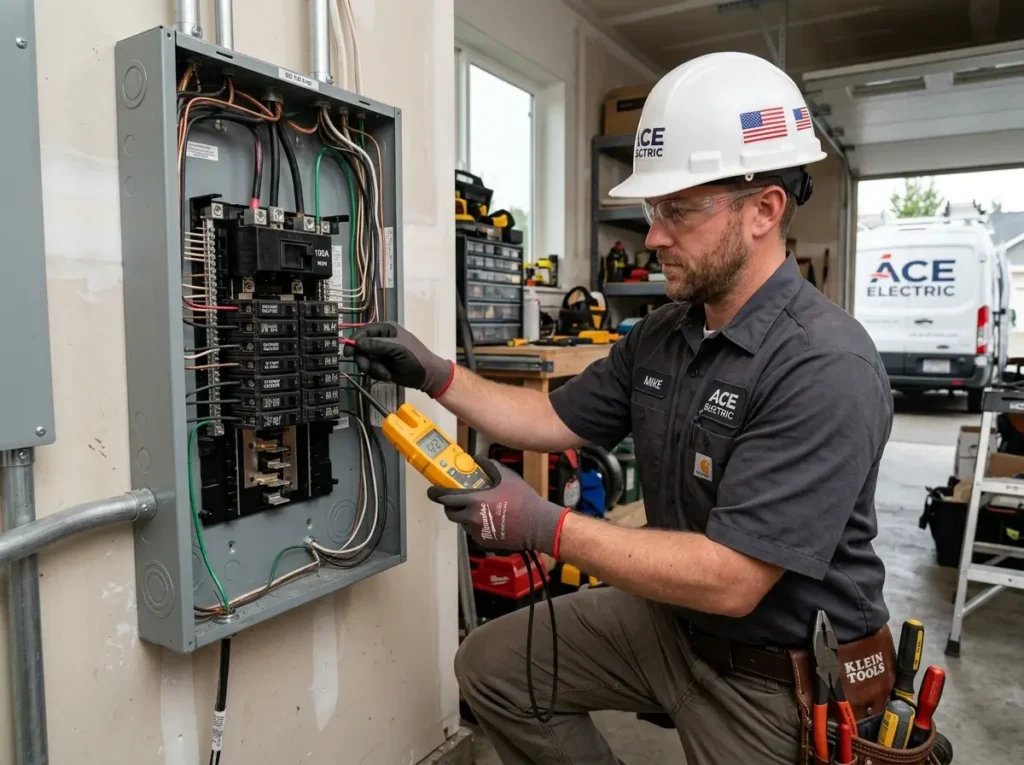
- Panel cover removal and thermal imaging scan of every breaker, bus bar, and connection under full load
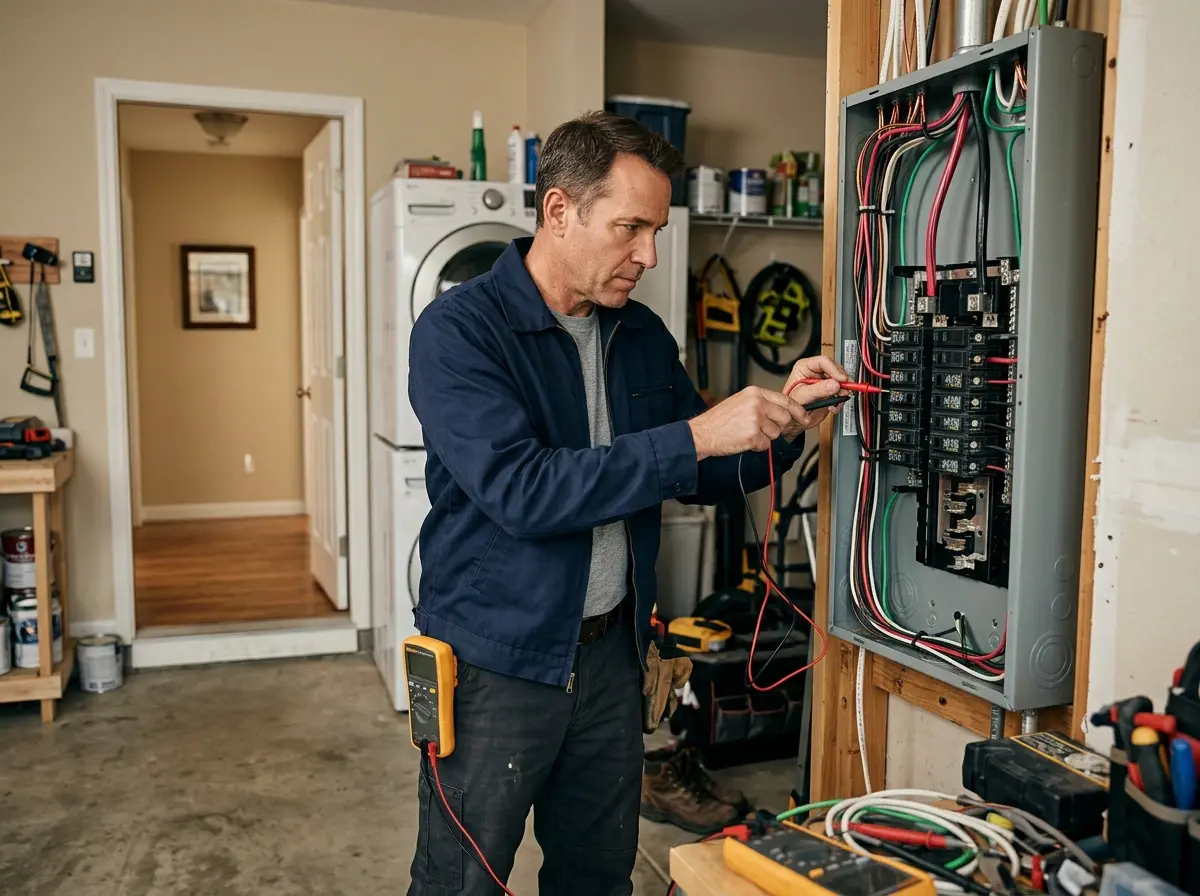
- Voltage drop testing at multiple outlets while high-draw appliances run (AC, dryer, oven, well pump)
- Overloaded circuit finder measurement — we clamp each circuit and record actual amp draw versus breaker rating
- Arc fault diagnosis on any AFCI breaker that has tripped — we test with an arc calibrator to confirm function
- GFCI trip troubleshooting using a specialized tester that measures trip time (must be under 0.025 seconds)
- Full report with infrared images, amp readings, voltage measurements, and priority repair recommendations
How Long Does an Electrical Inspection Take?
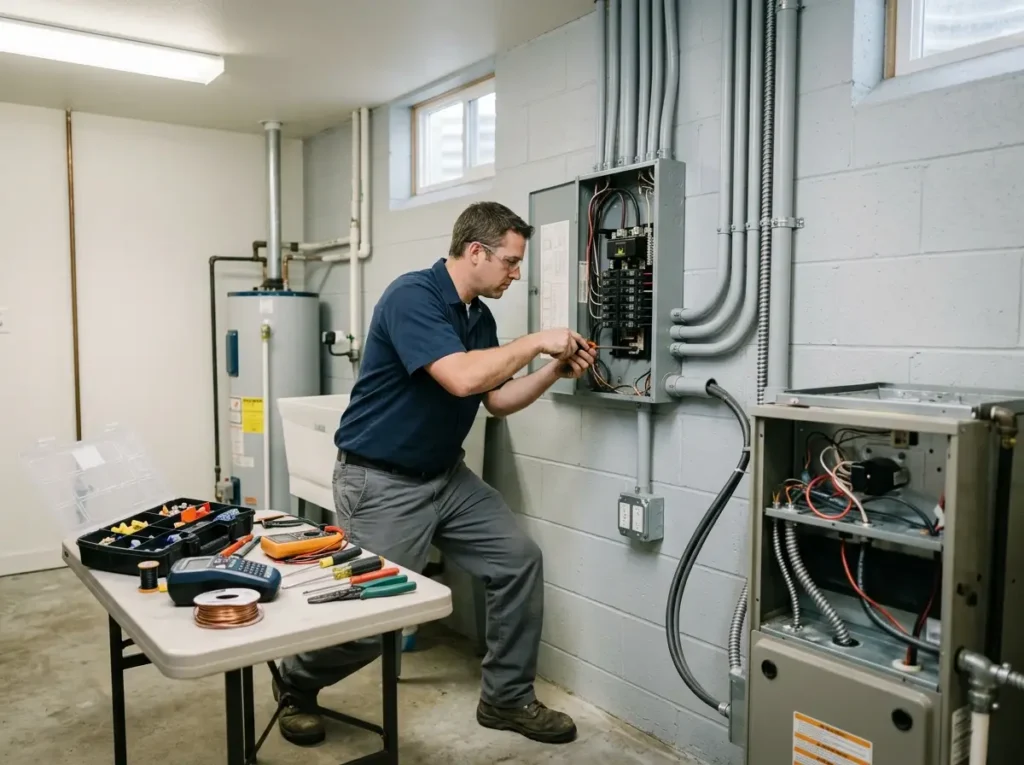
A standard electrical inspection home for a 2,000 square foot Miami Lakes home takes 2 to 3 hours. We open the panel, perform thermal imaging scan (15 minutes to let the panel warm up under load), test 10-15 outlets, check 5-8 switches, verify all GFCI locations, and test the main grounding system. We write the report on-site and review it with you before leaving. A home electrical panel inspection alone (no outlet testing) takes 1 hour: we open the panel, image every connection, document breaker brands, and check for double-tapping or damaged bus bars. A full electrical troubleshooting visit for a specific problem — "the kitchen breaker trips when I use the toaster and microwave together" — takes 1 to 2 hours to diagnose. We replicate the problem, clamp the circuit to measure actual load, check each appliance's draw, and recommend either circuit splitting or panel upgrade. For arc fault diagnosis on a circuit that trips randomly, we may need 2 to 4 hours because we must isolate the problem by disconnecting sections of the circuit and testing each device. Intermittent problems are the hardest: we sometimes install a data logger on the circuit for 24-48 hours to capture the fault event, then return to analyze the data. That adds a second visit but ensures we find the real cause, not just replace the breaker. The most time-consuming scenario is a Miami Lakes home with multiple overlapping issues — overloaded circuits, loose neutrals, and failing breakers. We treat this as a full electrical safety inspection with troubleshooting, typically 3-5 hours, and we provide a phased repair plan so you can prioritize the most dangerous issues first (overheating panel components) and defer less critical ones (non-AFCI protectors in older bedrooms). We always provide a fixed price for the inspection itself, then hourly rates for any troubleshooting beyond the first 2 hours, disclosed upfront.
Why Thermal Imaging Scan Is the Difference Between Guessing and Knowing
A loose wire nut inside a junction box generates heat. A corroded bus bar lug generates heat. A breaker that is failing internally generates heat. None of these produce visible smoke or smell until they reach 300-400°F — long after they have become a fire hazard. Our thermal imaging scan detects temperature differences as small as 0.5°F. We photograph every breaker and connection in your panel, looking for hotspots. A breaker that is 20°F warmer than others of the same amperage is failing. A neutral lug that is 40°F warmer than the adjacent ground lug indicates a loose connection. We document these findings in your report with side-by-side visible and thermal images — so you see exactly what we see. For voltage drop testing, we measure at your panel (should be 120-125V) and at outlets 50-100 feet away (should be within 3-5% of panel voltage). If we see 115V at the panel and 108V at a far outlet, that is 6% drop — excessive. Causes include undersized wire, long runs, or poor connections. For arc fault diagnosis, we use a specialized tester that generates a simulated arc. If the AFCI breaker does not trip within 0.5 seconds, the breaker is defective. If it trips correctly on the tester but still nuisance trips during normal use, the problem is on the circuit — often a shared neutral (doubles the current on the neutral, confusing the AFCI), a damaged cord plugged into an outlet, or a nail through a wire inside the wall. For GFCI trip troubleshooting, we test the GFCI with a calibrated tester that measures trip time (must be under 0.025 seconds). If the GFCI trips correctly but nuisance trips when a specific appliance is plugged in, the appliance has a ground fault. If it trips randomly with nothing plugged in, the GFCI itself is failing or there is moisture in a junction box. For overloaded circuit finder, we use a clamp meter to measure actual current while you run typical appliances. A 15-amp circuit reading 14.5 amps continuously is overloaded — the breaker may not trip immediately but will over time, and the wires will heat. We recommend moving some loads to another circuit or running a new dedicated circuit. Every electrical safety inspection we complete includes a one-page summary for your insurance company: panel brand (with warning if FPE or Zinsco), AFCI/GFCI compliance status, thermal imaging scan results (pass/fail), and voltage drop testing results. We also provide a list of any code violations requiring repair and an estimate for each.
Call our inspection team in Miami Lakes for a real electrical inspection, not a basic home inspection. We find what others miss and tell you exactly what needs fixing — and what can wait.