

That Old Pool Light Could Be a Death Trap — We Upgrade to Safe 12V
Your Miami Springs home's pool was built in 1985. The underwater light still works, so you assume it is safe. It is not. Old pool lights use 120V directly in the water. A cracked lens, a failed gasket, and that 120V energizes the pool. Swimmers become the path to ground. Modern code requires pool light transformer installation that steps voltage down to 12V — safe enough to touch in water without injury. Our pool and hot tub electrical wiring services include this critical upgrade. We replace dangerous 120V underwater fixtures with low-voltage LED lights, install GFCI protection swimming pool on every pump circuit, and ensure proper bonding and grounding pool systems.
Four Code Violations We Fix in Miami Springs Pools and Spas
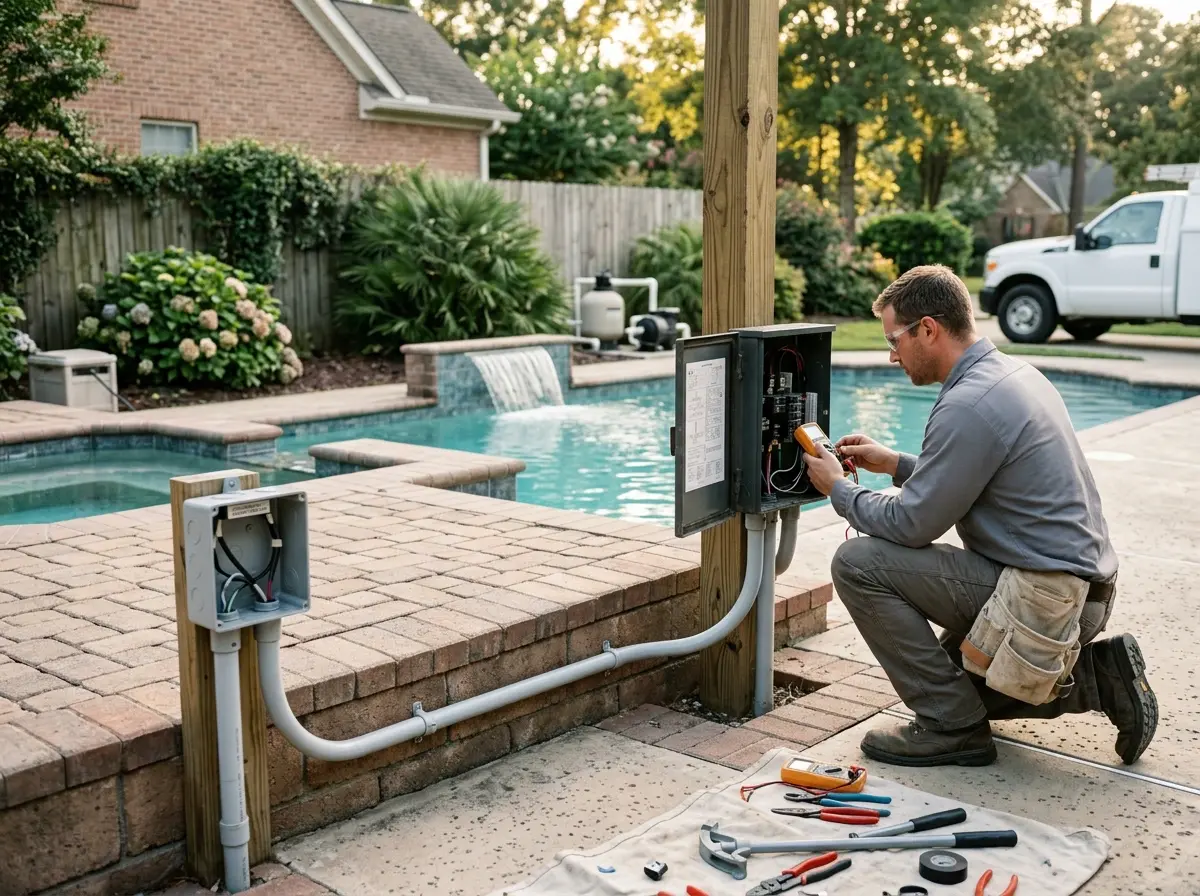
Violation one: missing GFCI protection swimming pool on the pump circuit. Pools installed before 2008 often have standard breakers. We replace with GFCI breakers or add inline GFCIs (1-2 hours per circuit). Violation two: spa disconnect panel missing or improperly located — either too close to the water (shock risk from wet hands) or out of sight (cannot shut off power in an emergency). We install a new spa disconnect panel at the required distance (5-50 feet, within sight) — 3-5 hours. Violation three: above ground pool electrical with no bonding. The metal frame is isolated, the pump has no bond wire, and the ladder sits on rubber feet. Our bond the frame to the pump to a ground rod — 2-4 hours. Violation four: pool light transformer missing or still 120V. We replace the transformer and the underwater fixture with a 12V system — 3-5 hours.
Our pool electrical process in Miami Springs prioritizes life safety over convenience:
- For pool pump wiring, we use 12 gauge wire for 20A pumps, 10 gauge for 30A pumps, always with GFCI protection swimming pool
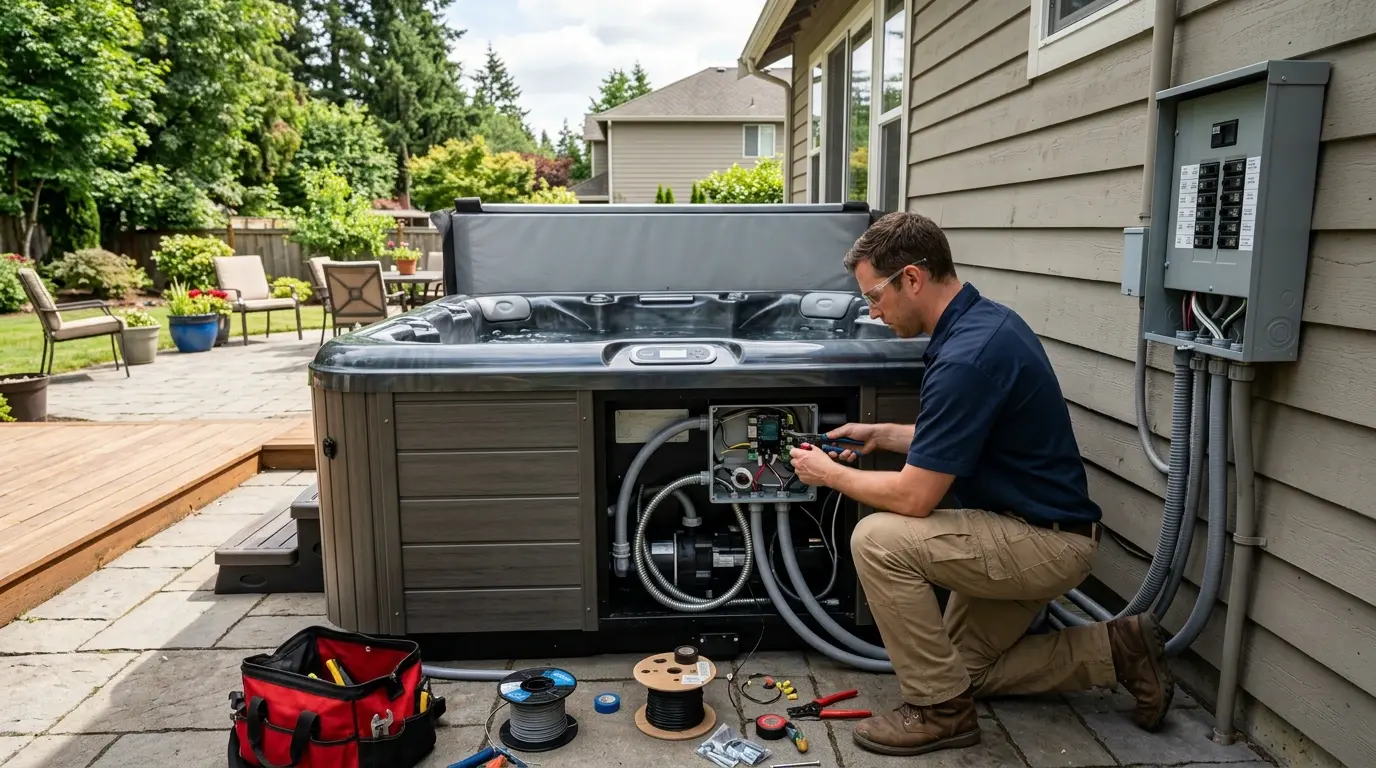
- For spa disconnect panel, we install a weatherproof box with GFCI breaker, within sight of the tub, and we label the breaker "HOT TUB"
- For bonding and grounding pool, we use solid #8 bare copper wire, exothermic welding connections (no clamps that can corrode), and we test each bond with a low-resistance ohmmeter
- For pool light transformer, we mount at least 8 inches above water level, connect to a GFCI-protected 120V circuit, and use 12V underwater-rated LED fixtures
- For above ground pool electrical, we install a dedicated GFCI receptacle within 10-20 feet (but not closer than 5 feet), then bond the frame
How Long Does Pool and Spa Electrical Work Take?
A pool pump wiring replacement with GFCI breaker installation takes 2 to 3 hours. We turn off the circuit, pull new wire from the panel to the pump location (through existing conduit if clear), install the new GFCI breaker, connect the pump, and test. If the existing conduit is clogged with debris or roots, we may need to run new conduit — add 2-4 hours. A bonding and grounding pool repair for a missing bond wire between pump and ladder takes 1 to 2 hours if the distance is short and we can run exposed wire along the deck. If we must trench under concrete to access bonding points, add 3-6 hours. A spa disconnect panel installation for a new hot tub takes 4 to 6 hours, including running 6/3 or 8/3 wire from the main panel, mounting the disconnect, and running liquid-tight conduit to the tub. A pool light transformer and fixture replacement takes 3 to 5 hours. The hardest part is pulling the old light cord through the conduit from the niche to the junction box — if the cord is stuck, we may need to abandon the old conduit and run new PVC, adding 2-4 hours. For above ground pool electrical for a new seasonal pool, we allocate 2 to 3 hours for a GFCI receptacle and bonding. The most time-consuming Miami Springs scenario is a pool that has multiple violations: no GFCI protection swimming pool on pump or light, no bonding grid, old 120V light, and a spa disconnect panel located behind a bush 60 feet away. We treat this as a full pool electrical rewire, typically 1-2 days. We always provide a phased repair plan so you can prioritize the most dangerous issues first (bonding and GFCI) and address less critical items (light transformer upgrade) later.
Why Pool Light Transformer Installation Is Not Optional for Older Pools
In 1996, the NEC began requiring pool lights to be low-voltage (12V) or have GFCI protection for 120V fixtures. In 2008, the code eliminated the GFCI exception — all new pool lights must be 12V. But thousands of pre-2008 pools still have 120V lights. The danger: a 120V light fixture in water leaks current through a cracked lens. The GFCI (if present) would trip, but many old pools have no GFCI on the light circuit. Without GFCI and without a pool light transformer, the water becomes energized. Swimmers receive shocks ranging from tingling (minor leak) to paralysis (major leak). We replace 120V fixtures with modern 12V LED lights. The pool light transformer mounts in the junction box above water level, reducing 120V to 12V. Even if the underwater fixture fails completely, 12V cannot cause serious injury. For pool pump wiring, modern variable speed pumps are more energy-efficient but require specific wiring: some need a dedicated 230V circuit with a timer or automation control. We read the pump manual and wire accordingly. Many electricians assume all pool pumps are the same — we do not. For spa disconnect panel, the disconnect must be able to turn off the hot tub even if the GFCI breaker is stuck. We use heavy-duty disconnects with pull-outs or switches rated for the amperage. For bonding and grounding pool, we use exothermic welding (Cadweld) for connections that will be buried underground or encased in concrete. Standard mechanical clamps corrode within 5-10 years in Miami Springs soil. Cadwelded connections last the life of the pool. We also bond the water itself using a bonding plate in the skimmer or a fitting in the plumbing line — this ensures that a swimmer touching the water and a metal ladder does not become the bond. For above ground pool electrical, we bond the metal frame to the pump motor and to the pool water (using a bonding fitting in the return line). Many homeowners do not know that above ground pools also require bonding. Local codes vary, but we always recommend bonding for any pool with over 12 inches of water depth. Every pool electrical project we complete includes a final test: we measure voltage between the water and each bonded component using a specialized voltmeter. Any reading over 0.5V indicates a bonding problem. We also provide a one-page summary of all GFCI protection swimming pool locations (breaker numbers) and the location of the pool light transformer for future maintenance.
Call our pool electricians in Miami Springs for a complete safety inspection. We will identify every violation and prioritize repairs so you can swim safely this summer.