
From Dark Yard to Show-Stopping Nightscape in Pompano Beach
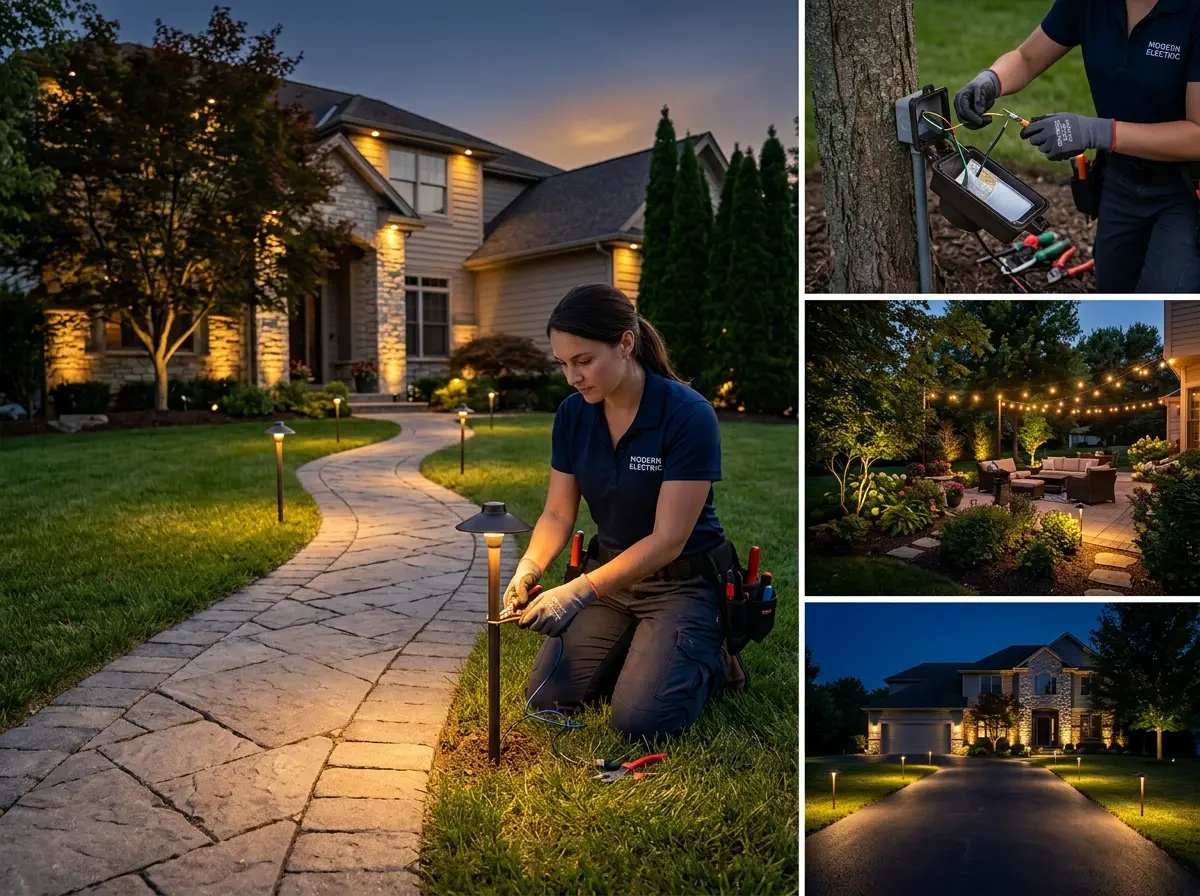
Most homes in Pompano Beach disappear after sunset. The beautiful stonework, the mature oaks, the winding path to the front door — all invisible until morning. Our landscape lighting installation changes that. We design outdoor lighting systems that reveal your home's best features at night, from dramatic up-lighting on trees to subtle path lights along walkways. Unlike plug-in solar stakes that dim after two hours, our low voltage landscape lighting runs all night on a timer or photocell, using less energy than a single porch light while lasting 15-20 years with minimal maintenance.
Seven Ways We Illuminate Pompano Beach Outdoor Spaces
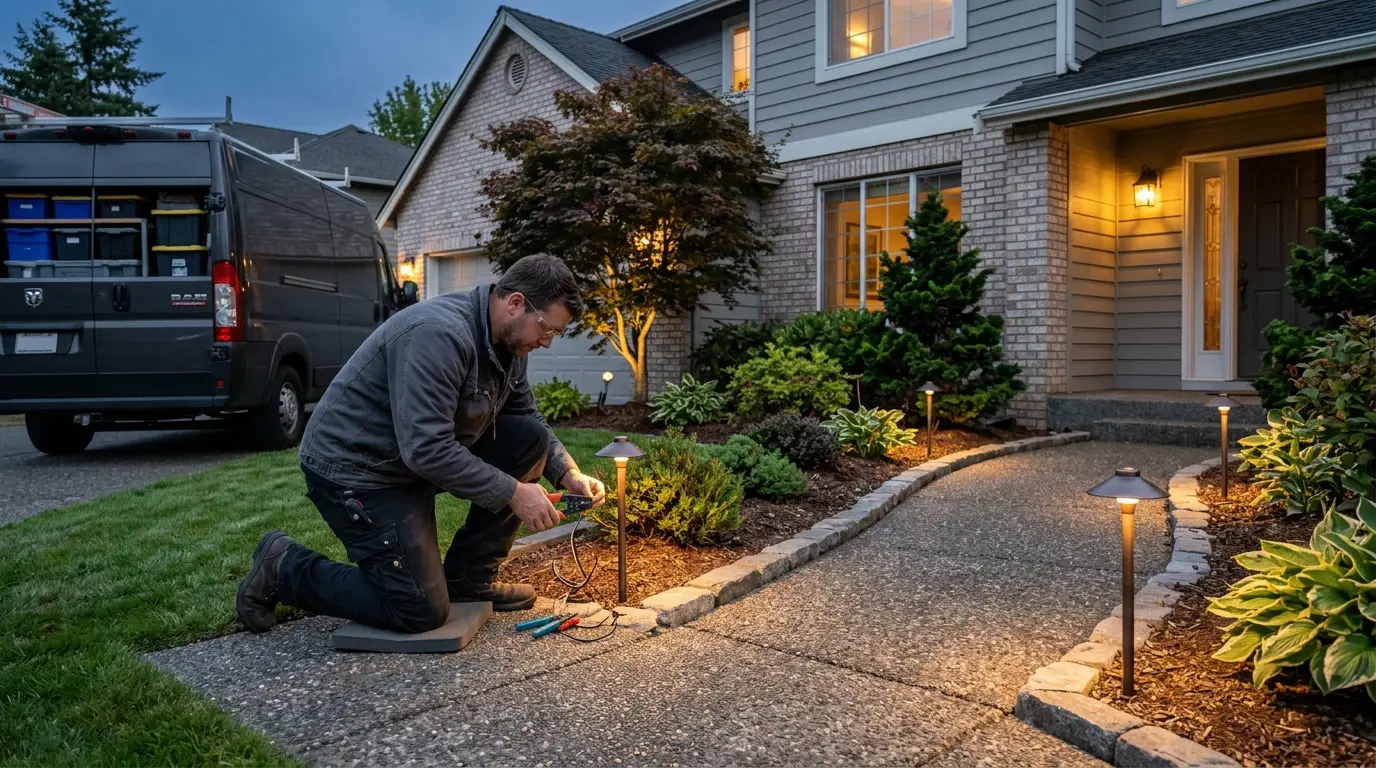
First, path lights — 12-inch brass or aluminum fixtures staked along walkways, spaced 6-8 feet apart to create a continuous pool of light without blinding glare. Second, well lights — buried flush with the ground in perforated wells, angled upward to wash tree trunks, flagpoles, or stone columns with dramatic vertical light. Third, hardscape lighting — slim LED strips recessed into retaining walls, steps, or bench seats, often installed during construction but retrofittable with surface-mount channel. Fourth, motion sensor floodlights — mounted under eaves or on garage walls, triggering only when someone approaches your driveway, back door, or side gate. Fifth, deck lighting — small puck lights or tape under railings, on stair risers, or along step edges, preventing falls while creating a soft perimeter glow. Sixth, wash lights — wide-beam fixtures aimed at exterior walls to highlight brick, stone, or siding texture. Seventh, accent lights — narrow-beam spotlights aimed at statuary, water features, or specimen plants.
Every outdoor lighting installation we complete in Pompano Beach follows this process:
- Nighttime site walk (after dark) to identify existing dark spots, glare sources, and HOA concerns
- Fixture selection based on fixture type (path, well, wash, flood, deck) and material (brass, copper, aluminum)
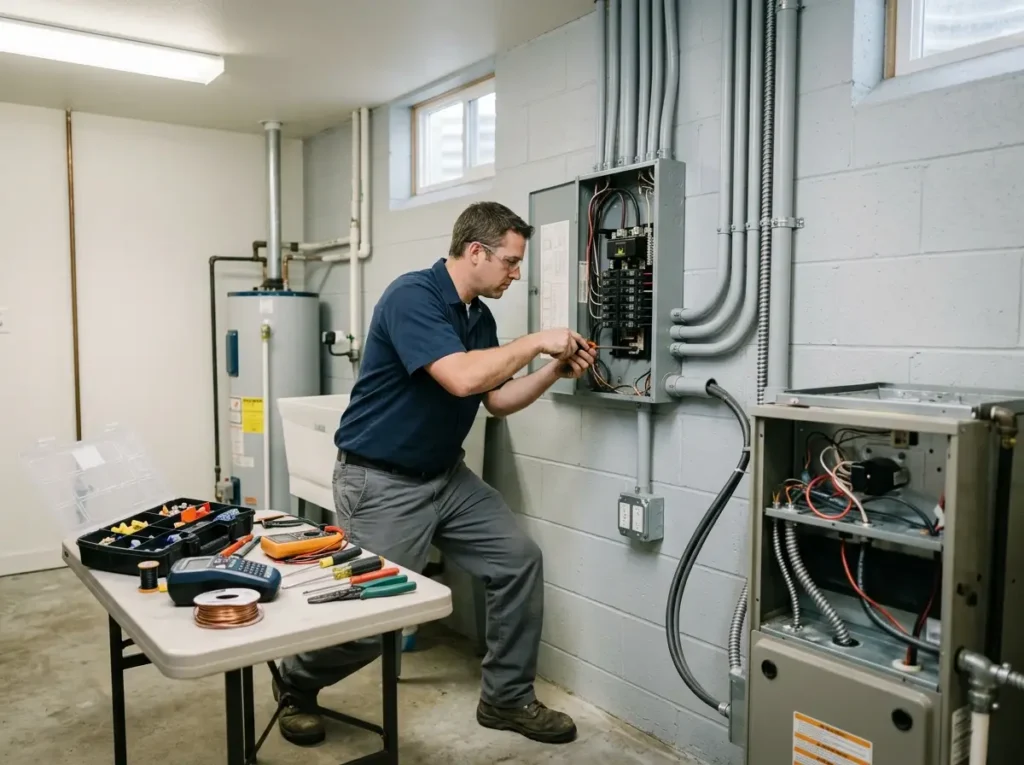
- Transformer placement within 10 feet of an exterior GFCI outlet, mounted at least 12 inches above grade
- Trenching 6-8 inches deep for low voltage cable, using direct-bury copper wire (never aluminum)
- Fixture assembly and installation with waterproof wire nuts and silicone-filled gel caps
- Photocell or timer programming to turn lights on at dusk, off at sunrise or 11 PM for dark sky compliance
- Final aiming adjustment and glare shielding to keep light on your property, not your neighbor's windows
How Long Does Landscape Lighting Installation Take?
A basic landscape lighting installation for a small Pompano Beach front yard (6-8 path lights, 2 well lights on a tree) takes 4 to 5 hours. This includes trenching 50-100 feet of cable, mounting the transformer, assembling and staking fixtures, and testing the photocell. A full yard installation with 20-30 fixtures (path, well, hardscape, deck, motion sensor floodlights) takes 8 to 12 hours spread over 1-2 days. The most time-consuming part is trenching: rocky Pompano Beach soil requires a powered trencher or pickaxe work, adding 3-4 hours to that estimate. Transformer placement matters — if your only exterior GFCI outlet is 50 feet from the yard, we must run conduit from that outlet to the transformer location before starting low voltage work, adding 2-3 hours. Retrofitting hardscape lighting into an existing retaining wall takes 2-3 hours per 20 feet of wall, as we must drill through stone or block, fish wire through voids, and seal each fixture with outdoor-rated caulk. Motion sensor floodlight installation for two fixtures takes 2 hours, including mounting each sensor, aiming the detection zone, and adjusting sensitivity and duration. The most complex scenario in Pompano Beach is a new construction home with no exterior outlets and bare dirt. We coordinate with the builder to stub out a dedicated 20-amp GFCI circuit to the transformer placement location before landscaping, saving 4-5 hours of retrofitting. For existing homes, we often piggyback the transformer onto an existing porch light circuit, but this requires verifying that circuit has capacity (load calculation) and that the photocell or timer can override the light switch. We provide a written timeline with separate estimates for trenching, wiring, and fixture assembly, so you understand why a full-yard system costs more upfront than a DIY kit (and why it will still work five years later).
Why Low Voltage Landscape Lighting Fails (And How We Prevent It)
That DIY landscape lighting kit from the home center came with a plastic transformer, aluminum wire with push-in connectors, and plastic fixtures with rubber gaskets. Within two years, the transformer overheated, the wire corroded at every connection, and the fixtures cracked in the Pompano Beach winter sun. Our low voltage landscape lighting uses commercial-grade components: brass or copper fixtures (never plastic), direct-bury copper wire (never aluminum), silicone-filled gel caps (never push-in connectors), and magnetic transformers with cast-aluminum enclosures rated for continuous outdoor use. We also calculate voltage drop before running a single foot of wire. Copper wire loses voltage over distance — a 12-gauge wire carrying 5 amps loses 2% over 100 feet, but 16-gauge wire loses 8%, causing your farthest path lights to be visibly dimmer than the ones near the transformer. We use 12-gauge or 10-gauge wire for all runs over 50 feet, and we loop the wire so each fixture sees equal voltage. For well lights, we install the fixture in a perforated drain well filled with gravel, so water never pools around the lens. For hardscape lighting, we use low-profile aluminum channels that sit flush with the stone face, secured with masonry anchors and sealed with outdoor silicone. Motion sensor floodlights are aimed downward at a 30-45 degree angle — straight-out aiming lights up the sky (violating dark sky compliant ordinances in many Pompano Beach neighborhoods) and blinds anyone approaching. We also install a manual override switch for motion sensors, allowing you to keep lights on during parties or off during lightning storms. For deck lighting on wood decks, we use staples or clips, never screws that split the wood. For composite decking, we use adhesive mounts or rail-clips that clamp without drilling. Every outdoor lighting installation we complete includes a voltage reading at the farthest fixture (must be within 10% of transformer output) and a photocell calibration test at actual dusk (not just covering the sensor with tape). We also provide a one-page diagram showing wire routing, transformer placement, and fixture locations for future troubleshooting.
Call our landscape lighting team in Pompano Beach to schedule a nighttime consultation. We show you what your home could look like after dark — and then we build it.